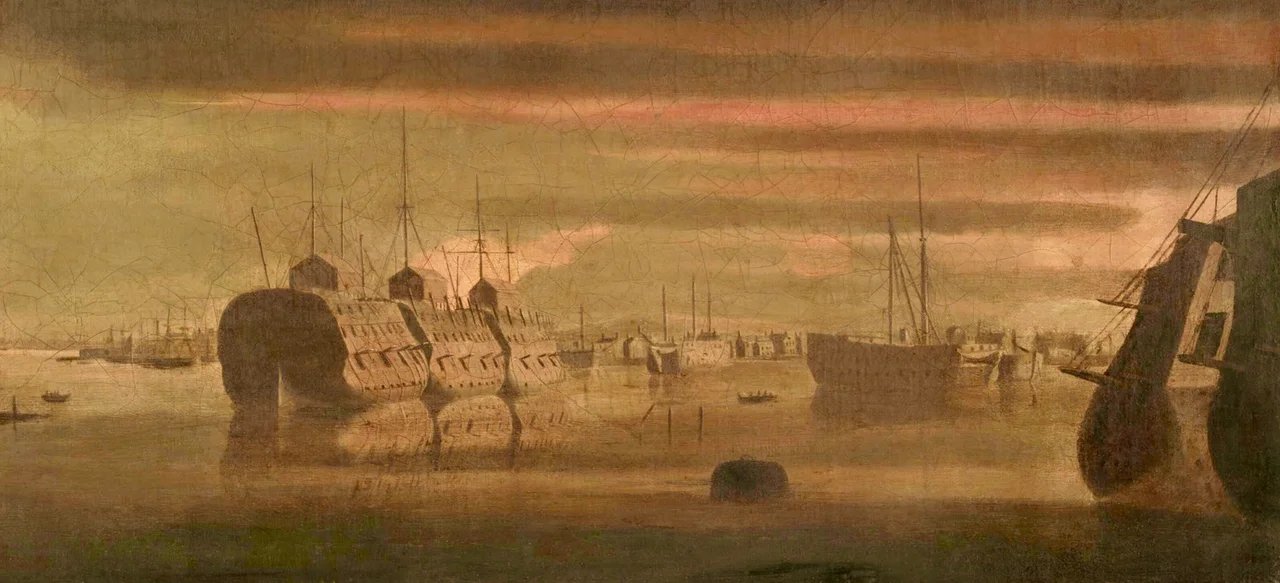

HM Prison Service
In 1777, a Bedfordshire high sheriff named John Howard published a book that catalogued, in patient prose, the conditions inside several hundred prisons he had visited across England and Europe. He had found men confined despite being acquitted because they could not pay the jailer's fees. He had found women crammed into rooms with men, debtors with murderers, children with hardened criminals. Two hundred and fifty years later, the institution that traces its modern descent from his reforms occupies eight floors of an office block at 102 Petty France in Westminster, a few minutes' walk from Buckingham Palace.
Petty France
The headquarters does not look like a prison. It looks like an insurance company - a sober slab of postwar concrete and glass, set back from a quiet Westminster street between the Ministry of Justice and St James's Park. The two Director Generals who run His Majesty's Prison and Probation Service - currently James McEwen as CEO and Michelle Jarman-Howe in charge of operations - sit somewhere on these floors, answering ultimately to a junior minister called the Prisons Minister and, above her, to the Secretary of State for Justice. The statement of purpose taped to a wall down the corridor is famous in penal circles. Our duty, it reads, is to look after them with humanity and help them lead law abiding and useful lives in custody and after release. Whether that duty is being discharged is the argument that has run through this building since it was built.
Howard's Book
John Howard's State of the Prisons changed how the country thought about confinement. He proposed separate cells, separate sections for women and young offenders, an end to the fee system that kept innocent people locked up. The Penitentiary Act of 1779 followed his agitation - solitary confinement, religious instruction, hard labour - though the two state penitentiaries it proposed were never built because of the wars with France. Howard gave his name to the Howard League for Penal Reform, which has been making the same arguments in slightly different language for over two centuries. Elizabeth Fry, a Quaker, visited Newgate in 1813 and found the women's wing so squalid that visitors wept. Charles Dickens described the Marshalsea in David Copperfield and Little Dorrit because his father had been locked inside it. The English reformer's instinct is older than the English prison itself.
Churchill the Prisoner's Friend
Among the many strange details of Winston Churchill's career is that the most ardent prison reformer of the twentieth century was a man who had himself been a prisoner of war. Captured by the Boers in 1899, Churchill escaped after twenty-eight days and made his name as a national hero on the back of his own captivity narrative. When he became Liberal Home Secretary in 1910, he arrived, his biographer Paul Addison writes, with the firm conviction that the penal system was excessively harsh. He cut the number of people sent to prison for failing to pay fines. He shortened sentences. He tried, with limited success, to make life inside more bearable. Looking back on those days, he wrote, I've always felt the keenest pity for prisoners and captives. His reforms were not politically popular. They were, however, durable.
The Borstal Movement
In 1902 the central government opened an experimental institution for young offenders in a Kent village called Borstal. The idea, championed by Herbert Gladstone, was that the cycle of teenage offending could be broken by an English public school inside a prison: housemasters, named houses, cross-country walks, and a degree of trust extended back to the boys. Alexander Paterson, who became commissioner after the First World War, ran the system on this principle - cross-country walks were encouraged, the records note, and no one ran away. Borstals were not gentle places, but they were less cruel than what came before. The system survived until 1988, when it was replaced by young offender institutions for those aged eighteen to twenty and secure children's homes for younger teenagers. The English instinct to reform persists, even when the Edwardian language for it does not.
The Modern Estate
There are around 122 prisons in England and Wales today, holding roughly 88,000 people, the great majority of them men. Eleven are run by private contractors - G4S, Serco, Sodexo. The imprisonment rate is the highest in western Europe and sits at the worldwide midpoint, neither Scandinavian nor American. The buildings are old. Many were thrown up in the Victorian rush of prison construction after 1877, when local jails were nationalised, and they have the small windows and long corridors of their century. A 2015 government announcement conceded what every governor knew: old prisons are more expensive to run and often unsuitable in design, with dark corners which too often facilitate violence and drug-taking. Synthetic cannabinoids - the drug known inside as Spice - have been smuggled in by drones since the late 2010s. In 2019, official statistics found that male prisoners were 3.7 times more likely to die by suicide than men in the general population.
The Officers on the Landing
About 18,000 uniformed officers work the landings of those 122 prisons, down from 25,000 in 2010. They wear a white shirt and black tie, black trousers, black boots, a black NATO jumper for the cold corridors. They carry a Monadnock AutoLock baton, a radio, and increasingly PAVA spray, an incapacitant rolled out across the estate from 2018 onwards. Under the Prison Act 1952, while acting in their duties, they have all the powers, authority, protection and privileges of a constable. The murder of an officer carrying out their work can result in a whole life order, the most serious sentence English law allows. Their union, the POA, lost the right to strike in 2008 and won the argument that they had been wronged in 2017, both times. They are not, on the whole, well paid for what they see.
The Petty France View
From the upper floors of 102 Petty France, on a clear morning, you can see across the rooftops to St James's Park and the back of Horse Guards. The walk to the Ministry of Justice next door takes ninety seconds. The Galleries of Justice Museum in Nottingham holds the official prison service collection - shackles, locks, photographs of long-demolished cells - but the working memory of the institution lives in this building, in policy papers and inspection reports stacked in cupboards. The arguments Howard started are still here. So is the unanswered question he posed: what is a prison for, and what does it do to the people inside it?
From the Air
HMPPS headquarters at 102 Petty France sits at 51.5000°N, 0.1346°W, in Westminster between Buckingham Palace and St James's Park. From 1,500 ft AGL, look for the broad concrete government block facing onto the green of the park, with the Palace and Wellington Barracks visible immediately to the north. Nearest airports: London City (EGLC) 5 nm east, London Heathrow (EGLL) 13 nm west, RAF Northolt (EGWU) 12 nm northwest. The view extends to Westminster Abbey two blocks south and the Houses of Parliament beyond.
Nearby Stories
- Battle of Britain, Northfleet 1.1 km away
- Bayham Old Abbey 5.4 km away
- Catharine Macaulay 6.4 km away
- Hatfield rail crash 8.8 km away
- Chequers 8.9 km away
- Chelmsford Cathedral 10 km away
- Queen Victoria Hospital 13 km away
- Fishbourne Roman Palace 36 km away