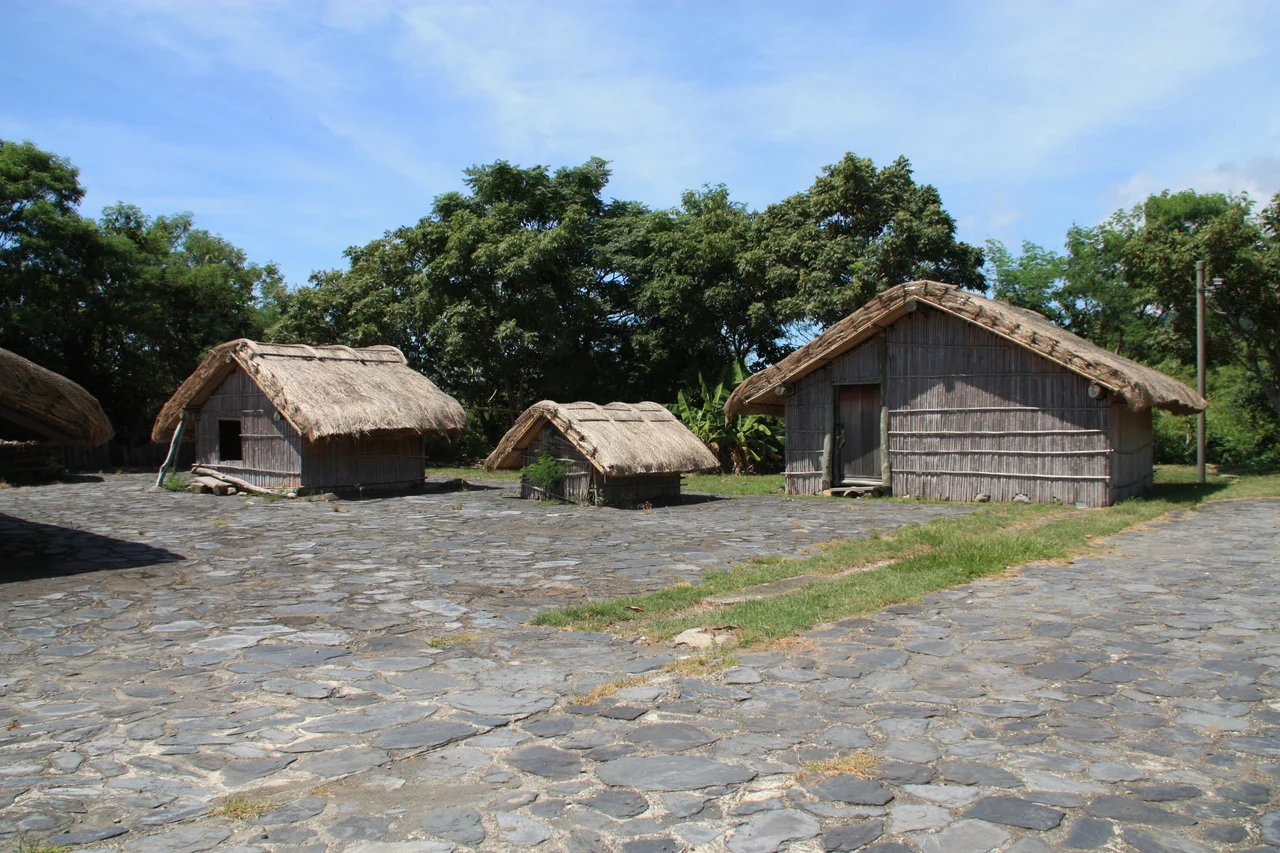

Indigenous Taiwanese Culture
Somewhere around 6,500 years ago, on the island that would later be called Taiwan, people began to move. Linguistic and genetic evidence now points to this island — this particular stretch of mountains and coastline in the western Pacific — as the probable origin point of the Austronesian dispersal, the migration that eventually carried related languages and peoples across an arc from Madagascar in the west to Easter Island in the east, from Hawaii in the north to New Zealand in the south. The descendants of those who stayed are Taiwan's indigenous peoples. They did not vanish when Han Chinese settlers arrived, or when the Dutch came, or the Japanese. They are still here — sixteen officially recognized ethnic groups with their own languages, ceremonies, governance traditions, and contemporary lives.
Sixteen Nations, One Island
Taiwan's government officially recognizes sixteen indigenous ethnic groups: the Amis, Atayal, Bunun, Hla'alua, Kanakanavu, Kavalan, Paiwan, Puyuma, Rukai, Saisiyat, Tao, Thao, Tsou, Truku (also known as Taroko), Sakizaya, and Sediq. The official collective term is 原住民 — yuán zhù mín, meaning 'original inhabitants.' Each group has its own distinct language, cultural practices, and territorial history. None of the indigenous languages are mutually intelligible, which means the linguistic richness of the island is more comparable to a continent than a single country. Taken together, these sixteen peoples account for less than three percent of Taiwan's total population today — a statistic that reflects centuries of displacement, assimilation, and demographic pressure, but says nothing about the depth or vitality of the cultures themselves.
What History Did, and What It Did Not Erase
Han Chinese settlement began in earnest when the Dutch colonized the island's south in the seventeenth century, accelerating after the Ming loyalist Zheng Chenggong — known in the West as Koxinga — expelled the Dutch in 1662 and brought more settlers from the mainland. The Qing Dynasty conquest of 1683 deepened the Han presence further. Japan took Taiwan in 1895 following the First Sino-Japanese War and held it until 1945, implementing policies that pressured indigenous communities to adopt Japanese language and customs. The final wave of Han migration came in the late 1940s, when the Nationalists fled the mainland after the Chinese Civil War. Through all of it, the indigenous peoples of Taiwan's western plains suffered the most — many communities were destroyed in armed conflicts, others intermarried and assimilated into Han society over generations. The cultures that survived most intact are found today in the highlands, on the east coast, and on outlying islands like Orchid Island, which remains predominantly home to the Tao people.
Languages That Cross the Pacific
The languages spoken by Taiwan's indigenous peoples belong to the Austronesian language family — the same family that includes Malay, Indonesian, Tagalog, Hawaiian, Māori, and Malagasy. Linguists have identified Taiwan as the probable homeland of this entire family, which makes the indigenous Taiwanese languages among the oldest surviving branches of one of the world's most geographically expansive language groups. Because each of the sixteen groups speaks a distinct language, indigenous people from different communities often communicate with each other in Mandarin, which serves as the island's lingua franca. The Amis greeting 'Naruwan,' meaning 'Welcome,' has entered wider use in Taiwan's tourism and advertising landscape as a welcoming phrase representative of indigenous hospitality — a small but visible sign of the ways indigenous culture has shaped the island's identity even as the peoples themselves remained marginalized.
East Coast Heartland
If there is a geographic center of gravity for indigenous Taiwanese culture today, it runs along the island's east coast. Taitung City has one of the largest indigenous populations of any Taiwanese city, with the Amis as the most numerous group there. Hualien, further north, holds the largest indigenous population among Taiwan's major cities, with significant Amis, Atayal, Truku, and Bunun communities — and the Hualien region was part of the maritime jade route that connected Taiwan to the Philippines and Southeast Asia beginning before 2000 BCE, a trade network that predates the written record by thousands of years. The National Museum of Prehistory in Taitung City houses the finds from the Beinan archaeological site, one of the most significant prehistoric discoveries in East Asia, and gives these deep histories a physical address.
Living Cultures, Contemporary Voices
Since Taiwan's democratization in the 1990s, the government has taken steps to address historical injustices and support indigenous cultural preservation — guaranteeing at minimum six legislative seats to indigenous representatives and funding language and cultural programs that decades of assimilationist policy had suppressed. The relationship between indigenous Taiwanese and the Han Chinese majority has become more peaceful, though not without complexity. Among the most celebrated contemporary indigenous Taiwanese figures is the Puyuma singer Kulilay Amit, known by her Chinese name Chang Huei-mei and better recognized by her stage name A-mei. Her voice — and her prominence across the Chinese-speaking world — has given millions of people a connection to indigenous Taiwanese identity they might not otherwise have sought. She is one example among many of how living indigenous cultures in Taiwan continue to generate artists, activists, athletes, and thinkers who shape the island and, increasingly, reach beyond it. Traditional animist ceremonies and festivals survive and are practiced openly. Languages are being taught again. The cultures the Austronesian founders of this island left behind are not museum pieces. They belong to people who are alive.
From the Air
Indigenous Taiwanese communities are distributed across the island, but the east coast corridor — particularly around Taitung and Hualien — represents the highest concentration of indigenous population today. The coordinates for this article center on Taitung at approximately 22.79°N, 121.12°E. The nearest airport is RCFN (Taitung Airport). From the air, the eastern rift valley running between the Central Mountain Range and the coastal hills is clearly visible — a geographic corridor that has sheltered indigenous communities for millennia. Orchid Island (Lanyu), home to the Tao people, lies approximately 90 km to the southeast of Taitung and is visible on clear days from altitude. Recommended viewing altitude: 10,000–15,000 feet to appreciate the full east coast geographic context.
Nearby Stories
- Jiadong 8.7 km away
- Bunun Cultural Museum 10 km away
- Liudui Hakka Cultural Park 12 km away
- Yujing District 16 km away
- Shouka Mountain Pass 40 km away
- 1951 East Rift Valley Earthquakes 97 km away
- Mavulis Island 157 km away
- 2021 Hualien Train Derailment 162 km away