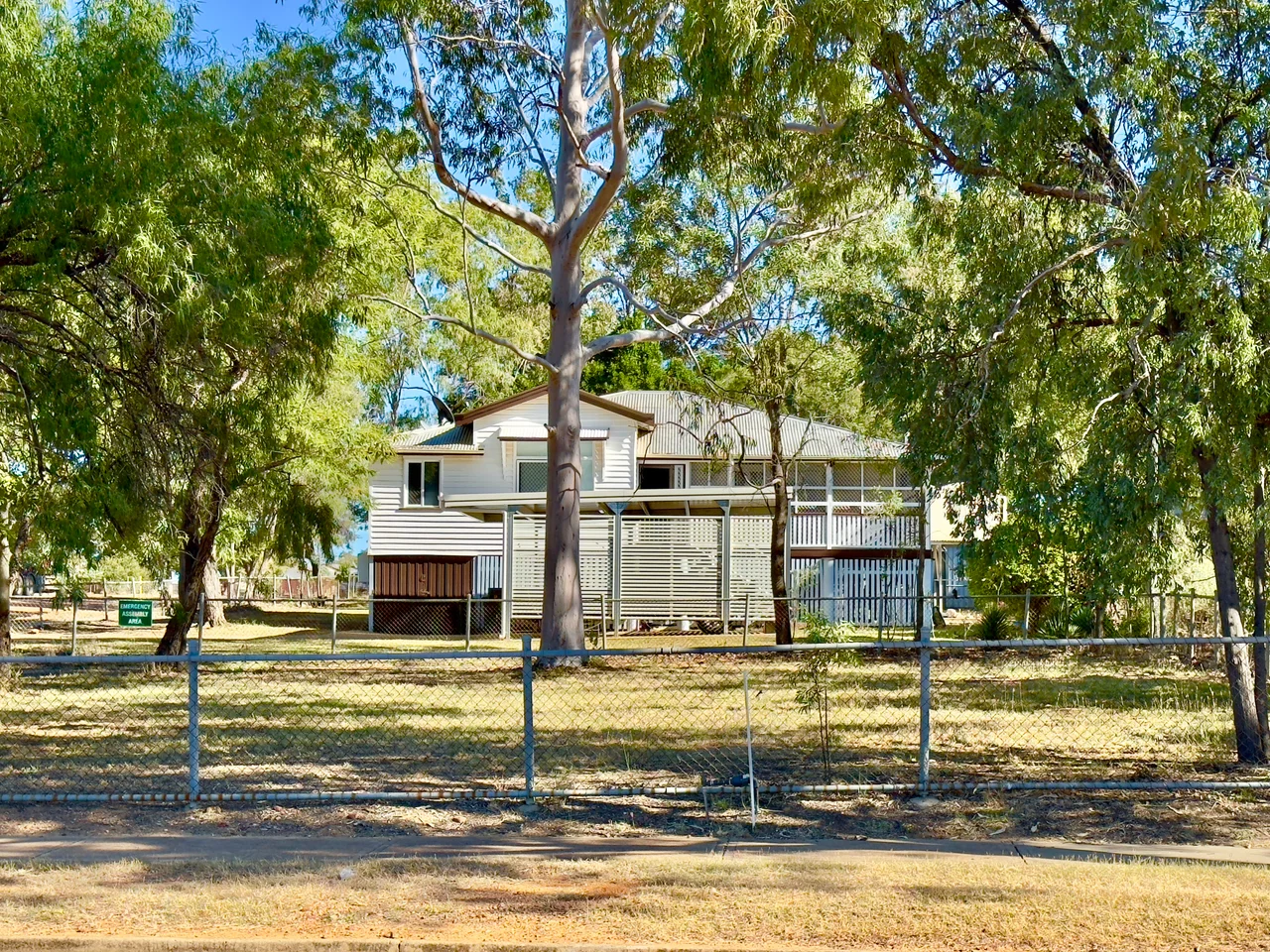

Isisford, Queensland
A dry creek bed near a town of barely 200 people turned out to hold the missing link in crocodile evolution. In the mid-1990s, Isisford's former deputy mayor, Ian Duncan, found fossil bones weathering out of the cracked earth on the western Queensland plains. They belonged to a small, sharp-snouted reptile that swam the inland seas about 98 million years ago - and that, scientists later realised, sat astonishingly close to the ancestor of every crocodile, alligator, and gharial living today. They named it Isisfordia duncani, after the town and the man who found it. Few places this small have given their name to so large a chapter of natural history.
The Crocodile That Came First
Isisfordia duncani was about 1.1 metres long, no monster, but evolutionarily it was a giant. Recovered from the Cretaceous Winton Formation, it is one of the most primitive members of the lineage that gave rise to all modern crocodilians - the closest thing yet found to their common ancestor. Where older crocodile relatives were sprawling, varied experiments, Isisfordia already carried the streamlined, fish-catching body plan that would prove so durable it survives, barely altered, in the saltwater crocs of today's northern rivers. Seven individuals have been unearthed, making it the best-represented Cretaceous crocodyliform in Australia. To stand on the Isisford plains is to stand where the crocodile's deep-time story turned a corner.
On the Outer Barcoo
The Barcoo River curls past the town, and that name carries weight in Australian letters. Banjo Paterson spent time in this country, and the flat, churchless distances fed his verse. "A Bush Christening" opens "On the outer Barcoo where the churches are few, / And men of religion are scanty" - lines drawn from exactly this stretch of saltbush and red dirt. The town leans into the connection: its grand two-storey pub trades as Clancy's Overflow Hotel, a nod to another Paterson poem. There is something fitting in a place this remote inspiring poetry about remoteness itself, where a man could ride for days and meet no one but the folk that are lost.
A Ford on the Barcoo
The name is a knot of history. The Indigenous people of this region are the Kuungkari, who lived along the river when Thomas Mitchell's expedition passed through in September 1846, describing a large camp of permanent huts and well-worn paths. The town that grew here was first called Whittown, after the publican James Whitman who opened a hotel, store, and smithy in 1875. By 1878 it had been renamed Isisford - for the nearby Isis Downs pastoral run and a ford across the Barcoo. The early decades were marked by frontier violence as pastoralists took up the land and the Kuungkari were dispossessed and, too often, killed.
Small Town, Long Memory
Isisford has never held more than about 300 people, yet its footnotes keep surprising you. In April 1910 it became the first town in Australia served by motorised mail, the cars running 90 kilometres from Ilfracombe to the north; a plaque on the post office still marks it. The 1885 courthouse stands as a relic of the wool boom that built the town. Today the Outer Barcoo Interpretation Centre anchors the main street, where a life-sized model of Isisfordia greets visitors who have driven a very long way to meet a very old crocodile. Idalia and Welford National Parks lie within reach, their gorges and dunes folding away to the south.
From the Air
Isisford sits at 24.27°S, 144.43°E on the Barcoo River in central-west Queensland, in flat, lightly wooded country broken by low hills - Penny Knob, Mount Grey, and Yellow Mountain stand out as navigation marks. The town's tin roofs and the green river line are visible from a recommended viewing altitude of 3,000–5,000 ft AGL in the region's typically clear, dry air. The nearest sealed airstrips are at Longreach (YLRE, roughly 120 km north) and Blackall (YBCK, about 110 km east); Isisford itself has a small local aerodrome. Best light is early morning or late afternoon, when low sun rakes across the plains and the Barcoo's billabongs catch the sky.
Nearby Stories
- Alice River (Barcoo River tributary) 6.1 km away
- Wellshot Station 25 km away
- Yaraka 39 km away
- Lochern National Park 49 km away
- Welford National Park 62 km away
- Blackall, Queensland 64 km away
- Bladensburg National Park 176 km away
- Cheepie, Queensland 225 km away