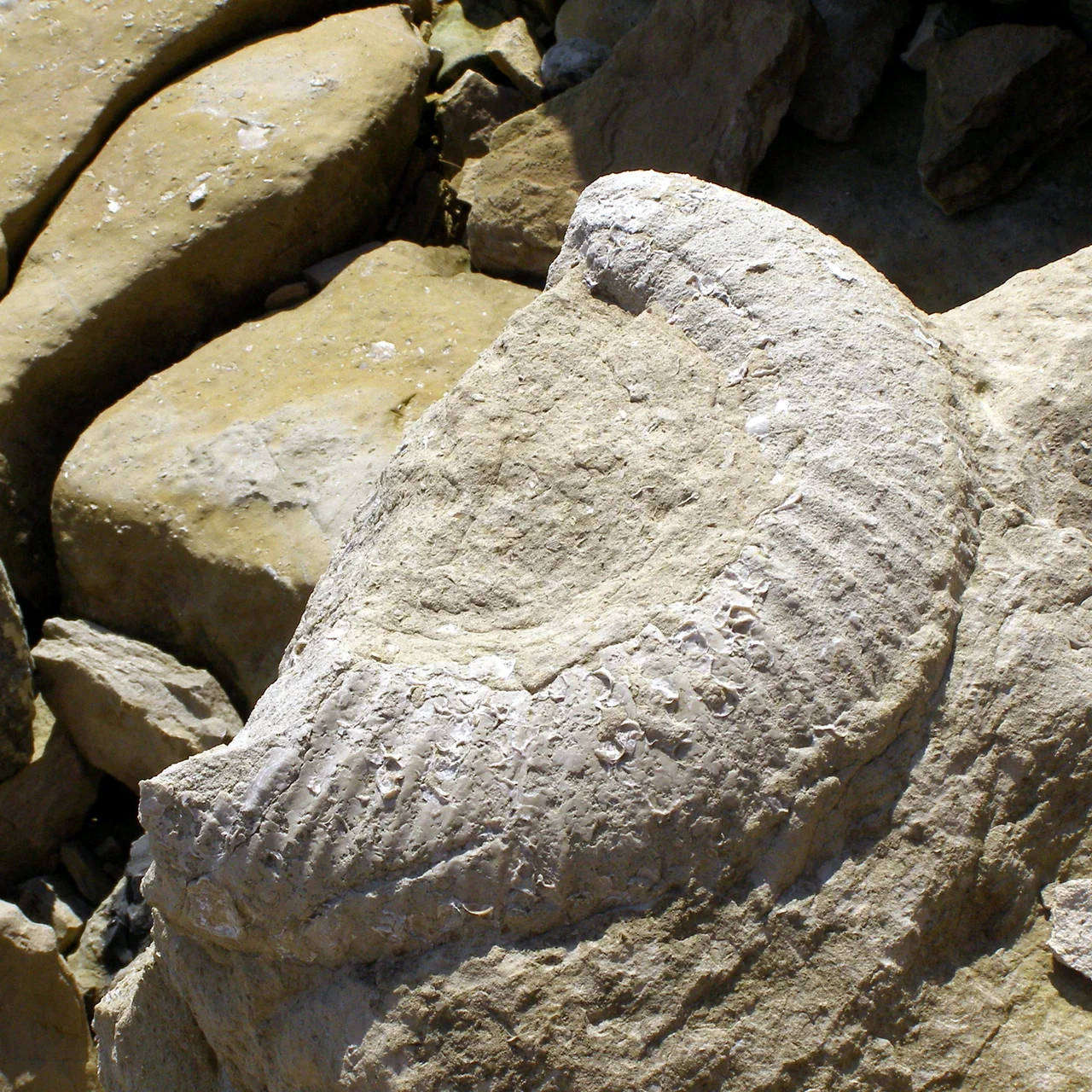

Isle of Portland
Don't say the word rabbit. Quarrymen here still call them underground mutton, long-eared furry things, or just bunnies, and the superstition has held long enough that the local film festival once issued a polite request to a visiting actor to avoid the word in public. The Isle of Portland is that kind of place - small, stubborn, and rule-bound by traditions that outsiders rarely understand until they have spent a season here. It is also one of the most consequential pieces of stone in England. The Cenotaph in Whitehall, the façade of Buckingham Palace, the white walls of St Paul's Cathedral - all of them were lifted out of the quarries you can still see scarring the hill above Easton.
A Tied Island
Portland is an island only in the way the most stubborn islands are. Chesil Beach - an eighteen-mile rampart of shingle, technically a shoal rather than a tombolo - keeps it loosely attached to the Dorset coast like a kite on a long string. Step onto the causeway and the change is immediate. The mainland recedes; the air tastes saltier; the architecture turns to grey stone hewn from beneath your feet. People have lived here since the Stone Age, drawn to the same combination of defensible high ground, deep water on three sides, and rock you could cut into anything. The Tophill and Underhill divide that Portlanders still observe is geological as much as social: one part of the island sits atop the other, and the line between them is older than any human boundary.
Half of London
Christopher Wren rebuilt London after the Great Fire in Portland stone, and the island has been quarrying for the capital ever since. Seven major quarries have been worked over the centuries - Perryfield is still active today - and the limestone has gone abroad in shiploads: into the United Nations headquarters in New York, into war cemeteries across northern France, into government buildings on six continents. Portlanders sometimes joke that the best view of their stone is from a London pavement. The three castles on the island - Portland Castle on the harbour, Pennsylvania Castle above the cliffs, and Rufus Castle nearby - all use this same grey limestone, fortifications built from the very rock they protect.
Three Prisons on Four Miles
Despite its small size, Portland has held three prisons within living memory: HMP Portland, HMP The Verne, and the floating HMP Weare, which moored in the harbour from 1997 to 2005 as the only prison ship in the British system. HMP Portland still operates as a young offenders' institute - the same complex that opened in 1848 to supply convict labour to the harbour breakwaters. The Verne, built into the heart of the Verne Citadel, served as an adult prison and then as an immigration removal centre. The island's history with confinement is older still: Portland Castle was used as a Civil War prison, and Henry VIII built it in the first place to keep an enemy fleet from doing exactly what residents have spent five centuries worrying about.
The Naval Departure
For more than a century, Portland was a Royal Navy town. The harbour - one of the largest artificial deep-water anchorages in the world, ringed by breakwaters that took convicts decades to build - hosted the home fleet, then anti-submarine warfare schools, then helicopter squadrons. The naval base closed in 1995 and the island had to reinvent itself. The reinvention came faster than anyone expected. The National Sailing Academy opened where the dockyard had been, and in 2012 Portland Harbour hosted the Olympic and Paralympic sailing events. Today the water is more likely to carry a J/70 racing yacht than a frigate. The bird observatory in the Old Lower Lighthouse, the climbing walls cut into abandoned quarries, the long-distance footpath that loops the entire island - Portland has turned its industrial bones into a leisure economy without quite letting go of the working-island feel.
Bill, Beach, and Bunnies
Portland Bill at the southern tip is the island's full stop - a low headland where the tidal race churns dramatically and three lighthouses stand within sight of each other. To the west, Chesil Beach throws its shingle for eighteen miles toward Bridport, sorted by the sea so precisely that local fishermen in the dark could once tell where they had landed by the size of the pebbles underfoot. Climbers come for the limestone walls. Divers come for the wrecks. And somewhere in a Portland pub, someone will tell you, with the absolute seriousness of someone who has heard the older generation say it all their life, that you shouldn't have used that word. Just call them bunnies.
From the Air
50.55°N, 2.44°W, Dorset coast. Portland is unmistakable from the air: a long limestone peninsula angled south from the Chesil Beach shingle bar, with Portland Harbour's breakwaters enclosing a vast anchorage on the eastern side. Nearest aviation reference is Bournemouth (EGHH) about 30 nm east. The Bill at the southern tip and the National Sailing Academy on the eastern shore make excellent visual checkpoints. Watch for the Portland tidal race off the Bill - dramatic from above, lethal at sea level.
Nearby Stories
- Needles Lighthouse 18 km away
- Lyme Bay Canoeing Disaster 19 km away
- HMS Formidable (1898) 19 km away
- National Motor Museum, Beaulieu 22 km away
- Sherborne Castle 22 km away
- Muchelney Abbey 24 km away
- German Submarine U-672 29 km away
- Battle of Cherbourg (1864) 58 km away