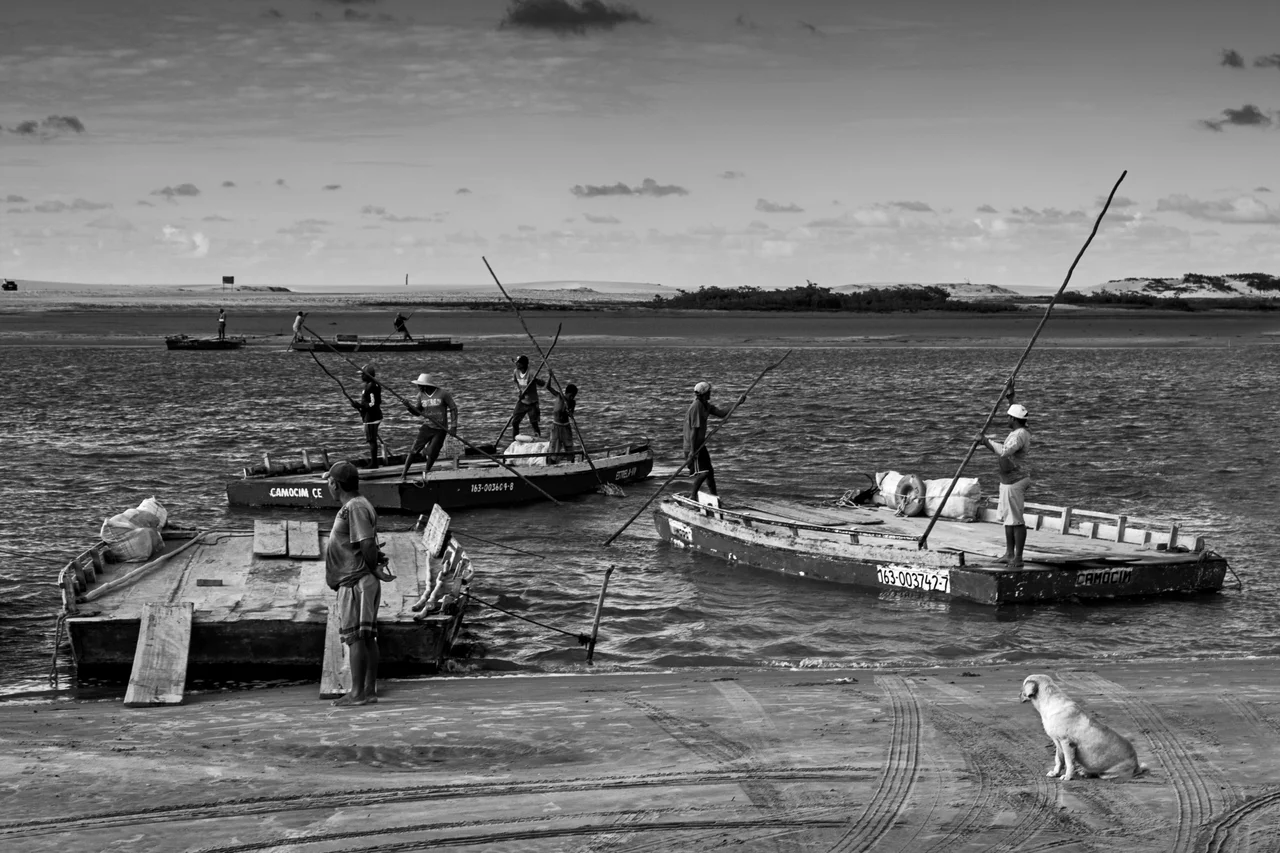

Jijoca de Jericoacoara
Jijoca is the town where the pavement stops. For travelers bound for Jericoacoara, the famous beach village another hour west through the dunes, Jijoca is the necessary pivot point: the last place with a normal road, the last ATM for 23 kilometers, the place where a highway bus is swapped for a jardineira, a kind of converted lorry with benches, or for the 4x4 trucks that carry the last stretch. The municipality is technically the sovereign of its much more famous beach district, but in practice it exists in the shadow of the destination it surrounds. That inversion is part of its character. Jijoca is the place that other people pass through.
The Road That Ends in Sand
Most visitors arrive from Fortaleza, 300 kilometers to the east. A 4x4 taxi makes the run in about five hours for roughly 550 reais, picking up passengers from hotels along Beira Mar and delivering them directly to their pousada door in Jericoacoara. Cheaper alternatives exist: the Fretcar VIP bus leaves Fortaleza's rodoviaria at 07:50, passes through the airport, and runs roughly seven and a half hours to Jijoca, where passengers transfer. Package micro-buses include the transfer in the ticket price. Private 4x4 trucks leave Jijoca as they fill, charging 100 reais per person or 400 for the whole vehicle. A driver unfamiliar with soft sand will bury a normal car almost immediately, which is why the parking lot at the village entrance has quietly become a near-mandatory stop.
The Airport That Keeps Almost Opening
For years, Jijoca watched an airport grow in its territory. A new international facility between the municipalities of Cruz and Jijoca, located roughly 30 kilometers from the beach village, had originally been scheduled to open before the end of 2012. The schedule slipped, and slipped again. The airport, now Jericoacoara-Cruz Airport, eventually opened in 2017, which finally cut the Fortaleza shuttle out of the equation for arriving international travelers on the right route. It changed the scale of tourism that the municipality could absorb. A place that had been genuinely difficult to reach suddenly became a ninety-minute flight from Sao Paulo, and the arithmetic of how many visitors Jericoacoara could sustainably handle became a more urgent question than it had ever been before.
Lagoa Azul and the Hidden Lagoons
The municipality's single most underrated asset is the network of freshwater lagoons scattered through the dune fields. Lagoa Azul is the best known, usually included in day trips from the beach village, but dozens of others pool in the valleys between dunes, sandy-bottomed and warm for swimming. Their positions change; the dunes migrate with the wind, and a favorite lagoon found one year may not exist in the same place the following one. That impermanence is precisely what gives them their appeal. A dune-buggy driver who has been guiding tours for twenty years will reliably know where the current best ones are. The windsurf schools of Lagoa do Paraiso put beginners on flat water in steady trade winds, conditions that coastal ocean beaches rarely offer together.
Tatajuba, the Village That Moved
West of Jericoacoara, another reminder of who actually owns this landscape: Tatajuba, a village that had to be physically relocated because the sand dunes were swallowing it. Day-long buggy tours from Jericoacoara cross to Tatajuba across beach and dune, passing the site where the old village used to stand and the new settlement built further back from the creeping sand. For travelers heading west toward the Lencois Maranhenses dune complex in the neighboring state of Maranhao, Tatajuba makes a reasonable overnight stop. The crossing takes about seven hours by 4x4 Toyota Hilux, roughly 960 reais for up to four people. Trucks and minibuses in combination have made the trip more affordable since 2017, opening a land route from Jericoacoara through Parnaiba to Barreirinhas and the Lencois.
The Municipality Behind the Beach
The town of Jijoca itself is rarely visited except as a transit point, but it has the services the beach village deliberately does not. The nearest cash machines to Jericoacoara are here, 23 kilometers away by sandy track. The paved road network ends here. The wider municipality of Jijoca de Jericoacoara has a population of something over 20,000 people, most of them living in communities far removed from the tourist economy that dominates the international perception of the place. For visitors who want to understand the actual region they are visiting, an hour spent in Jijoca before or after the beach is instructive: this is what ordinary life in the Ceara interior looks like, not the carefully preserved sandy streets of the destination in the dunes.
From the Air
Jijoca de Jericoacoara sits at 2.79 degrees south, 40.51 degrees west in western Ceara, Brazil. The main town lies slightly inland from the coastal dunes. Best viewing altitude is 3,000-5,000 feet above ground for the municipality's mix of town, dune fields, freshwater lagoons, and the Jericoacoara beach village to the west. The nearest airport is Jericoacoara-Cruz Airport (SBJE), about 30 kilometers away and serving commercial flights from Sao Paulo, Rio de Janeiro, and other Brazilian hubs. Pinto Martins International (SBFZ / FOR) at Fortaleza is roughly 280 kilometers east by road. Strong easterly trade winds dominate July through December.
Nearby Stories
- Parnaíba 74 km away
- Emboaca 89 km away
- Ubajara National Park 92 km away
- German submarine U-164 (1941) 96 km away
- Guajiru 109 km away
- Serra da Ibiapaba Environmental Protection Area 124 km away
- Ilha de Santana Lighthouse 278 km away
- Alcântara Space Center 421 km away