.jpg)
Kagnew Station
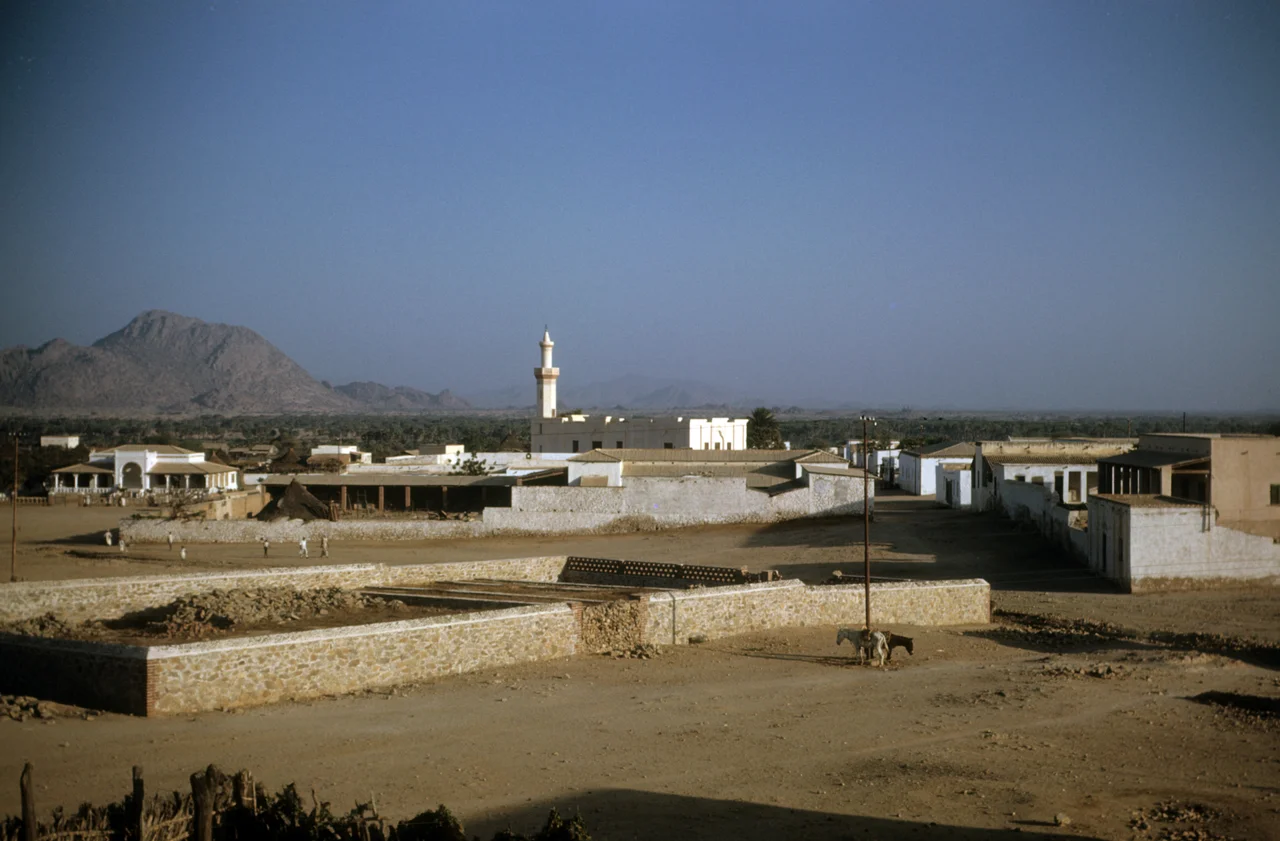
The cover story said telephone relay station. The golf course, the miniature course for children, the bowling lanes, the Roosevelt Theatre with its CinemaScope screen - all of it reinforced the innocuous image. But on a plateau 7,600 feet above the Red Sea, sitting at almost the same longitude as the Soviet deep space command center in Crimea, the Americans at Kagnew Station were listening to Moscow's satellites. The altitude that made skin tingle and lungs work harder made radio signals travel cleanly. For thirty-four years, this patch of Eritrea was one of the most sensitive intelligence sites the United States Army operated anywhere in the world.
Inheritance From a Colonial War
The site began as Radio Marina, an Italian naval radio station serving Mussolini's African empire. When British forces defeated the Italians in Eritrea in 1941, they inherited the facility and kept the old name. The Americans arrived in 1942, invited in through the Lend-Lease program Roosevelt had extended to Ethiopia the year before. A seven-man detachment showed up in 1943 to refurbish the equipment, and the tests went so well the War Department scrambled to expand operations before the Asmara Barracks had even officially opened. Two officers, a warrant officer, and forty-four enlisted men were rushed through training at Vint Hill Farms in Virginia. By December 1943, fifty-four men were working on an arrowhead-shaped tract the Army simply called Tract A. The site did not receive its Ethiopian-bestowed name, Kagnew, until 1953.
A City Within a City
By 1970, 3,200 Americans lived on Kagnew, and the base had become one of the strangest expatriate bubbles in Cold War Africa. The chapel seated 220, with overflow for 150 more. The gymnasium held a regulation basketball court, ten bowling lanes, and a boxing ring. The Dependent School had seventeen classrooms. A combined laundry could process 50,000 pieces a month. Children played a 22,000-dollar miniature golf course while their parents played eighteen holes on the adult course. KANU Radio and KANU TV broadcast American programming. At Kagnew Farms, a banked-dirt oval hosted car races, motorcycle scrambles, and gherry cart races organized by the Afro-American Racing Club. All of this sat on Eritrean soil, staffed and supplied by Eritrean workers whose wages kept Asmara's economy afloat even as many Eritreans resented the presence that paid them.
Stonehouse and the Soviet Sky
The real work happened behind the recreation. In 1964, two enormous radio dishes arrived by ship at Massawa - one 85 feet across, the other 150 feet - and were hauled up the escarpment in sections. They formed the heart of Project Stonehouse, a joint NORAD and Army Security Agency site for what the military publicly called deep space research. Located on nearly the same longitude as the Soviet deep space command center in the Crimea, the Stonehouse antennas tracked telemetry from Russian spacecraft. The CIA, the Army Security Agency, STRATCOM, and Navy Communications all ran operations from Kagnew. The deception was clever: rather than hide the enormous dishes, the Army flaunted them as a telephone relay and space research site. Hidden in plain sight, they were arguably the most valuable signals intelligence antennas America deployed in the 1960s.
An Uneasy Alliance With Empire
The Eritreans watched the Americans come, and they drew their own conclusions. Kagnew sat in a country that Emperor Haile Selassie's Ethiopia had annexed against Eritrean wishes, and the American base was the clearest possible symbol that Washington backed Addis Ababa against Eritrean self-determination. By the late 1960s, Kagnew was a target of nationalist and student protest. The Eritrean Liberation Front would have attacked it if they could, but the base was too well defended. The Eritreans who served meals, tended gardens, and drove supply trucks saw an American lifestyle most of them would never share. Many benefited economically. Many did not forgive. When the Ethiopian revolution toppled Selassie in 1974, the political ground under Kagnew cracked. American personnel began drawing down.
One Week to Leave
The end came quickly. In April 1977, with the revolutionary Derg government tilting toward Moscow, Ethiopia gave the Military Assistance Advisory Group one week to pack and go. The 1953 mutual defense agreement was scrapped. The lease on Kagnew was terminated. On April 29, 1977, the last Americans walked out, leaving behind millions of dollars in equipment in the chaos of a hurried departure. The bowling lanes, the golf course, the dishes that had watched Soviet satellites for over a decade - all of it passed to Ethiopian hands and then, after Eritrean independence in 1991, to the new nation built by the fighters who had once watched the base from the hills. The story of Kagnew Station is not simply an American Cold War outpost. It is also a story about Eritrean labor, Eritrean patience, and a community that waited a long time to see the gates open outward rather than in.
From the Air
Kagnew Station is located at 15.33°N, 38.93°E on a plateau at approximately 7,600 feet / 2,316 meters elevation in Asmara, Eritrea. Best viewed from 12,000-15,000 feet AGL. The Asmara International Airport (HHAS / ASM) lies about 3 km south. Clear weather year-round makes identifying the old base compound on the northwest edge of the city possible - look for the distinctive arrowhead tract and the remains of the Stonehouse dish site. Daytime temperatures are moderate due to altitude despite the low-latitude location.
Nearby Stories
- Arkiko 19 km away
- Southern region (Eritrea) 39 km away
- Northern Red Sea region 43 km away
- Battle of Agordat (1941) 50 km away
- Anseba region 52 km away
- Nokra Naval Base 61 km away
- Eritrean-Ethiopian War 76 km away
- Danakil Depression 139 km away