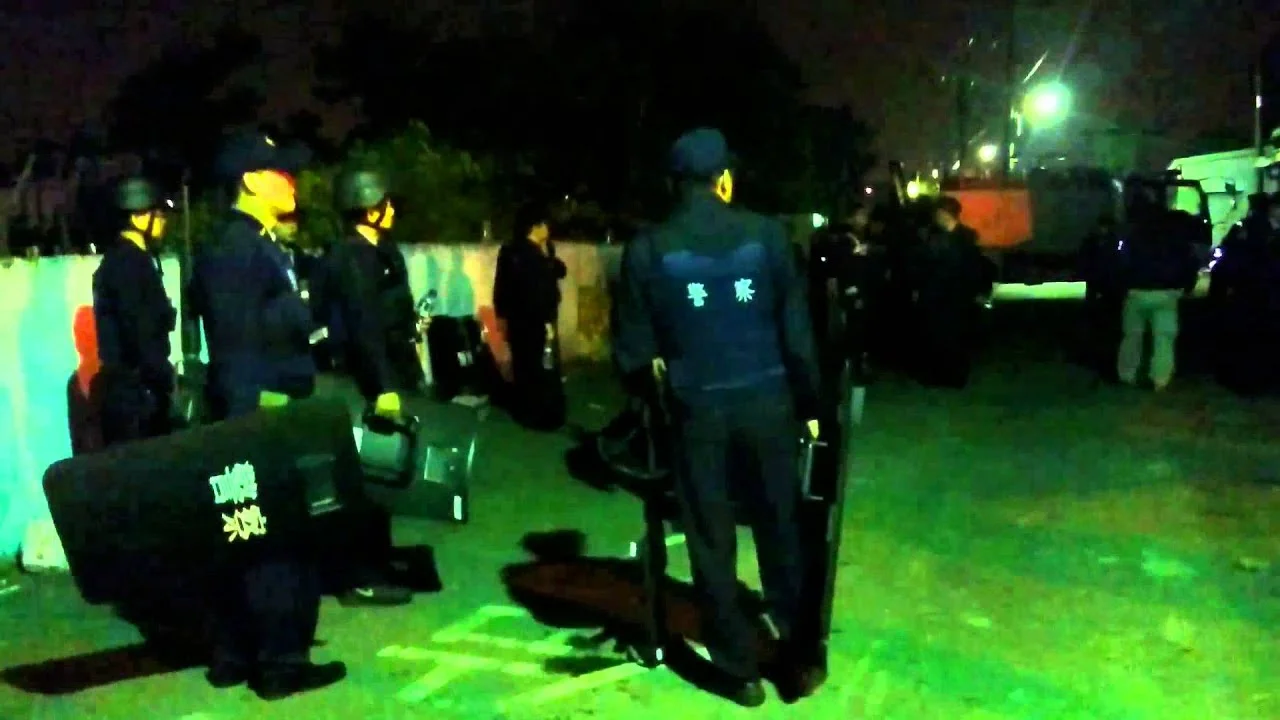

Kaohsiung Prison Riot
It began with a grievance about fairness. On February 11, 2015, six inmates at Kaohsiung Prison broke into the armory, seized assault rifles, and took the warden hostage. Their ringleader was a member of the Bamboo Union, one of Taiwan's most powerful organized crime syndicates. For 14 hours, the standoff transfixed the nation, broadcast live on every major Taiwanese news channel. When it ended, all six men were dead by their own hands. It was the first prison riot with officials held hostage in the history of Taiwan, and the questions it raised about justice, privilege, and desperation did not die with the inmates.
The Grievance That Lit the Fuse
The inmates' stated motivation cut to the heart of a public debate already simmering across Taiwan. Former President Chen Shui-bian, convicted and sentenced to 20 years for money laundering, had been granted medical parole. To many ordinary prisoners serving lengthy sentences for far lesser offenses, the message was clear: justice in Taiwan had two tiers. The six men who took up arms that February night believed they had been denied the same consideration that a former head of state received. Whether their grievance justified their actions is one question. Whether the system that produced their rage was functioning fairly is another -- and it was the second question that haunted Taiwan in the weeks and months that followed.
Fourteen Hours
The crisis unfolded across a single night and into the following morning. Armed with rifles taken from the prison's own stockpile, the six inmates barricaded themselves with the warden and issued demands that were broadcast in fragments through the media. Negotiators engaged but could not persuade the men to surrender. The standoff drew comparisons in the Taiwanese press to a 1988 Seoul prison jailbreak, where an inmate had escaped to protest what he saw as an unjust sentence given to the brother of South Korean president Chun Doo-hwan. Both cases shared a common thread: incarcerated men driven to extreme action by what they perceived as a system rigged in favor of the powerful. As dawn approached on February 12, the inmates released their hostages. Then they turned the guns on themselves.
A System Called to Account
The aftermath exposed institutional failures that compounded the tragedy. Investigators discovered that the head prison warden had been unaware of the hostage crisis for a full 30 minutes after it began. On February 26, the Ministry of Justice announced that 23 prison officials had been reprimanded. The head warden was demoted and given a demerit; his top aides and the head of the Agency of Corrections received demerits as well. By August 2016, the head warden, deputy warden, and head guard had all been removed from their positions and impeached by the Control Yuan, Taiwan's governmental watchdog body. The disciplinary actions acknowledged what the night had made painfully visible: the prison system had been caught unprepared, its oversight mechanisms too slow and too weak to prevent a crisis that cost six lives.
Questions That Remain
The Kaohsiung Prison riot left Taiwan grappling with uncomfortable truths about its criminal justice system. The inmates who died were not sympathetic figures -- they were violent offenders who endangered the lives of prison staff. But their protest touched a nerve precisely because the inequality they identified was real enough for millions of Taiwanese citizens to recognize. The incident prompted renewed debate about sentencing disparities, the criteria for medical parole, and whether Taiwan's prisons were equipped to manage the desperation that builds behind walls. The prison still operates in Kaohsiung's eastern suburbs, a compound that from the air looks like any other institutional facility. Nothing in its architecture hints at the night that briefly made it the most watched building in Taiwan.
From the Air
Located at 22.590N, 120.398E in eastern Kaohsiung. The prison compound is visible as a walled institutional facility. Nearby airports: RCKH (Kaohsiung International Airport, 10 km southwest). Best viewed at 3,000-4,000 ft AGL. The Fengshan District urban area surrounds the site, with the Weiwuying Metropolitan Park visible to the northwest.
Nearby Stories
- Taimali 7.2 km away
- Meinong East Gate Tower 15 km away
- Kunci Temple 20 km away
- Checheng Fu'an Temple 42 km away
- Dongji Island 49 km away
- Orchid Island 69 km away
- South Penghu Marine National Park 77 km away
- Hong Kong 12 549 km away