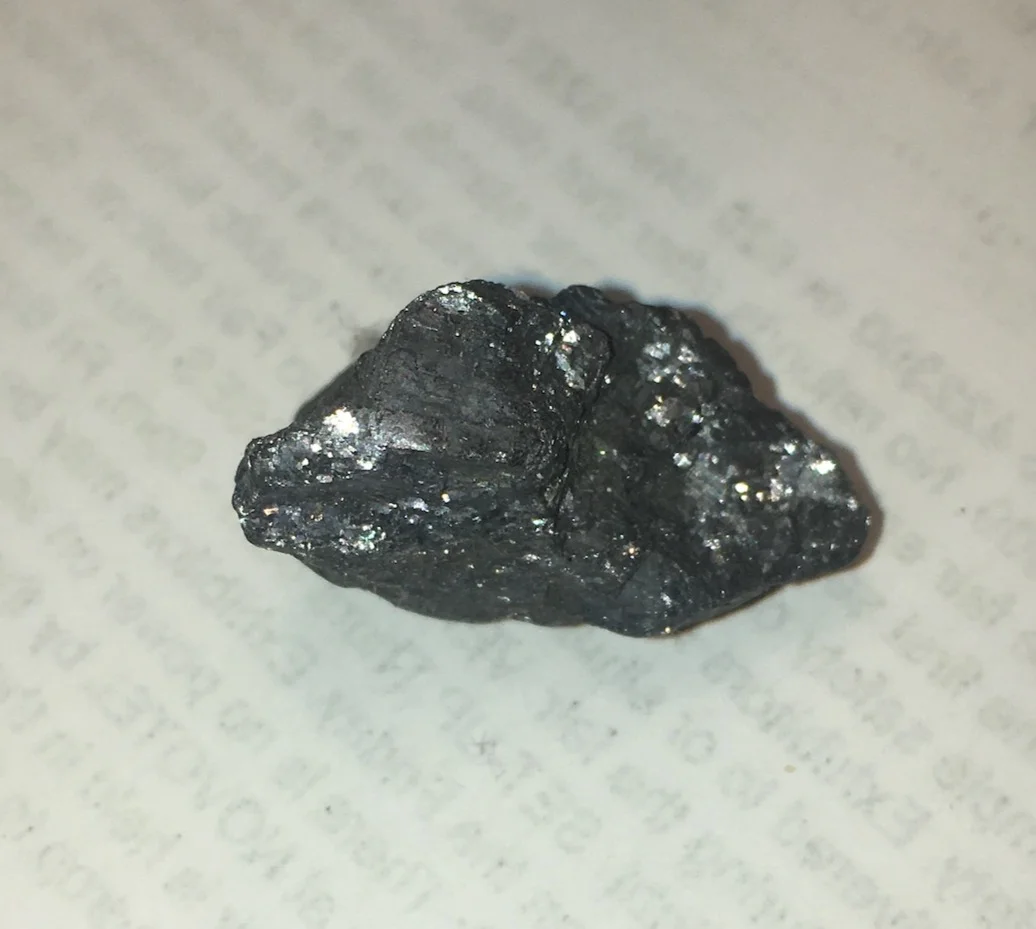

Kelly Mine, Devon
Kelly Mine never produced iron. It produced the wrong kind of iron oxide for that - too flaky, too mica-like, useless for smelting. What the ore was perfect for, it turned out, was paint. Specifically, the kind of corrosion-resistant industrial paint that protected the steel girders, ships, and bridges of the late Victorian era from rusting back into the soil they came from. Demand for that paint kept Kelly Mine working, in fits and starts, from the 1790s to 1951. The miners called the stuff "shiny ore." It came out of the rock glittering like crushed mirrors, and it ended up on the Forth Bridge, the gasworks at Beckton, and a thousand iron lamp-posts you never thought about until the paint began to flake.
What Came Out of the Ground
The ore was micaceous haematite - iron(III) oxide in a flaky, plate-like crystalline form. Useless for making iron. Wonderful as a pigment. The flakes, suspended in oil or resin and brushed onto steel, overlapped each other to create a microscopic barrier that water and oxygen struggled to penetrate. As industrial Britain built its railways, bridges, and ships, the demand for rust-resistant paint exploded, and the Devon mines that produced micaceous haematite found themselves with a niche market that outlasted most other forms of Devon mining. Kelly Mine sat on the eastern flank of Dartmoor, near Lustleigh, working three parallel east-west lodes up to four feet wide. There were nine or ten other mines in the triangle between Bovey Tracey, Moretonhampstead, and Hennock, all working the same shiny ore. Kelly was one of the smaller operations. It never employed more than ten men at a time, and averaged six.
Owners Come and Go
The first recorded mining lease at Kelly dates to the 1790s. Work continued, fitfully, into the early 1870s. In 1877 the mine appears on a national register under the Kelly Iron Company, with W. H. Hooking as manager. The pits reopened in 1879 and produced 324 tons of ore by 1891 - not a fortune, but enough to keep going. From 1892 to 1900 the mine was closed. Then the Scottish Silvoid Company took over, running it from 1900 to 1917, when Ferrubron - who also operated the larger Great Rock Mine nearby - bought them out. Ferrubron worked the mine until 1946. For a year or two from 1950 the Pepperdon Mine company used Kelly's washing plant to process ore from a new level cut nearby, and then mining ceased completely in 1951. The site has not been worked commercially since.
George William Druett
On 8 June 1910, a 28-year-old miner named George William Druett was killed at Kelly Mine. A wire rope snapped while a cage carrying 560 pounds of ore was being raised. The cage fell 180 feet down the shaft and struck Druett, killing him instantly. The inquest in Lustleigh heard that the rope had not been subject to any regular inspection, and that there were no rules at the mine - none at all - about workers being beneath ascending cages. The jury returned accidental death and recommended that the safety rules already enforced in coal mines should be extended to mines like Kelly. The Scottish Silvoid Company agreed to install a fence and require workers to stand clear. Druett had been the leader of the local Rechabite chapter - a temperance society - and was buried in the village. Three years later another miner, John Johns, died after what was reported as pneumonia. Later authorities think it was silicosis from breathing rock dust. The mine kept working. The dead were named in the local paper. Their families stayed in Lustleigh.
Devonshire Sand and Writing Ink
The shiny ore had another use that has now mostly disappeared from memory. It was marketed from Kelly Mine as "Devonshire Sand" and sold as writing sand - the powder you sprinkled on freshly inked paper to blot it dry before envelopes and blotters became standard. Generations of clerks and correspondents used Kelly's haematite to dry their ink. The grains glittered as you brushed them off the paper, leaving behind a faintly sparkling residue that some users found pleasing and others found a nuisance. The product is now obsolete. Micaceous haematite paint is still produced, but the ore now comes from mines abroad.
The Preservation Society
In 1984 the owner agreed to lease the site to a group of mining enthusiasts who have organised themselves as the Kelly Mine Preservation Society. They have restored the buildings, refurbished the machinery, and brought the processing plant back to working order. The site occasionally opens for tours. What you see is one of the most complete surviving Devon metal mines, preserved not as a polished museum but as a working artefact - the same workshops, the same waterwheel, the same processing tables that George William Druett would have known when he came down the lane to work on the morning of 8 June 1910. The shiny ore is still in the ground. The mine, in a small way, lives on.
From the Air
Kelly Mine sits at 50.6229 N, 3.70371 W, on the eastern flank of Dartmoor near Lustleigh in Devon. View from 1,500 to 2,500 feet for a sense of the wooded Wray Valley setting; the site itself is small. Nearest airport is Exeter (EGTE), about 12 nautical miles north-east. The mine is tucked between the village of Lustleigh and the A382 road. The setting is steeply wooded, so the workings can be hard to spot from altitude. Look instead for Lustleigh village - the obvious cluster of stone cottages around a church tower - and Kelly Mine lies just south on the Kelly Farm estate.
Nearby Stories
- Torcross 2.8 km away
- Cotehele 4.6 km away
- HMS Formidable (1898) 9.1 km away
- Holsworthy 9.4 km away
- Eddystone Lighthouse 11 km away
- Tiverton Castle 18 km away
- 1890 Norton Fitzwarren Rail Crash 24 km away
- Lyme Bay Canoeing Disaster 26 km away