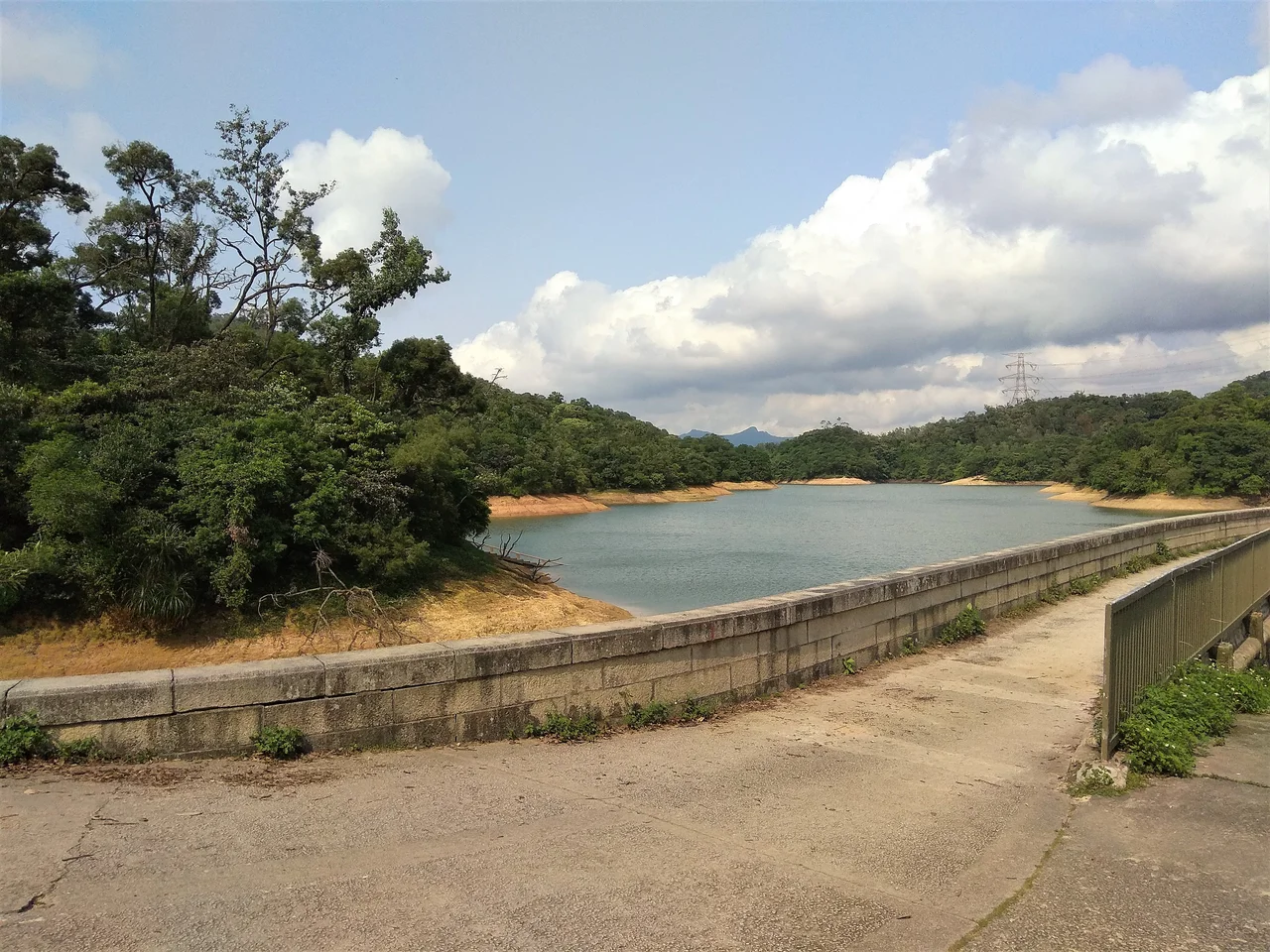

Kowloon Reservoir
Somewhere between Beacon Hill and Needle Hill, British engineers in 1901 found what they had been looking for: two valleys that could hold water. The New Territories had just passed into British administration, and within days of the handover in 1898, the Public Works Department had dispatched survey teams into the hills. What those teams found, tucked inside what is now Kam Shan Country Park, became the first reservoir in the New Territories — a piece of infrastructure so ordinary-seeming that it is easy to forget how profoundly it changed daily life for everyone living below those hills.
Water Before the Dam
For the communities around Kowloon in the late nineteenth century, water meant wells. Households drew from them, markets depended on them, and the Yau Ma Tei Pumping Station existed largely to manage what wells could not. When the Convention for the Extension of Hong Kong Territory transferred the New Territories to Britain in 1898, the colonial government inherited not just land but the challenge of supplying a growing urban population. Engineers immediately identified the problem: Hong Kong's density was climbing, its existing water infrastructure was inadequate, and the hills of the New Territories offered something valuable — catchment area. The valleys west of Beacon Hill and south of Needle Hill were surveyed and found suitable. Within three years, construction had begun.
Nine Years in the Hills
Construction commenced in 1901 and finished in 1910, giving the reservoir nine years of building in terrain that was neither flat nor forgiving. When it was complete, the Kowloon Reservoir held 353 million gallons and had cost $619,000 to build — a substantial investment for the era. The site sits within what is now Kam Shan Country Park, where the forested hills of Sha Tin District provide a quiet backdrop that makes it easy to imagine the engineering labor required to shape those valleys into something that could hold a city's water. Stone dams, catchment channels, and a filtration plant transformed the natural drainage of the hillside into a controlled system.
Expansion and a Daily Promise
By 1922, demand had grown enough to justify expansion. The project aimed to enlarge the filtration plant to achieve a daily output of 3.58 million gallons and to extend the catchment area further into the surrounding hills. After that expansion was complete, the reservoir delivered 1.5 million gallons of water to local residents daily — a number that sounds modest by modern standards but represented a genuine transformation in how people lived. Clean, reliable water piped from a reservoir meant something different from hauling buckets from a well. It meant the Yau Ma Tei Pumping Station gradually declined in importance, its function made redundant by a system built in the hills above.
A Reservoir in a Country Park
Today the Kowloon Reservoir sits inside Kam Shan Country Park, its functional role diminished by decades of growth in Hong Kong's water infrastructure, including the massive Plover Cove and High Island reservoirs built in the 1960s and 1970s. What remains is a reservoir that is also a landscape — the still water reflecting the wooded slopes, macaque monkeys moving through the trees on the hillsides above, and hiking trails crossing the dams that were built more than a century ago. The Kowloon Group of Reservoirs, of which this is the oldest member, sits quietly in the hills as the city it once supplied has grown in every other direction around it.
From the Air
The Kowloon Reservoir sits at approximately 22.354°N, 114.155°E, within Kam Shan Country Park in Sha Tin District. From the air, it appears as a still body of water set against densely forested hills, clearly distinct from the urban development surrounding the park. Flying in from the south, Hong Kong International Airport (VHHH) is about 20 km to the west on Lantau Island. The reservoir is best viewed at 2,000–4,000 feet, where the contrast between the forested hillside catchment and the surrounding urban grid of Kowloon becomes apparent. Lion Rock, at 495 meters, is visible to the southeast. Beacon Hill (457 m) rises directly to the west of the reservoir.
Nearby Stories
- Chapel of St. Francis Xavier 3.5 km away
- Cuiheng 4.1 km away
- 2015 Shenzhen Landslide 16 km away
- Shunde 31 km away
- Wanshan Archipelago 37 km away
- Nanxiong Formation 96 km away
- Heyuan 149 km away
- Checheng Fu'an Temple 629 km away