
Krupp Decoy Site
Imagine a steel plant the size of a small town, except none of the buildings have insides. Shed roofs over nothing. A gasometer that holds no gas. Chimneys with no boilers underneath. A railway with no trains. And then at night, on the orders of a single officer in a concrete bunker on the Rottberg-Hills in Velbert, the whole non-existent plant lights up - blackout lamps glowing through cracked shutters as if someone forgot the regulations, scattered fires burning rags and tar, the whole illuminated theater of a real Krupp works failing at blackout discipline. From 20,000 feet, with cloud underneath and a navigator under stress, that is exactly what real industry looked like.
The Krupp Problem
The Krupp steelworks in Essen produced the steel that produced the German war machine - tanks, artillery, U-boat hulls, locomotives. Royal Air Force Bomber Command identified Essen as a top-priority target early in the Second World War, and the bombers came almost every clear night. The problem for Germany was that Essen was unmistakable: dense, industrial, surrounded by other unmistakable industrial cities. The problem for Britain was that RAF crews were flying at night, by dead reckoning and patchy radio navigation, often through cloud, trying to identify a specific factory complex within a city already smothered in haze and smoke. Wherever the bombers thought the Krupp works was, that was where the bombs went. So in 1941 the Luftwaffe high command tried something improbable. They built another one.
Building a Lie
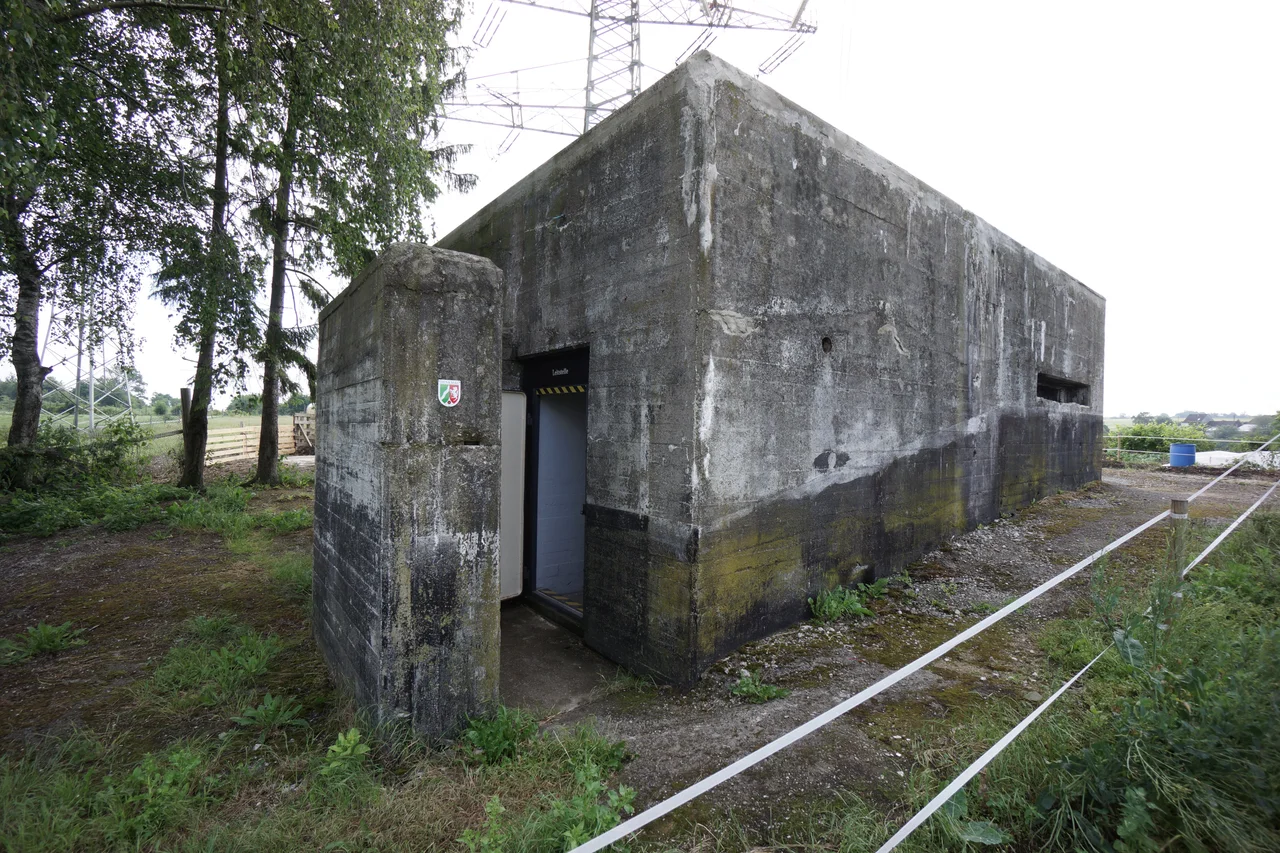
The decoy site - the *Kruppsche Nachtscheinanlage*, the Krupp night decoy installation - went up on the Rottberg-Hills near Velbert, 10 kilometers south of the real factory. It covered roughly 1.5 by 2.5 kilometers, the same footprint as the actual works. The construction was deliberately crude. Shed roofs framed in timber and tar paper, no walls underneath. A wooden gasometer skeleton. Painted chimneys. A short stretch of railway track that led nowhere. From the ground it would have fooled no one. From a bomber at five kilometers altitude, on a cloudy night, with the only reference points being lights and fires, it was indistinguishable from a real industrial complex experiencing a bad blackout. A concrete control bunker on a nearby rise housed the operators, who triggered the light arrays and set the controlled fires based on incoming air-raid alerts.
Sixty-Four Percent
It worked. For two and a half years, until 1943, RAF Bomber Command did not realize the decoy existed. During that period, by the British air ministry's own postwar analysis, the bombers dropped 64 percent of all high-explosive ordnance and 75 percent of all incendiaries intended for Krupp Essen onto an empty patch of Rottberg forest. Three-quarters of the firebombs that should have ignited steel mills instead ignited beech trees and bracken. The actual Krupp works continued to produce - damaged, certainly, but at nothing close to the rate the British bombing campaign had assumed. When the RAF finally identified the trick in 1943, after sustained photo reconnaissance and growing suspicion that bombs were not striking what crews thought they were striking, real raids on Essen intensified. By then the strategic situation had changed and the Allies were preparing for an invasion that no decoy could distract.
A Bunker on Private Land
What remains today is the control bunker - a single concrete box, low and gray, partly buried in a hillside in Velbert. The rest of the decoy - the fake shed roofs, the wooden gasometer, the dummy chimneys - was all temporary by design, and the war scoured the site bare. The bunker survived because concrete survives. For most of seven decades it sat unremarked on private property, known to a handful of local historians. Then in the early 2010s, volunteers from the Landschaftsverband Rheinland's archaeological monument office surveyed and documented the bunker, traced its function, and successfully argued for protection. In 2013 it was listed as a historical monument. Visits are now offered on the European Heritage Days, on Long Night of Museums weekends, and on occasional guided walks. There is no permanent museum yet - a community-interest group is working toward one.
What Decoys Teach
Military deception in the air war was not unique to Germany. The British built Starfish sites - decoy fires lit on the outskirts of cities to draw the Luftwaffe away from urban targets. The Americans painted inflatable rubber tanks for the D-Day deception campaign. But the *Nachtscheinanlage* in Velbert is one of the few decoy installations of its scale that left a physical trace. Standing in front of the bunker today, you are looking at the operations center of an architectural lie that diverted three-quarters of the incendiaries aimed at one of the most important industrial targets of the Second World War. The trees around it grew back. The fields look ordinary. The strangeness is entirely in knowing what happened in the dark above this hill - night after night for two years, real bombs falling on a fake factory while the real factory kept working.
From the Air
Located at 51.36 N, 7.07 E, on the Rottberg-Hills above Velbert, roughly 10 km south of the actual Krupp works in Essen. Elevation around 240 meters - the highest ground in the immediate area, which is why it worked: from a bomber's perspective, it looked like the lit-up sprawl of an industrial city below. Today the site is forested and largely unmarked from the air. The control bunker is the only built feature; you will not see it from altitude. The visual story is invisible - the absence of any built structure across roughly 1.5 by 2.5 km of restored forest is the monument. Nearest major airport: Duesseldorf (EDDL), 25 km southwest.
Nearby Stories
- Burg Castle (Solingen) 4.1 km away
- Düren-Neuss railway 9.6 km away
- Operation Chastise 9.7 km away
- Krefeld Zoo 10 km away
- Festspiele Balver Höhle 13 km away
- Lembeck Castle 16 km away
- Haldern Pop 18 km away
- Warendorf 35 km away