
Operation Chastise
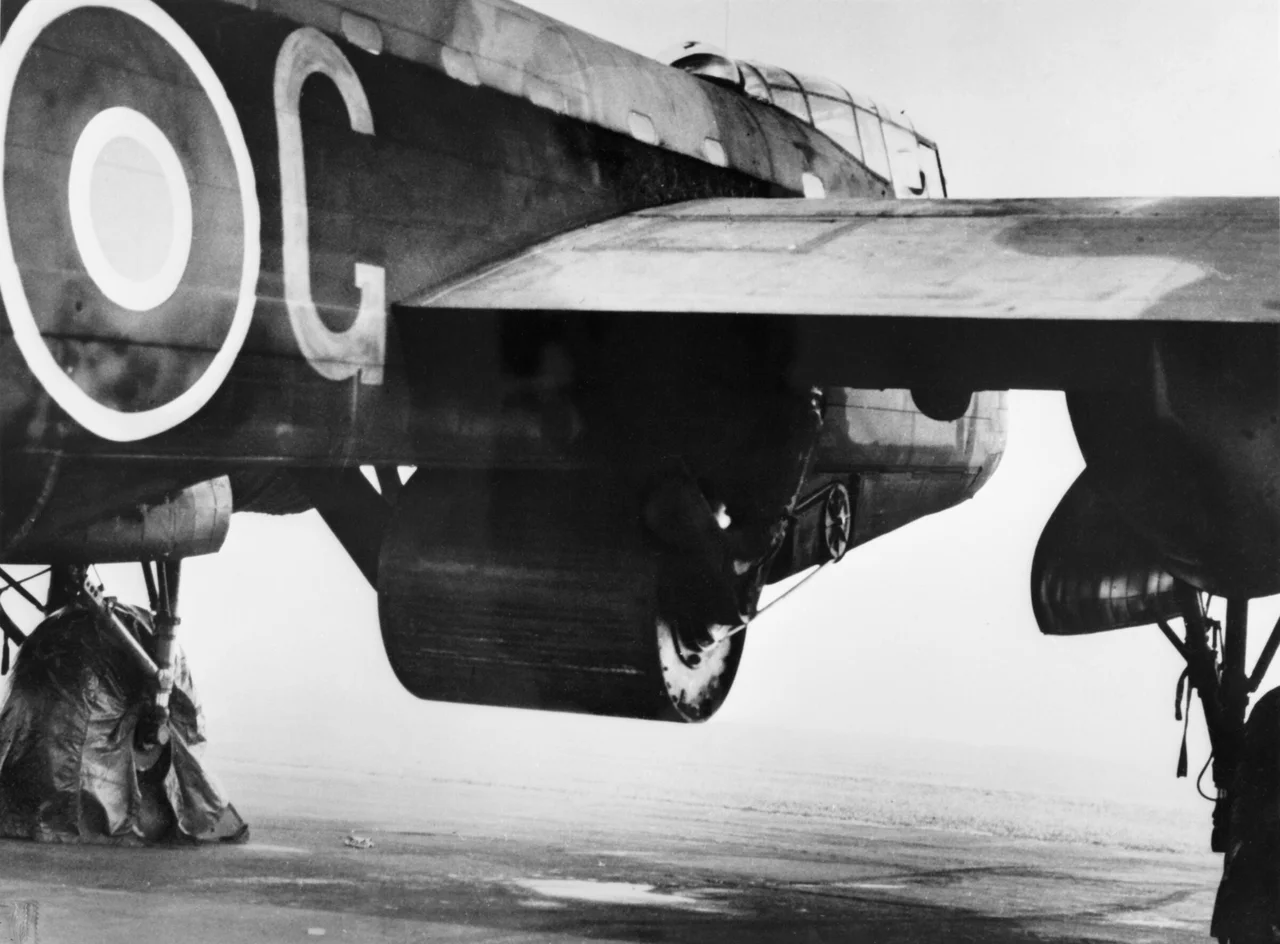
Around 22:00 on the night of 16 May 1943, the first Avro Lancasters of 617 Squadron lifted off from RAF Scampton near Lincoln, each carrying a cylindrical mine that had been forced to spin at 500 rpm under its belly. By dawn the next morning, the Mohne and Eder dams in the German Ruhr region would lie breached, a wall of water would have rolled through valleys downstream, and about 1,650 people would be dead. Of those, fifty-three were RAF aircrew. Roughly six hundred were German civilians. About one thousand were enslaved laborers, mostly Soviet women, locked into a camp at Neheim where they could not run. This is the story of Operation Chastise, the Dambusters Raid, and it has to be told for everyone who died in it.
Barnes Wallis and the Mine That Skipped
The bomb was the work of Barnes Wallis, an assistant chief designer at Vickers who had already shaped the Wellesley and Wellington bombers. The Mohne and Sorpe dams were ringed by torpedo nets that would stop any underwater weapon, and Wallis knew an explosion against the dam wall under the water was the only way a small charge could breach a dam. His solution, code-named Upkeep, was a cylindrical mine the size of a depth charge. Given a backspin of 500 rpm and dropped from precise speed and height, it would skip across the surface of the reservoir, vault the torpedo nets, hit the dam wall, and roll down its face before exploding at depth. Wallis tested the idea at the disused Nant-y-Gro dam in Wales in July 1942 and watched it work. Air Chief Marshal Charles Portal had to overrule Sir Arthur Harris, head of Bomber Command, to free thirty Lancasters for the project. With eight weeks to go before the May 1943 attack window, the bomb was not yet built and the aircraft were not yet modified.
The Crews
The new squadron was thrown together so fast it outran the RAF's own naming rules and went by Squadron X for weeks before being called 617 Squadron. Wing Commander Guy Gibson was 24 years old and had already flown more than 170 bombing and night-fighter sorties. Around him he gathered 21 crews drawn from across the British Empire and Commonwealth: Australians, Canadians, New Zealanders, an American flying with the RCAF named Joe McCarthy, a young Australian known to everyone as Micky Martin. They trained for weeks at reservoirs in the Peak District, Rutland, and Chesil Beach, flying Lancasters at 100 feet over water in the dark. Two crossed spotlights mounted under each aircraft were rigged to converge on the water at exactly 60 feet altitude. To find the release point, some crews used a wooden sight with two prongs that matched the towers of the Mohne and Eder dams; others used a length of string. It was the most precise low-altitude bombing the RAF had ever attempted.
The Run In
Nineteen aircraft took off in three waves on the evening of 16 May. They flew at about 100 feet to slip under German radar. Flight Sergeant George Chalmers, riding as radio operator in O for Orange, looked through the astrodome and saw treetops above his pilot, who was threading the bomber along a forest firebreak below the canopy. Losses began before the targets did. Munro's aircraft was crippled by flak over the IJsselmeer. Rice flew too low and clipped the sea, tearing his bomb off in the spray. Astell hit high-voltage cables near the German hamlet of Marbeck and crashed in a field. Burpee was shot down by flak around the Gilze-Rijen airfield. Each aircraft carried seven men. Each loss was seven names, with mothers and wives and brothers who would learn the next morning.
The Wall Gives Way
At the Mohne, Gibson made the first run himself. The bomb skipped clean, hit the wall, and rolled down to detonate at depth, but the wall held. Hopgood went in next and was shot down on the run, his bomb overshooting and detonating on a power station. Martin's bomb missed. Then Young's bomb breached the dam, and Maltby's confirmed it. As the Mohne wall collapsed, a wall of water perhaps eight meters high rolled down into the Ruhr valley below. Gibson took the remaining bombers on to the Eder, a difficult valley approach with no flak but treacherous terrain. Shannon, Maudslay, and Knight all attacked; Knight's bomb breached it. At the Sorpe, an earthen dam less vulnerable to the technique, McCarthy made nine practice runs before bomb-aimer George Johnson was satisfied with the tenth. The bomb cracked the crest but did not breach the dam. Eight Lancasters were lost. Of 133 men who flew the mission, 53 were killed and three were captured.
The Valley at Night
Downstream of the Mohne was Neheim, a working town in the Ruhr industrial region. Just south of Neheim, at the labor camp known sometimes as Bremketal or Lager Neheim, the SS held between one thousand and 1,200 enslaved workers, the great majority of them young Soviet women, most of them Ukrainian, brought by force from villages near Kharkiv and Kyiv to work in German factories. They had been deported to be unpaid labor. They lived in wooden barracks at the bottom of a valley between the dam and the town. When the water came they could not climb out. The barracks washed away. Estimates suggest at least 700 of those women, and perhaps more, drowned in the dark. They had names. They had families in Soviet villages who never learned exactly when or how their daughters died. They were targeted by no one, but they were killed because they had been imprisoned exactly where the planners chose to flood. Of the roughly 1,650 people killed by Operation Chastise, about 1,000 were enslaved laborers, the largest single victim group of the raid. Around 600 German civilians also died, many of them in the Eder valley villages below the second dam. The raid is rightly remembered for the skill and courage of its aircrew. It must also be remembered for them: the women in the camp at Neheim, killed because they had no door.
After the Water
Two hydroelectric power stations were destroyed, several more damaged. Factories and mines along the Ruhr were hit. The Germans, drawing on enslaved labor on a much larger scale, repaired the dams within months. Production did not return to normal until September. Bomber Harris, who had opposed the raid, later argued it had achieved little militarily. Other historians disagree, pointing to the diversion of German resources from other defenses. The Lancasters that flew home landed at Scampton between 03:11 and 06:15 on the morning of 17 May. Gibson received the Victoria Cross. He was killed in 1944 over the Netherlands while directing a bombing raid in a Mosquito, age 26. Johnny Johnson, the bomb-aimer over the Sorpe, lived to be 101 and died in 2022, the last of the Dambusters. The dams have been rebuilt. The reservoirs are again full of clear water. At Neheim there is a memorial. The names of the women who drowned there are mostly written in Cyrillic, mostly recovered late, and still being recovered.
From the Air
The Mohne Dam is at 51.4905°N, 8.0533°E in the Sauerland; the Eder Dam at 51.1828°N, 9.0419°E in northern Hesse; the Sorpe Dam at 51.3514°N, 7.9831°E. The article's coordinates (51.09°N, 7.84°E) sit between the three. Cruise the Mohne reservoir corridor at 3,000 to 4,000 ft for the best perspective of the reservoir geometry, including the dam wall and the village of Gunne behind it. Look downstream toward Neheim for the path the floodwave took. Nearest airports: Paderborn-Lippstadt (EDLP) about 50 km northeast, Dortmund (EDLW) about 60 km west. The terrain is hilly, the reservoirs are dark blue, and the dam walls are visibly straight man-made arcs.
Nearby Stories
- Festspiele Balver Höhle 2.9 km away
- Schloss Allner 6.1 km away
- Eschbach Dam 15 km away
- Marienstatt Abbey 15 km away
- Ruhr University Bochum 15 km away
- Eresburg 32 km away
- Marburg 36 km away
- Observation Post Alpha 106 km away