
Land's End Disaster
They had called the game 'dodge the spray.' Eleven children between the ages of 10 and 12 had scrambled down a path on the cliffs at Land's End on the afternoon of 6 May 1985, found a platform of rocks ten or fifteen feet above the sea, and stood there for about half an hour daring the swell to reach them. Above them, on the famous signpost at the headland, the rest of their school party was queuing for a group photograph. The Atlantic that day was uncomplicated. A wave came in larger than the ones before it. Six children climbed clear. Five did not. The Land's End disaster, as it came to be called, killed four primary school pupils and rewrote the rules of every school trip in Britain.
The Children
Their names should be said. James Holloway was 11. Ricky Lamden was 11. Robert Ankers was 12. Nicholas Hurst was 10, and he had been swept away after trying to rescue the others. Heather Price, who was 12, was washed into a cleft in the rock face and pinned there long enough for a parent to reach down and pull her up onto a higher ledge; both of them were eventually winched to the clifftop by helicopter. The four other children were never recovered alive. A Royal Navy helicopter joined a minesweeper, two lifeboats and a fishing boat in the search through the afternoon and into the evening. Only two bodies, those of James Holloway and Robert Ankers, were ever found. The seven surviving children were taken to West Cornwall Hospital in Penzance, treated for cold and shock; Heather Price was kept in with head injuries and hypothermia.
Stoke Poges
The children were pupils at Stoke Poges County Middle School in Buckinghamshire, a hundred-odd miles from the Cornish coast, on a week-long adventure holiday based at the Duporth Holiday Village near St Austell. Fifty-one of them had come for the week. The Land's End visit was one of the lighter days of the trip, a stop at the famous signpost to be photographed. Three teachers and two parents were responsible for the group. According to Heather Price, none of those five adults was on the rocks with the eleven children who had wandered below the cliffs. They were at the top of the headland, near the signpost, organising the photograph. The headteacher, Alec Askew, was on the trip. He said later that he had not thought the children were in immediate danger, but had sent another pupil down to call them back when he realised they were there.
The Inquest
Parents asked the obvious questions almost immediately. Why were children that age allowed onto rocks usually frequented only by experienced climbers? Where were the adults? Why had nobody warned them, given them safety briefings, kept them off paths that had no railings? At the inquest, Askew and a teacher named Robert Harrington both denied negligence. Harrington stated he had not been aware of the cliff path at all and had not seen any child go down it. Askew insisted the party had been given no warning of the dangers because there were no warning notices in place, which was true and was about to become a problem in itself. On 19 July 1985, after considering the evidence, the jury returned a verdict of death by misadventure. The affected parents called the verdict 'disappointing' and demanded that the school dismiss Askew. He resigned in the days that followed, citing the press attention.
The Inquiry and the Boat
Buckinghamshire County Council opened a private inquiry on 4 September 1985. It ran for six days. The 64-page report, published on 11 November, reached harder conclusions than the inquest had: Askew's planning and preparation had been 'inadequate and, in a number of ways, seriously unsatisfactory'; he had 'failed to organise sufficient supervision and failed to act when he saw the children in danger.' Harrington resigned in light of the findings. The report made 22 specific proposals for the future organisation of school trips, recommendations that fed directly into the Department of Education and Science's new national guidance, Safety in Outdoor Education, and into the policies of the National Association of Head Teachers. During 1985, six warning noticeboards were installed at Land's End itself. The Royal National Lifeboat Institution accepted a £100,000 contribution from the four families and the people of Stoke Poges towards a new Mersey-class lifeboat for Sennen Cove station, just north of the disaster site. They named her The Four Boys, and on 22 April 1992 Prince Edward, Duke of Kent, dedicated her in memory of James, Ricky, Robert and Nicholas.
From the Air
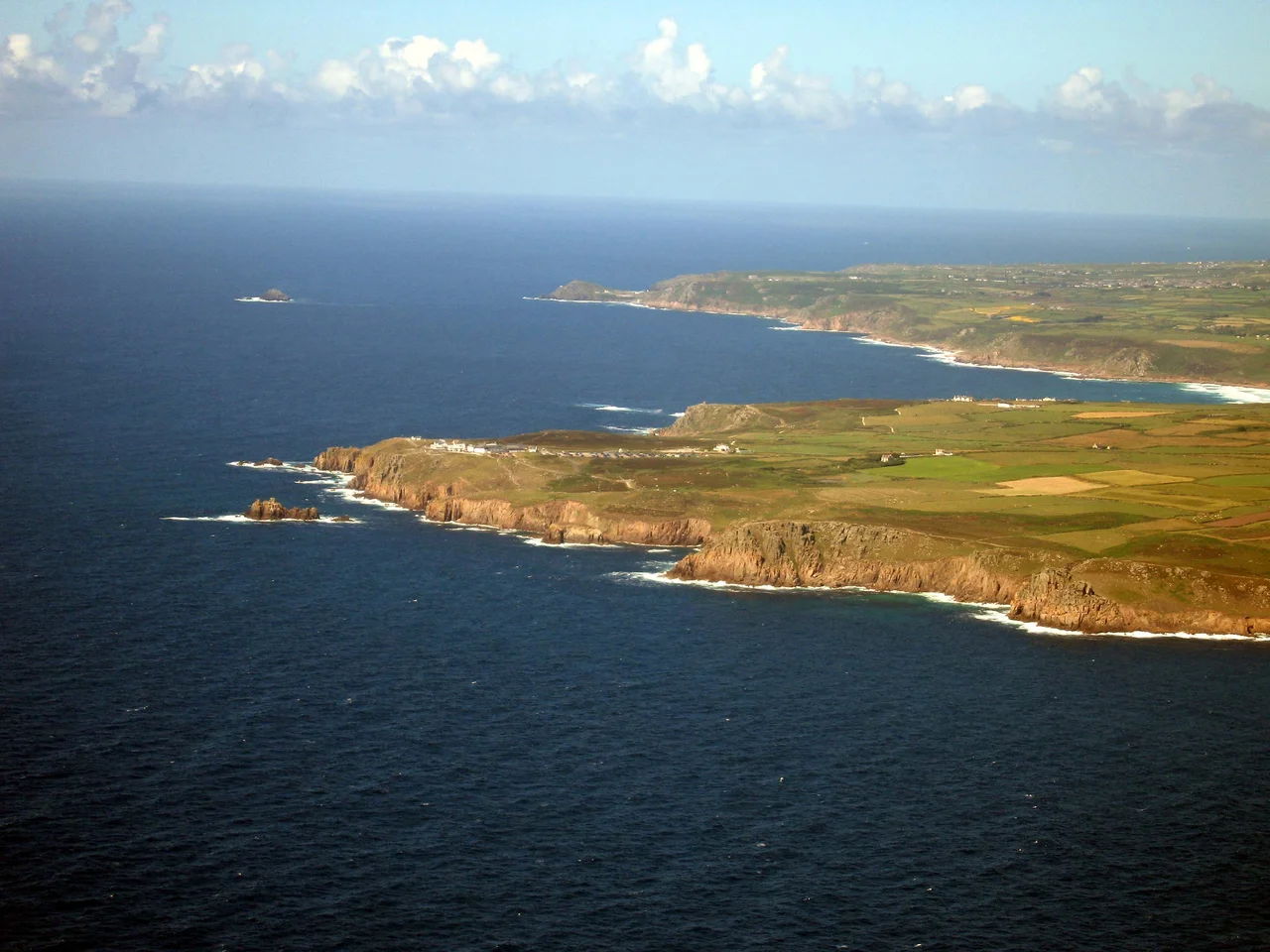
The disaster occurred at the cliffs immediately adjacent to the Land's End tourist complex at approximately 50.07 degrees north, 5.72 degrees west, on the Penwith peninsula. The location is the western tip of mainland England, about 8 miles west-southwest of Penzance. Land's End Airport (EGHC) at St Just lies 3 nautical miles to the north and offers the closest landing strip; Newquay (EGHQ) is the nearest commercial airport. From the air the famous signpost and tourist complex are unmistakable, and the Longships Lighthouse a mile offshore is the most prominent navigation aid. Sennen Cove, home of the lifeboat station, sits 1 mile to the north. Expect strong Atlantic swell year-round and frequent sea fog rolling onto the cliffs.
Nearby Stories
- Mullion Cove 1.3 km away
- Great Wheal Charlotte 3.7 km away
- Castle Down 5.3 km away
- SS Georgia (1890) 30 km away
- Wheal Coates 41 km away
- 1979 Fastnet Race 55 km away
- HMS Affray 126 km away
- Routes of Santiago de Compostela: Camino Frances and Routes of Northern Spain 713 km away