
Lembata: Where Volcanoes Meet the Whale Road
The boats are called tena, and they are built entirely by hand. Ropes braided from palm fiber, sails stitched from giant leaves, hulls shaped without power tools. When the men of Lamalera paddle out into the Savu Sea to hunt sperm whales, they carry harpoons and little else -- no motors, no guns, no GPS. This tradition has persisted on Lembata's south coast for at least six hundred years. It is one of many reasons this volcanic island in eastern Indonesia feels like a place where time moves at its own pace.
An Island Ringed by Fire and Water
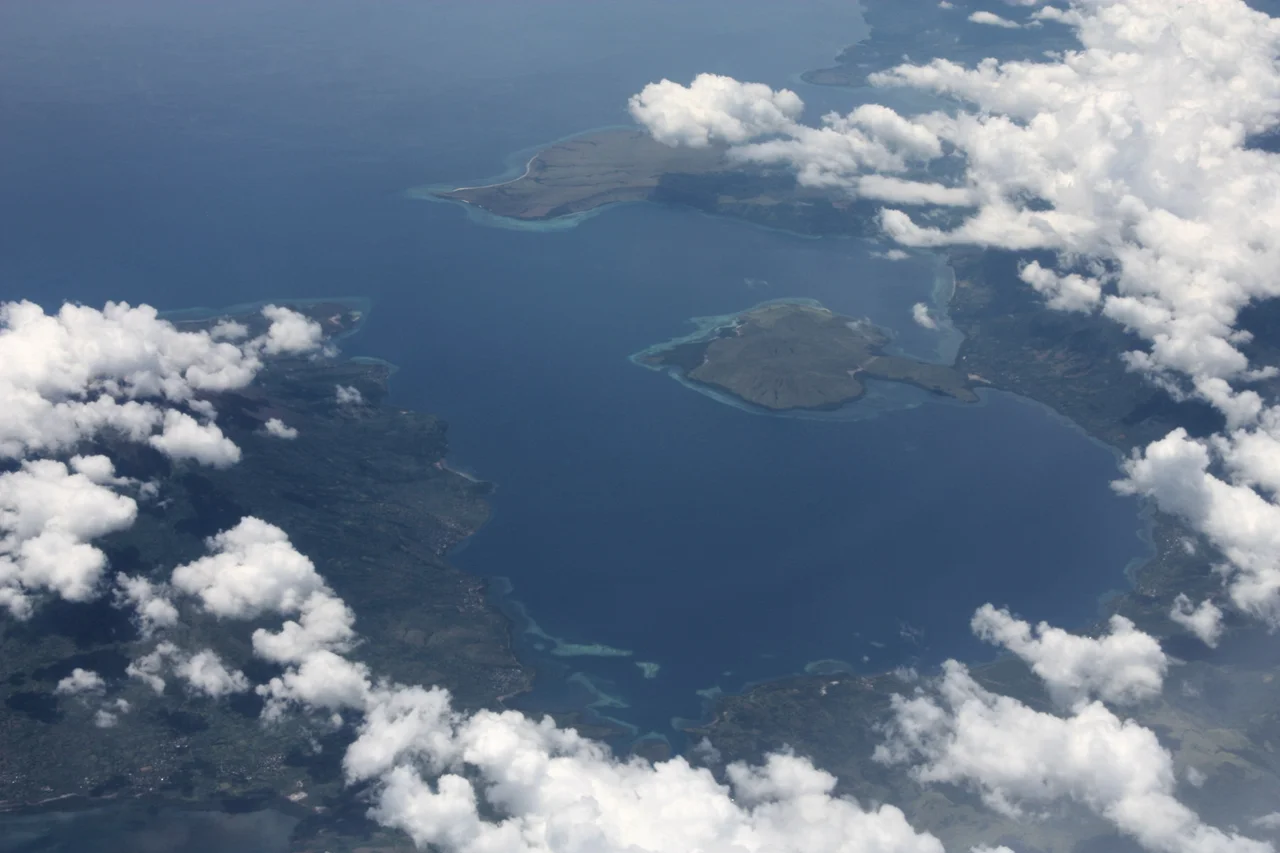
Lembata is the largest island in the Solor Archipelago, stretching roughly 80 kilometers from southwest to northeast and 30 kilometers across. Three active volcanoes define its skyline: Ililabalekan, Iliwerung, and Lewotolo, the last of which occupies a dramatic peninsula jutting into the Flores Sea from the island's north coast. The highest point, Mount Ile Labalekang, reaches 1,621 meters. The coastline is wildly irregular, carved into deep bays and sharp promontories that make the island look, from the air, like a piece of crumpled paper tossed into the sea. To the west across narrow straits lie the islands of Solor and Adonara, then the larger mass of Flores. To the east, the Alor Strait opens toward the Alor Archipelago. South across the Savu Sea sits Timor, and north the Banda Sea stretches toward Sulawesi.
The Whale Hunters of Lamalera
On Lembata's southern coast, the village of Lamalera -- population roughly 2,500 -- maintains what may be the world's last fully traditional whale hunt. Around twenty working tena line the beach, each carrying about a dozen men. When a sperm whale is sighted, the harpooner leaps from the prow of the boat onto the animal's back to drive the blade home -- a technique unchanged across centuries. The village takes around twenty whales per year, a subsistence catch regulated under International Whaling Commission rules governing aboriginal whaling. Conservationists have raised concerns that engine-powered boats are sometimes used year-round to catch protected species including manta rays, orcas, and oceanic sharks. Together with Lamakera on neighboring Solor, Lamalera represents the last of Indonesia's whaling communities. The whale meat is never sold commercially; it is divided among families and bartered with inland villages for vegetables and other goods the coast cannot produce.
Threads Dyed by Tradition
Away from the coast, Lembata is known for something quieter but equally remarkable: its ikat weavings. The technique involves tying off sections of thread before dyeing, creating intricate patterns that emerge only when the fabric is woven. On Lembata, these textiles are more than decoration. Most are created as bridewealth -- pieces exchanged at marriage that carry social and spiritual meaning. The process requires handspun cotton thread and natural dyes drawn from local plants, and a single cloth can take months to complete. The weavers also craft artifacts from whale bones left over from the hunt, binding Lamalera's maritime life to its textile traditions in a material loop. Lembata's ikat is recognized across Indonesia as among the finest, a distinction the island's weavers maintain despite the availability of cheaper, machine-made alternatives.
A Babel of Tongues
Lembata is linguistically dense even by Indonesian standards. The national language coexists with a constellation of local tongues, the most widespread being Lamaholot, a lingua franca spoken across the Solor Archipelago and eastern Flores by 150,000 or more people. But Lamaholot itself fractures into ten or more sublanguages and countless dialects. In the Atadei district, Eastern and Western Atadei are distinct enough to qualify as separate languages. On the island's eastern end, the Kedang people speak what they call "the language of the mountain" -- tutuq-nanang wéla -- a tongue so different from Lamaholot that mutual intelligibility is limited. This linguistic diversity mirrors Lembata's geography: the volcanoes and deep bays that segment the island also isolated its communities long enough for their languages to diverge.
Rare Waters
The seas around Lembata hold surprises that science is still cataloging. In 2011, the Indonesian Institute of Sciences discovered two rare coral reef fish in the waters off Lamalera: the yellow-fin fairy wrasse and the swallowtail hawkfish, species found only in Indonesian and Philippine waters. In 2016, researchers described a new species entirely -- the flasher wrasse Paracheilinus alfiani, identified from a specimen collected on Lembata's reefs. These discoveries suggest the island's marine environment remains healthier than many in the region, though traces of blast fishing have been found on some coral formations. Lembata sits at a biogeographic crossroads where the Indian and Pacific Oceans exchange species, making its reefs disproportionately important to marine biodiversity -- and disproportionately vulnerable to the pressures that accompany even modest development.
From the Air
Located at 8.40S, 123.53E. Lembata is served by Wunopito Airport (LWE/WATW) near the capital Lewoleba on the island's western coast. From altitude, the island is unmistakable: an elongated volcanic mass with the distinctive Ile Ape peninsula extending northward into the Flores Sea, topped by the cone of Lewotolo volcano. The three volcanic peaks are prominent visual landmarks. The deep Savu Sea to the south appears markedly darker than the shallower waters of the Flores Sea to the north. Ferry connections run from Lewoleba to Larantuka on Flores and Waiwerang on Adonara.
Nearby Stories
- Solor: The Island That Empires Fought Over and Forgot 16 km away
- The Lakes Where Souls Go to Rest 133 km away
- The Month the World Didn't Know 171 km away
- Kupang 172 km away
- Wakatobi: Four Islands, One Name 284 km away
- The Banda Sea: Where Continents Collide 458 km away
- Montara Oil Spill 464 km away
- Ambelau: The Spice Island the Empire Forgot 606 km away