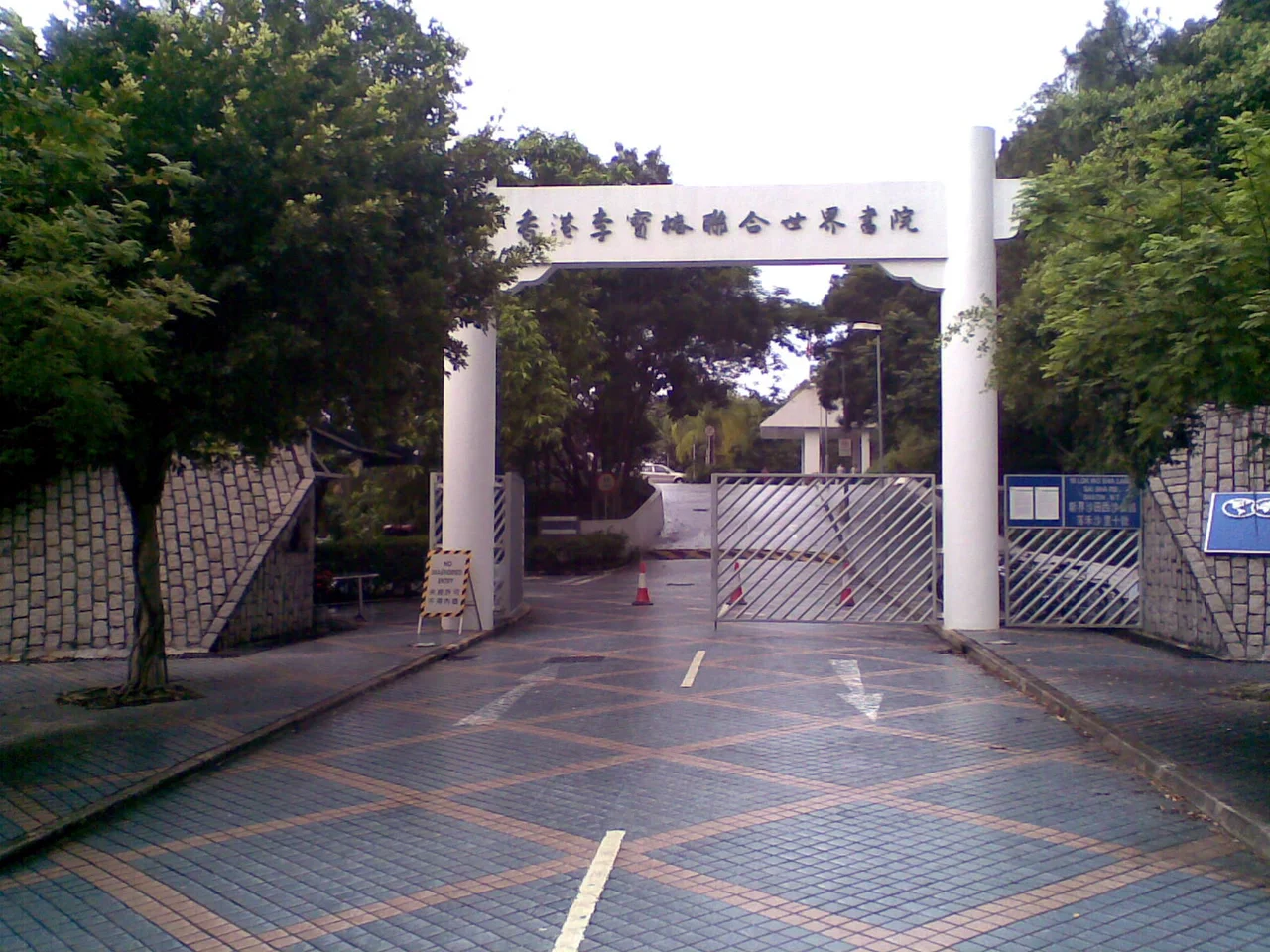

Li Po Chun United World College
On 6 November 1992, the Prince of Wales stood on a hillside in Wu Kai Sha and formally opened a school whose founding idea was almost audaciously simple: put teenagers from around the world into close quarters, teach them together, and trust that the understanding they build will outlast the classroom. That idea had begun in 1962 with a German educationalist named Kurt Hahn and a college in Wales — UWC Atlantic College, the first of what would become the United World Colleges movement. Li Po Chun United World College of Hong Kong, the eighth member of that movement, carries the vision into Asia, its campus perched above the waters of Tolo Harbour in the New Territories.
From Wales to Hong Kong: The Idea Behind the Institution
Kurt Hahn built Atlantic College in 1962 on the conviction that international understanding was not something to be lectured about but something to be lived. The United World Colleges movement that grew from that founding has since spread to four continents. Hong Kong's version took shape in 1978, when Dr Lee Quo-Wei, chair of the UWC Hong Kong Selection Committee, began working with Li Shiu Tsang — one of the city's wealthiest men — to fund a campus here. Li Shiu Tsang established the Li Po Chun Charitable Trust to support the project. With the backing of Sir David Wilson, then Governor of Hong Kong, the college opened fourteen years later. Nelson Mandela, Queen Noor of Jordan, and the Prince of Wales have all served as patrons of the broader UWC movement. The college was the first international boarding school in Hong Kong, and among the first to offer the International Baccalaureate here.
Students Selected by 150 Countries, Arriving as Strangers
The admissions process is deliberately global. Students from over 110 countries attend the college, selected not by the school itself but by UWC National Committees and selection contacts operating in more than 150 countries. In the 2020–2021 academic year, students from all six inhabited continents, representing 90 countries, made up the student body. Roughly 58 percent of students come from overseas and 42 percent from Hong Kong. The Hong Kong selection process runs three rounds — written application, a community-led Challenge Day, and a final interview — whittling around 300 applicants down to 50 places. An additional 15 Hong Kong students are placed at other United World Colleges worldwide. Many students receive scholarships; since 2000, UWC graduates have been eligible for the Davis United World College Scholars Program, described as the largest international scholarship program for undergraduate studies in the world.
Quan Cai: The Whole Person as Curriculum
Li Po Chun UWC's adaptation of the IB's Creativity, Activity, Service requirement is called the Quan Cai program — the characters 全才 mean 'development of the whole person.' Students must officially participate in at least two Quan Cai activities per year, choosing from more than 70 on offer: Initiative for Peace, Playback Theatre, Coral Monitoring, Lion Dance, and dozens more. Beyond campus, first-year students travel to Mainland China for community service projects — teaching English, working with children who have disabilities, helping with Habitat for Humanity builds. Annual project weeks extend that reach further into East, South, and Southeast Asia. The Global Issues Forum, embedded into the 8-day academic timetable, gathers the entire school to hear and debate student-led presentations on international questions. Academically, results are strong: in 2020, the college's IB diploma average was 36 points, compared to a worldwide average of 31.34.
A School Tested by the World It Studies
The college's commitment to political impartiality has faced genuine tests. In 2018, when the school announced a HK$50 million donation from Dr Lee Shau Kee to establish a Belt and Road Resources Center on campus, students launched a petition arguing that the name would compromise the school's independence. The center was eventually renamed the Lee Shau Kee Peace Education Centre. In 2019, a council member's alleged proximity to an attack on protesters in Yuen Long drew calls from student and alumni bodies for his removal. The university issued a statement distancing institutional positions from his personal ones. These episodes reflect something real about what it means to run a school premised on international understanding in a city navigating its own difficult politics — and they suggest that the students take the school's founding mission seriously enough to defend it.
From the Air
Li Po Chun United World College sits at approximately 22.431°N, 114.248°E on the Wu Kai Sha peninsula in the New Territories, overlooking Tolo Harbour to the north and east. From the air at 2,000–3,000 feet heading northeast from Hong Kong International Airport (VHHH, approximately 30 km to the southwest), the campus is visible as a compact institutional cluster on a hillside above the water. The Ma On Shan ridgeline rises to the southeast. Clear conditions are best; the Pearl River Delta region sees frequent haze.
Nearby Stories
- Chapel of St. Francis Xavier 3.5 km away
- Cuiheng 4.1 km away
- 2015 Shenzhen Landslide 16 km away
- Shunde 31 km away
- Wanshan Archipelago 37 km away
- Nanxiong Formation 96 km away
- Heyuan 149 km away
- Checheng Fu'an Temple 629 km away