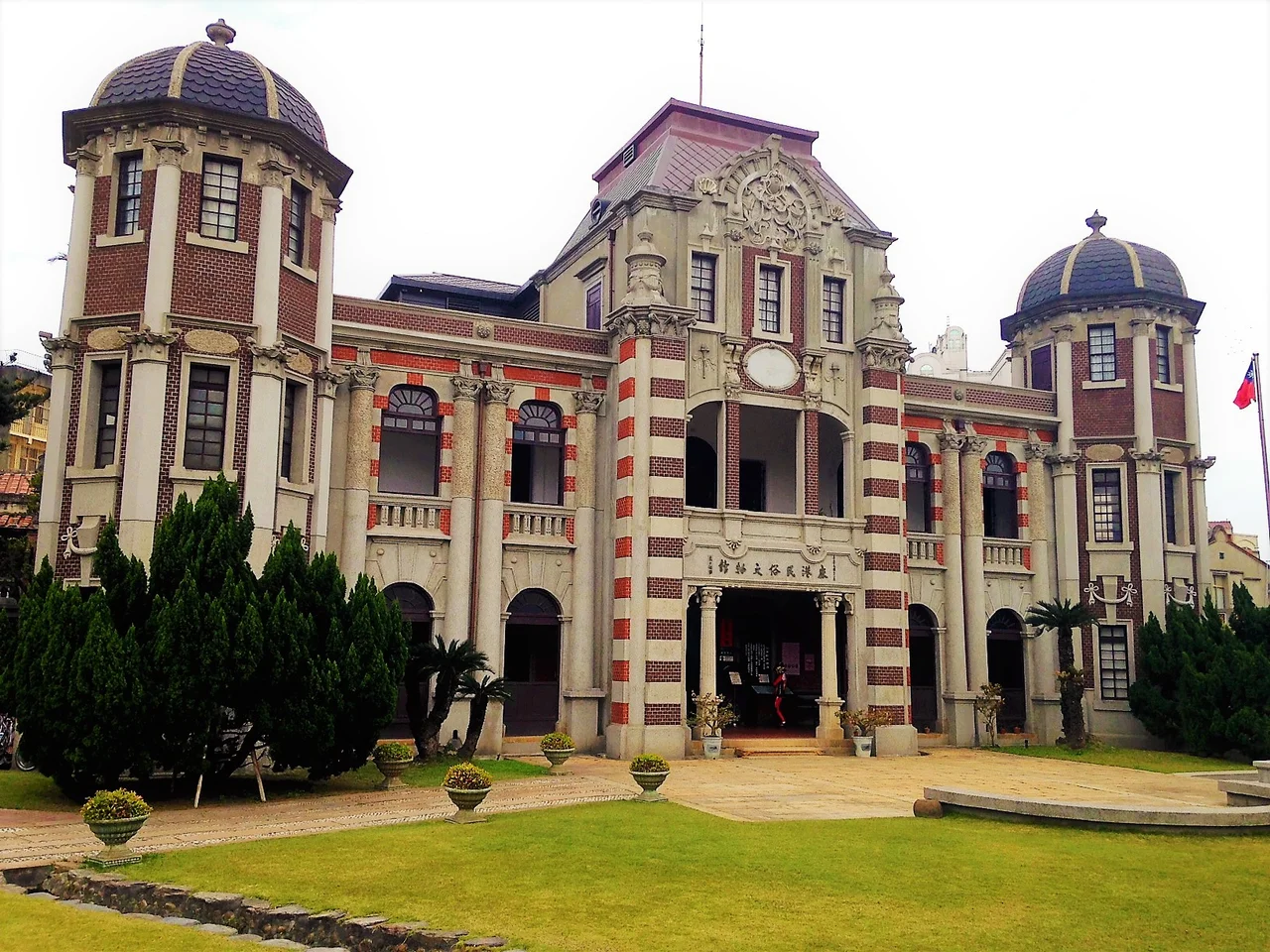

Lukang Folk Arts Museum
Koo Hsien-jung was not a man who built small. When construction began on his Lukang residence in 1913, he was one of the most influential figures on the island — a businessman and political operator who navigated the transition from Qing dynasty rule to Japanese colonial administration with enough skill to emerge prosperous on the other side. The mansion that rose over six years reflected that stature: a compound mixing Meiji-era Japanese design with Min-nan southern Fujian tradition, designed by the Japanese architect Moriyama Matsunosuke and filled with the material culture of a family at the center of Taiwanese life. By the 1920s and 1930s, the house had become a venue for international conferences with foreign dignitaries. In 1973, the Koo family and private benefactors donated the entire compound — buildings, land, furniture, utensils, and more than 6,000 collected objects — to become the Lukang Folk Arts Museum. What you walk through today is not a reconstruction. It is the real thing.
A Mansion Becomes a Museum
The decision to donate rather than sell was significant. The Koo family could have converted the property to other uses as Lukang modernized around it — the town's historic core was undergoing its own transformation by the mid-20th century. Instead, the compound was opened as a museum dedicated to the folk arts and everyday life of Taiwan's Qing dynasty and early Republican periods. The museum holds objects that range from the ceremonial to the intimate: lacquerware, porcelain, carved stones, embroidery, musical instruments, vintage photographs. Household items, travel gear, religious implements, and celebratory artifacts sit side by side, tracing the texture of life across social classes and occasions. The collection does not celebrate only the elite — it preserves the everyday alongside the exceptional.
Two Buildings, Two Worlds
The museum compound contains two principal structures, each carrying a different architectural lineage. The Yang Building, completed in 1919, exemplifies Meiji-period construction: its design and materials reflect Japanese craftsmanship of that era, and it stands as one of the better-preserved examples of Meiji-influenced architecture in Taiwan. The Ku Feng Building is older in spirit if not in date — an 18th-century-style structure in wood and brick built in the Min-nan manner of southern Fujian. Walking between these two buildings is a kind of compressed history of the cultural currents that shaped Taiwan: the deep roots in Fujian immigrant tradition, overlaid with the Japanese colonial period that followed. The unusual pairing of Asian vernacular and Western-inflected Japanese architecture within a single compound gives the museum its distinctive character.
Moriyama's Craft
Moriyama Matsunosuke was among the most prolific architects working in Taiwan during the Japanese colonial period. His buildings can still be found in Taipei and across the island, often distinguished by their confident handling of Japanese and Western classical forms. The Koo mansion represents his engagement with local taste and context — a design that doesn't simply import Japanese forms but blends them with the strong regional character of Lukang, a town that retained a deep connection to its Fujianese roots. The result is a building that looks Japanese in its structural logic but feels rooted in Taiwan. This quality of layered influence without loss of local identity is precisely what makes the museum's architecture as interesting as its collection.
What Prosperity Preserved
Lukang's decline as a trading port in the late 19th century — when the harbor silted and the railway bypassed the town — paradoxically preserved its historic fabric. The Koo family mansion, like many of Lukang's old structures, survived because there was less pressure for redevelopment than in faster-growing cities. The Folk Arts Museum is the most formal expression of this accidental preservation: a private home that became a public trust, its contents spanning the mid-Qing dynasty through the early Republic. More than 6,000 objects from everyday Taiwanese life now have a home here — rescued from dispersal by an act of family generosity and civic commitment that created one of the country's most atmospheric regional museums. Lukang's loss of commercial relevance turned out to be its greatest cultural gift.
From the Air
The Lukang Folk Arts Museum is located at approximately 24.054°N, 120.436°E in central Lukang Township, Changhua County, on Taiwan's western coastal plain. The historic district of Lukang is roughly 15 kilometers west of Changhua City. From the air at 3,000 to 5,000 feet, Lukang's compact historic core — dense with traditional-roofed structures — contrasts visibly with the surrounding flat agricultural land. The nearest major airport is Taichung International Airport (RCMQ), approximately 30 kilometers to the southeast. The Taiwan Strait coast is visible on clear days about 5 kilometers to the west.
Nearby Stories
- Huwei, Yunlin 2.8 km away
- Geographic Center of Taiwan 4.2 km away
- Gaomei Wetlands 15 km away
- China Airlines Flight 611 21 km away
- Shei-Pa National Park 25 km away
- Yushan Weather Station 27 km away
- TransAsia Airways Flight 222 30 km away
- Battle of Xiapi 1136 km away