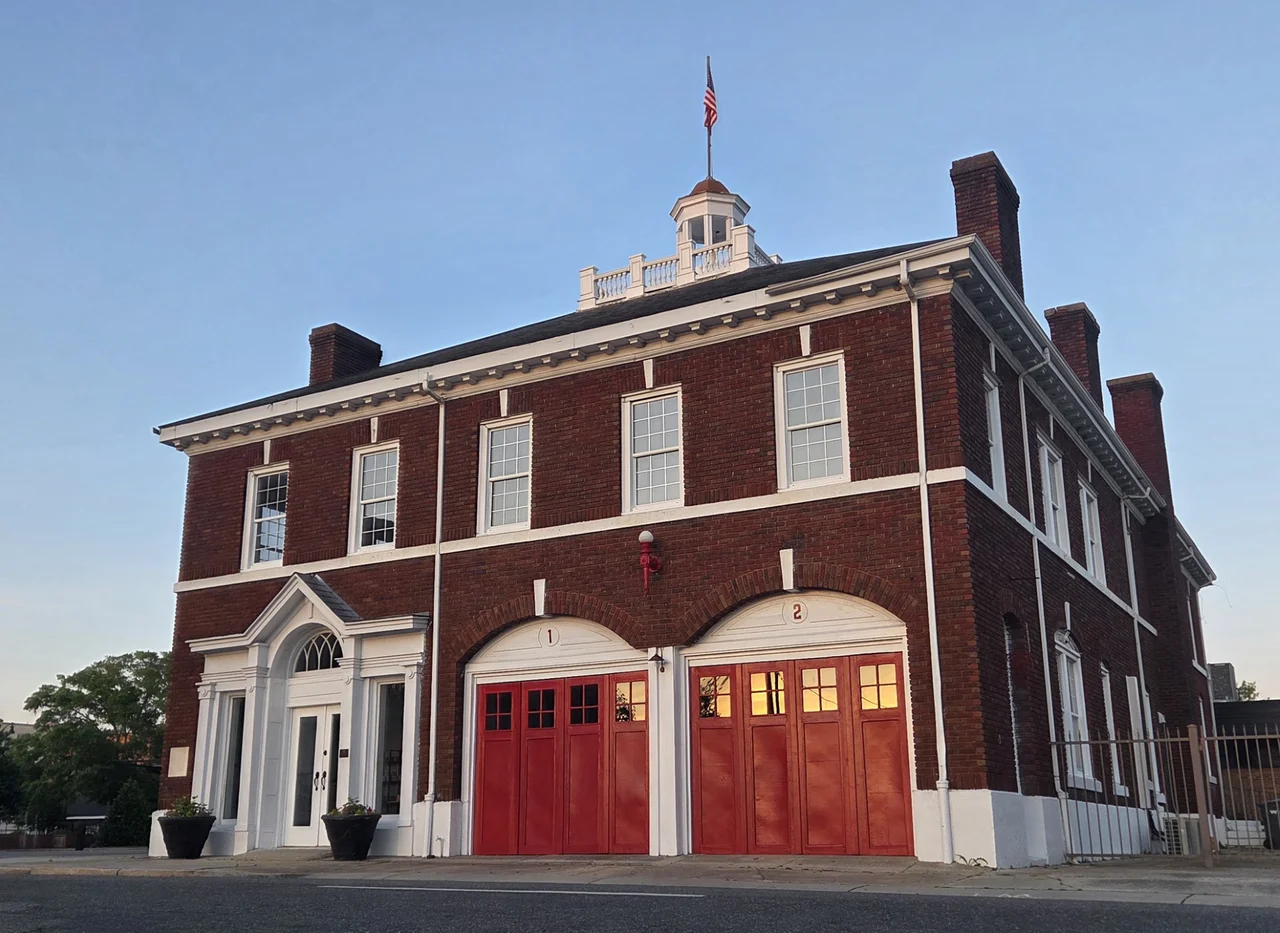

Lumberton, North Carolina
The water came up the same streets twice in two years. Hurricane Matthew in October 2016 broke every existing flood record in Lumberton, pushing the Lumber River past anything the city's defenses were designed to handle. Hurricane Florence in September 2018 broke Matthew's record. Entire neighborhoods on the south and west sides were left abandoned, houses gutted to the studs, doorframes marked with two distinct waterlines stacked like sedimentary layers. Lumberton has been here since 1787, founded as a lumber-shipping point on a river that took its name from the same trade. The town has watched hurricanes, mill closures, Klan rallies, drug wars, and a 1988 newspaper hostage crisis pass through and remain itself: poor, complicated, stubborn, and the seat of one of the most racially diverse rural counties in the United States.
A Lottery and a Town
General John Willis, owner of Red Banks plantation, lobbied the new state of North Carolina to put Robeson County's seat of government on his land. The site he offered had a ford across the Lumber River and a crossroads of frontier paths. On August 14, 1787, 170 acres were surveyed and lots distributed by lottery under the county court's supervision. The first courthouse was a wooden farmhouse Willis sold to the county and had moved into place. The North Carolina General Assembly formally chartered the town on November 3, 1788. From the river bank, brick warehouses and a hotel rose first. Goods came upriver from Georgetown, South Carolina. Logs went down the river — bound for the Navy's shipyards, floated in great rafts by men who knew every snag and shoal in the dark water.
The Lumber River
The river that gave the city its name runs blackwater — water stained the color of strong tea by tannins from cypress and gum trees in the swamps it drains. It is slow. It is shallow. Lumber River State Park preserves 115 miles of it as a designated Natural and Scenic River, one of the few in the South to receive that protection. Paddle the river through Robeson County and you pass bald cypresses draped in Spanish moss, oxbow lakes left behind when the channel shifted, and stretches of bank where the Lumbee people fished and traveled for centuries before the arrival of Europeans. The river is also why Lumberton floods. The cypress swamps are floodplain. When a hurricane parks over the watershed for days, the river has nowhere to put the water but city blocks.
Blue Velvet, Tobacco State League, All-America City
Cultural ephemera that pass through Lumberton make a strange list. David Lynch set his 1986 film Blue Velvet here, though he filmed in Wilmington — the name 'Lumberton' was chosen for its evocative ordinariness, the kind of small American town where evil could hide unnoticed. From 1947 to 1950 Lumberton fielded a Chicago Cubs minor-league affiliate in the Tobacco State League: the Lumberton Cubs, later renamed the Lumberton Auctioneers. The National Civic League named Lumberton an All-America City in 1970 and again in 1995 — the second award came shortly after the city's image had been bruised nationally by the 1988 Robesonian hostage crisis and the 1993 murder of James R. Jordan Sr., father of Michael Jordan, at a roadside stop near I-95 south of town. The city's relationship with its national reputation has been uneasy for decades.
A Border Belt Town
Lumberton lies in what is called the Carolina Border Belt — a tobacco-growing region that straddles the North-South Carolina line, defined more by warehouse networks and auction markets than by any geographic feature. Tobacco shaped the city's twentieth-century economy until the federal buyout program ended large-scale Carolina tobacco growing in 2004. Textile mills shaped it until NAFTA shaped them out of business. What is left is a downtown of brick buildings, several of them listed on the National Register of Historic Places — the Carolina Theatre, the Planters Building, the Robeson County Agricultural Building, the Alfred Rowland House. Some are restored. Some are not. A Border Belt newsroom called the BorderBelt Independent now covers the region's rural and economic stories with a depth most regional papers no longer have.
The People
Of the 19,025 people the 2020 census counted in Lumberton, 39 percent were white, 37 percent were Black, 13 percent were Native American (primarily Lumbee), and seven percent were Hispanic. Lumberton has produced a remarkable list of people: civil-rights attorney Benjamin Crump, who has represented the families of Trayvon Martin, George Floyd, and Breonna Taylor; Afeni Shakur, Black Panther Party member and mother of Tupac Shakur; Angus Wilton McLean, the 56th Governor of North Carolina; gymnast Ashton Locklear, a Lumbee Olympian; multiple NFL players; the actor Penny Fuller; the wrestling 'Tatanka' Chris Chavis. The reputation Lumberton earns from the outside — for the hurricanes, the poverty, the news stories — is one thing. The reputation it earns from the people who leave and come back is another. They tend to come back.
From the Air
Lumberton sits at 34.62°N, 79.01°W in Robeson County, North Carolina, at the crossing of Interstates 95 and 74, on the Lumber River. Field elevation: about 130 feet MSL. Nearest airport: Lumberton Municipal (KLBT) just south of town. Other regional fields: Laurinburg-Maxton (KMEB) 25 miles west, Fayetteville Regional (KFAY) 35 miles north. From altitude, look for the meandering blackwater Lumber River cutting east-southeast through the city, the I-95/I-74 cloverleaf interchange southwest of downtown, and the distinctive grid of the original 1787 town centered near the courthouse, with newer growth along the highway corridors. Hurricane flooding has reshaped neighborhoods on the south and west sides — abandoned blocks visible in clear weather.
Nearby Stories
- Scotland County, North Carolina 4.6 km away
- Tabor City, North Carolina 15 km away
- 1958 Mars Bluff B-47 Nuclear Weapon Loss Incident 21 km away
- Sampson County, North Carolina 21 km away
- Fayetteville Regional Airport 21 km away
- Marlboro County, South Carolina 22 km away
- National Airlines Flight 2511 30 km away
- Pender County, North Carolina 47 km away