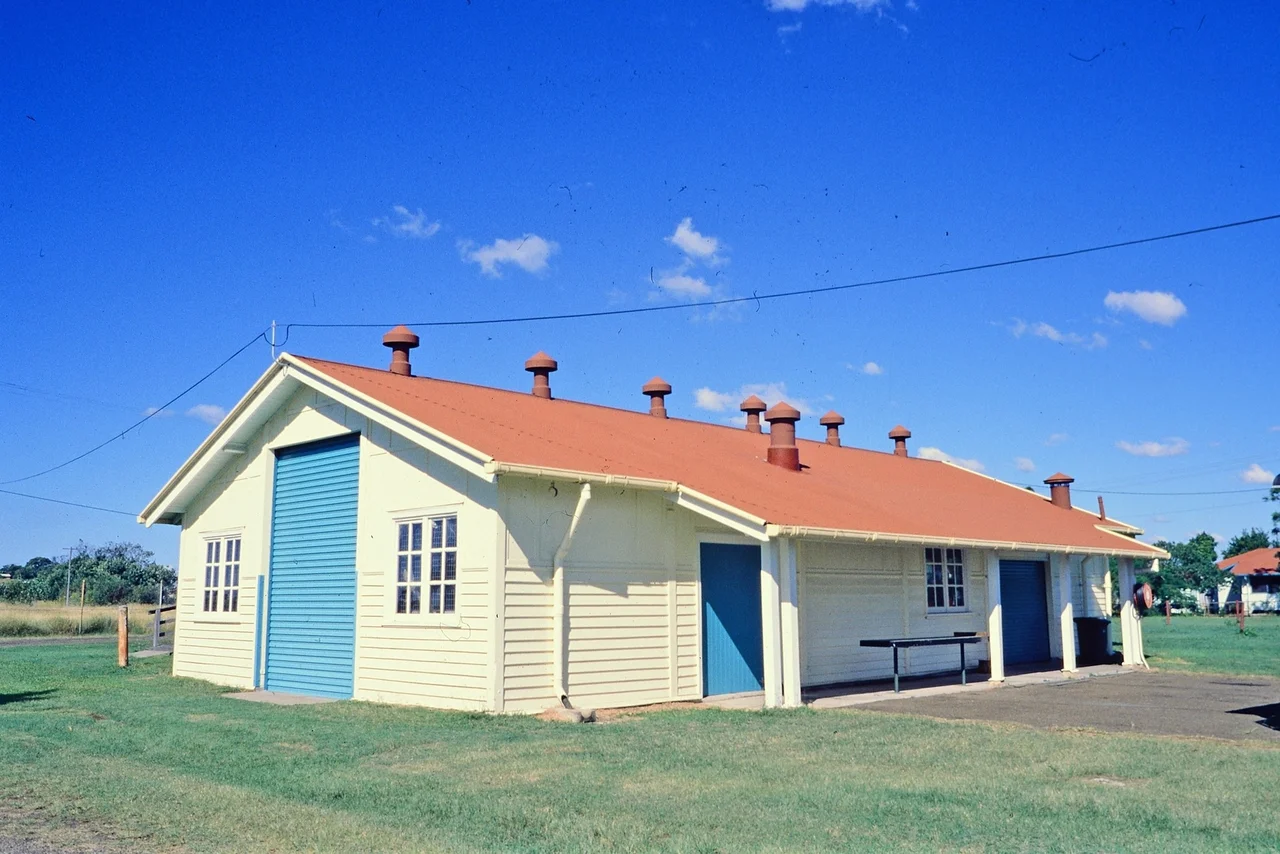

Lytton Quarantine Station
Imagine sighting Australia at last after months at sea, only to be told you cannot land. For tens of thousands of immigrants reaching Brisbane in the early twentieth century, the first piece of their new country was not a city street but a fenced timber compound on a flat, mosquito-haunted spit at the mouth of the Brisbane River. If fever was suspected aboard ship, the launches came out, and passengers were brought to Lytton: bathed, their luggage steamed in great autoclaves, their freedom suspended until the danger passed. For many people, life in Queensland began here, in quarantine, watching the river slide by through a wire fence.
The Long Watch on Moreton Bay
Lytton was the latest link in a chain of fear that stretched back to 1844. As ships brought both settlers and sickness into Moreton Bay, the colony moved its quarantine ground from place to place, Dunwich on Stradbroke Island, briefly St Helena, then Peel Island, always seeking somewhere isolated enough to hold contagion at bay. By 1911 the river bar had been dredged deep enough for ocean-going vessels to come right up to Brisbane, and a modern human quarantine station was built at Lytton between 1913 and 1914, beside the guns of Fort Lytton. The fort and the station worked as a pair: one turned away ships that lacked health clearance, the other held the people aboard. Of the three quarantine stations the federal government built in Queensland, Lytton was the first and the largest.
Steam, Cyanide and Class
Quarantine in this era was equal parts medicine and ritual. A permanent staff met every incoming ship, inspected passengers and cargo, and landed anything suspect for fumigation. Luggage was disinfected in steam autoclaves fitted to gas with cyanide or formaldehyde; bathing blocks could process dozens of passengers and crew at a time. The wards copied the rigid hierarchy of the ships themselves, segregated into first, second and third class. Some were screened against mosquitoes; most were not. The station also reflected the harsher prejudices of the White Australia era: separate camps of tents and huts, with their own kitchens and bath blocks, were set aside for those the records coldly labelled 'Asiatics.' The discomforts and indignities fell, as they so often did, most heavily on the poorest and the least welcome.
Holding Back the Plague
For all its bureaucratic coldness, the station did the thing it was built to do. In 1919, as the influenza pandemic that followed the First World War swept the globe and killed tens of millions, Brisbane held it off for roughly three months by quarantining at Lytton the soldiers returning home on crowded troop ships. Those extra weeks were not abstract. They were time for hospitals to ready beds and for a city to brace itself, time measured in lives. The man behind much of this was Dr John Simeon Colebrook Elkington, who built Queensland's public health system almost from nothing and later wrote a quarantine manual adopted as a model in other countries. A grimmer note: somewhere in the grounds lay a cemetery, for not everyone who reached Lytton ever left it.
What the Grass Keeps
Human quarantine ended at Lytton in the early 1980s, and many buildings were carted off or pulled down. But walk the surviving northern corner of the site, now part of Fort Lytton National Park, and the machinery of isolation is startlingly intact. The brick boiler house still stands with its tall chimney; the disinfecting block holds its autoclave and trolley tracks in place; the bath house keeps its upstairs observation post, from which staff could watch the bathing crowds below. Rails that once carried sick passengers and steamed luggage between jetty and wards run off into the grass. There is no crowd here now, no anxious queue of new arrivals, only weatherboard sheds and concrete footings, quietly preserving the experience that so many Australians met before they ever called this country home.
From the Air
The Lytton Quarantine Station lies at roughly 27.414 degrees south, 153.15 degrees east, on the southern bank at the mouth of the Brisbane River, immediately south of Fort Lytton and surrounded today by the Port of Brisbane and an oil refinery. From the air, look for the green pocket of Fort Lytton National Park wedged between industrial tanks and the river mouth; the timber and brick station buildings sit at its southern edge; best viewed at 1,000 to 1,500 feet. The dredged Brisbane River shipping channel and the Gateway Bridge upstream are clear references, and the container terminals make the river mouth impossible to miss. Nearest airport is Brisbane (YBBN / BNE), only about 6 nautical miles to the northwest, so this is busy controlled airspace; industrial haze and river-mouth humidity often soften visibility.
Nearby Stories
- Bribie Island 12 km away
- Cressbrook Homestead 17 km away
- Beenleigh Rum Distillery 18 km away
- Main Range National Park 39 km away
- 2010-2011 Queensland Floods 47 km away
- Cape Byron 115 km away
- Cape Byron Light 145 km away
- HMS Porpoise (1799) 570 km away