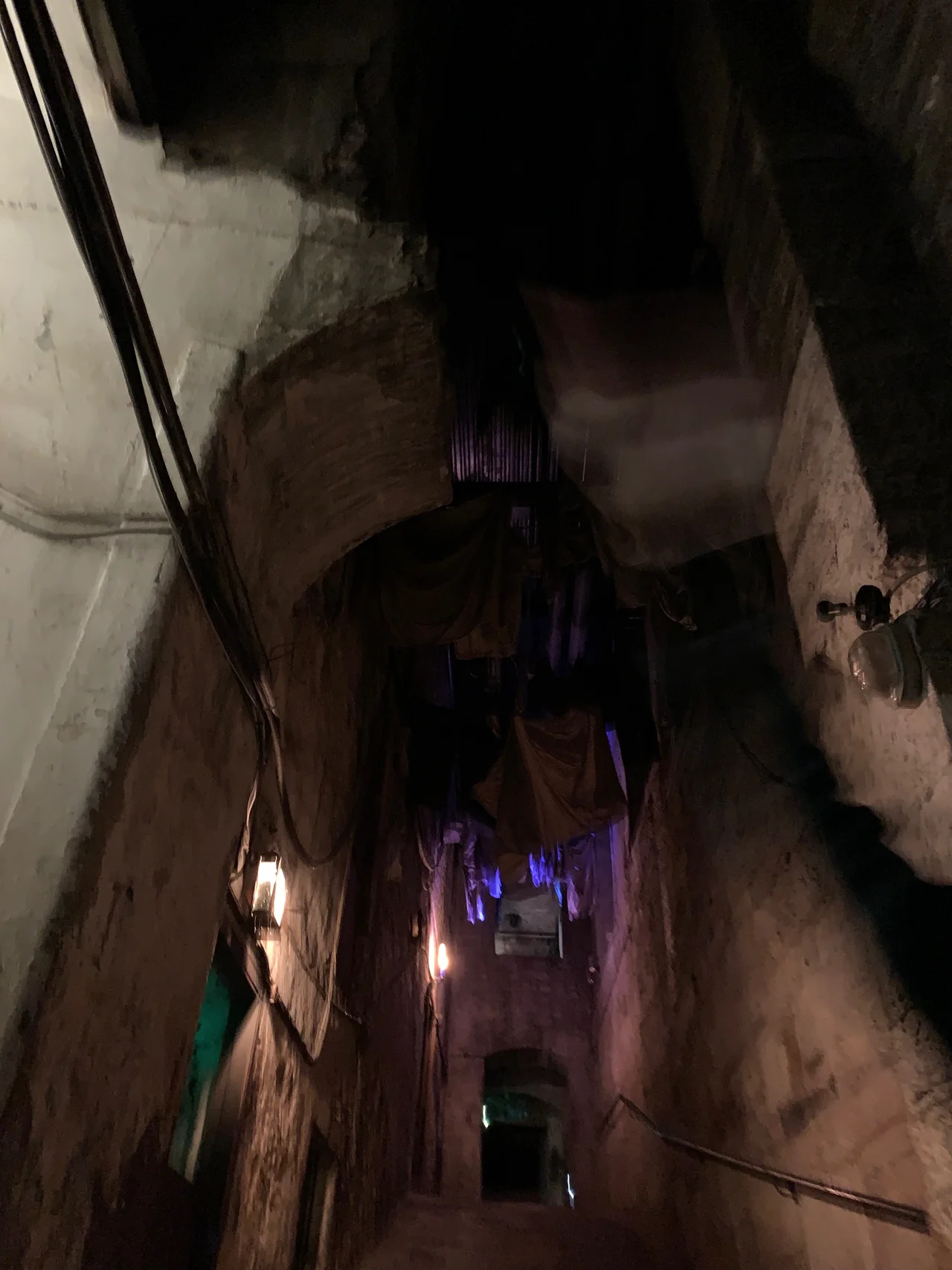

Mary King's Close
There is a 17th-century street that runs beneath Edinburgh's City Chambers, buried by the Royal Exchange the city built on top of it in 1753. People used to live down there. One of them was a merchant named Mary King, a burgess in her own right at a time when women rarely held that status, and the close was named for her. Other residents stayed long after the council started walling in the upper storeys. Andrew Chesney, the last person to make his home there, was finally bought out for £400 in 1897 and left in 1902. What people came to call Mary King's Close was not abandoned all at once. It was sealed shut while it was still being used, until one by one the families gave up and left.
A Merchant Woman Names a Street
Mary King was a merchant burgess in 17th-century Edinburgh, which is to say she had the legal right to trade in her own name in a city where most women did not. The close where she had her household and her business took her name. Closes in Edinburgh's Old Town were narrow lanes between tall tenements that climbed several storeys above the cobbles, with families living stacked above shops and workshops. The closes ran perpendicular to the High Street, dropping steeply toward the Nor Loch on one side and the Cowgate on the other. Mary King's Close was one of the steepest, running closest to the Nor Loch itself, a stagnant marsh that drained the rubbish of half the city. The name stuck because the city's records kept it, and because the families on the close kept calling it that, generation after generation, even as the world changed around them.
The City Builds On Top
In 1753 the city decided to build the Royal Exchange, the grand merchants' hall that became today's City Chambers. They picked the site at the head of Mary King's Close. To build a foundation big enough they had to demolish the upper storeys of the tenements lining the close and use the lower floors as cellars. Some residents kept living there for a while; others moved out as the noise and dust took over. The close became a layered building site, with new construction above and the old street still below, lit only by what light could squeeze in from the open ends. By the late 18th century the lower close was a half-buried curiosity, increasingly closed off as it was used for storage and stables. By the 19th century only a handful of families remained in the deepest sections.
Plague and the Long Memory
Edinburgh was hit hard by plague in the 17th century, including a major outbreak in 1645 that killed huge numbers across the city. The closes off the High Street, with their dense, vertical living and shared stairways, suffered terribly. Whole households died within days; in some closes more than half the residents were lost. People were buried hastily, often without ceremony, sometimes in mass graves. Mary King's Close was one of many places where families watched relatives die in small rooms with no good way out. The stories that later got told about the close, the ghost tales and walled-in plague victims, are mostly invention or exaggeration. The reality was sadder and quieter. Real people, named in parish records, died in confined places trying to keep their families alive. The close stayed lived-in long after the plague years; that says something about how little choice the poorest residents had.
The Last Resident
Andrew Chesney lived in Mary King's Close until 1902. He was the last to go. In 1897 the city issued him a compulsory purchase order for £400 and he eventually left, after which the close was sealed up almost entirely. It sat under the City Chambers, mostly forgotten, until tour operators began opening it up in the late 20th century. The eerie lights that gave rise to centuries of ghost stories may well have been biogas seeping in from the silted-over Nor Loch, which is the rational explanation; the same gas can cause hallucinations in concentrated quantities. Today the close is run as a tourist attraction by Continuum Attractions, marketed under the name The Real Mary King's Close. Fiction writers have used it constantly. Ian Rankin set a Rebus murder there in 1994. V.E. Schwab put it in City of Ghosts. Alexander McCall Smith hid characters there. The street that the city tried to bury kept finding new ways to surface.
From the Air
55.95 N, 3.19 W, directly beneath the Edinburgh City Chambers on the Royal Mile, mid-way between Edinburgh Castle and Holyrood Palace. From the air the close itself is invisible (it is underground), but the City Chambers above is a prominent classical building on the north side of the High Street. Edinburgh Airport (EGPH) is 9 km west. Recommended altitude 2,500-3,500 ft for a city overview. The Royal Mile runs along a long ridge from the castle down to Holyrood; Mary King's Close drops sharply north toward what was the Nor Loch and is now Princes Street Gardens and Waverley Station.
Nearby Stories
- Ardoch Roman Fort 2.2 km away
- Craignethan Castle 3.1 km away
- Haddington 3.8 km away
- Balvaird Castle 4.3 km away
- Battle of Kilsyth 9.4 km away
- Siege of St Andrews Castle 9.9 km away
- Neidpath Castle 11 km away
- Melrose Abbey 15 km away