
Mei Foo Sun Chuen
When the last of its 99 towers was completed, Mei Foo Sun Chuen had become something the world hadn't quite seen before: a privately financed residential city, rising from what had been an oil storage depot on the Kowloon waterfront. The name translates loosely as 'Beautiful and Good New Village,' and in 1968 Hong Kong — still digesting waves of refugees from the mainland, still building its economic miracle — a flat in Mei Foo cost around HK$40,000. That price tells you who the development was for. It was aspirational housing for a city in the middle of becoming itself.
The Scale of the Thing
Ninety-nine towers. That number alone sets Mei Foo apart. The complex in Lai Chi Kok was built in phases across the late 1960s and 1970s on a scale that had no precedent in Hong Kong's private housing sector — and at the time of completion, it was considered the largest private housing development in the world. Every flat came with a balcony, at least two rooms, and one bathroom: amenities that were not given but designed. The estate included its own schools, medical clinics, supermarkets, shopping arcades, restaurants, beauty salons, and newspaper kiosks. It functioned as a self-contained community — a deliberate choice by the developers, who understood that in a city without much public space, residents would need services within walking distance. A 24-hour uniformed security force at every residential block completed the picture of a managed environment. By 2016, 37,303 people called Mei Foo home, with a median age of 42.7 — a community that had aged together in the towers it had moved into as young families.
Water, Then Land
When Mei Foo was built, it stood at the edge of Lai Chi Kok Bay. The waterfront flats had balconies overlooking the water. There were walkways along the shore. This relationship with the sea was part of the estate's identity — the kind of amenity that justified the aspiration encoded in the name. Then, beginning in 1990, the West Kowloon reclamation project progressively filled in Lai Chi Kok Bay, pushing the shoreline hundreds of meters west. The waterfront balconies no longer overlooked water. The walkways became internal paths through an estate now surrounded by new land. Lai Chi Kok Park now occupies the ground where the bay used to be, a green buffer between Mei Foo and the further developments that arrived in reclamation's wake. It is a distinctly Hong Kong kind of change: geography itself is not permanent here, and the city that built an airport on reclaimed land thinks nothing of rearranging its waterfront between one decade and the next.
Connected to Everything
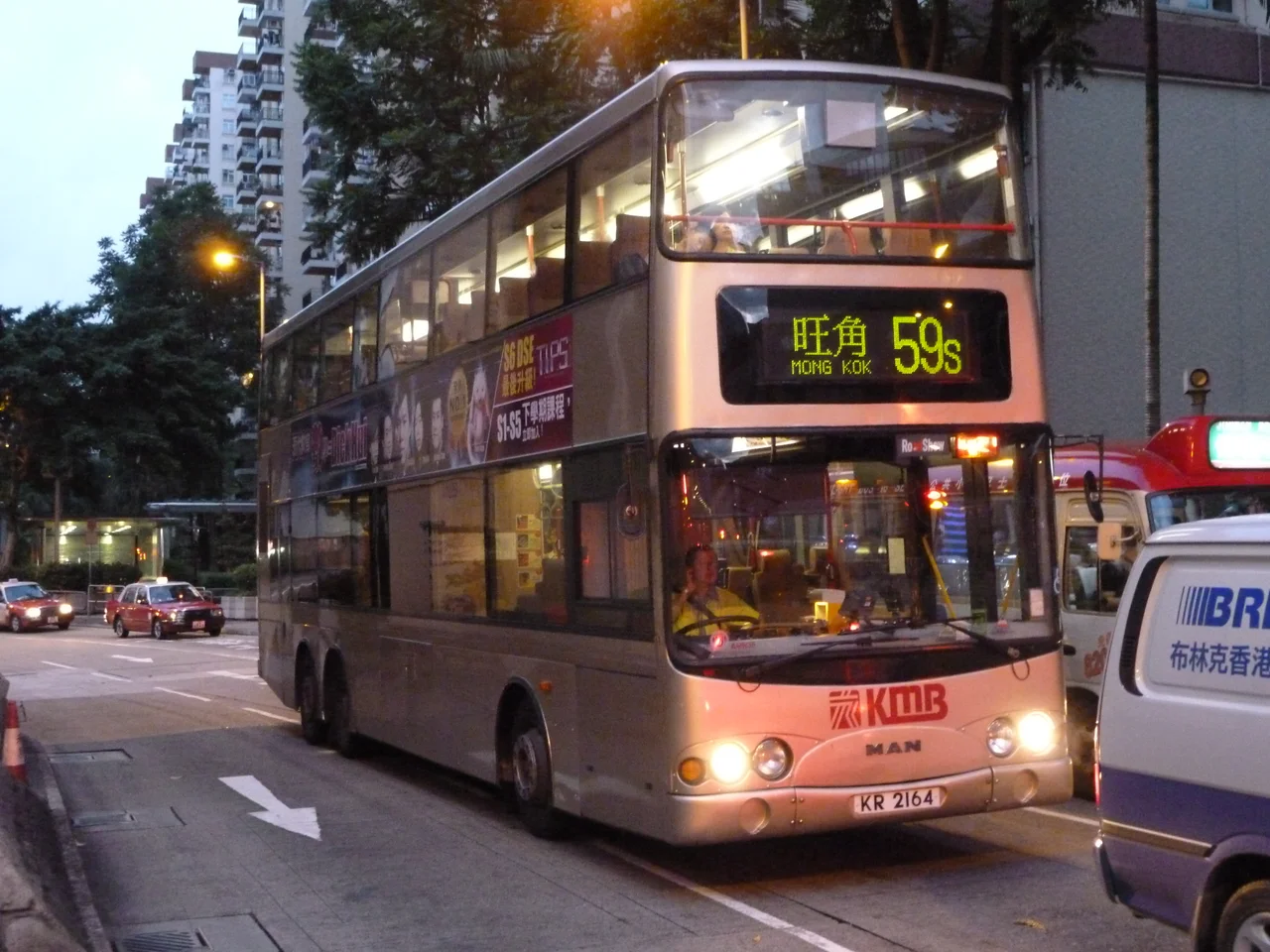
Mei Foo sits at the junction of Kowloon and Tsuen Wan, which makes it something of a crossroads in the urban fabric of northwest Kowloon. Kwai Chung Road and Lai Chi Kok Bridge carry the traffic. Below the Kwai Chung Road underpass, a major bus terminus serves multiple routes. The MTR station at Mei Foo connects to two lines: the Tsuen Wan Line, completed in 1982, and the Tuen Ma Line, operational from 2003 onward — a dual connection that makes Mei Foo one of the best-served transit nodes in western Kowloon. In 2009, the new Route 8 tunnels opened nearby, adding a direct road link to the eastern New Territories. Minibuses and taxis complete the picture. For an estate that was once defined by its position on the water's edge, it has adapted comfortably to being defined instead by its position on the map.
Governing Yourself
In 1997 — the same year Hong Kong returned to Chinese sovereignty — the Incorporated Owners of Mei Foo Sun Chuen Stage I was formed. It was, at the time, the largest owners' corporation with legal status in Hong Kong. The founder, Yiu Chi-Wai, served as Chairman of the Management Committee from 1997 to 2000. The other seven stages followed, each forming their own corporations during the same period. In a city where large housing estates have always had to negotiate between developer interests, government regulation, and resident needs, Mei Foo's organized owners' corporations represented a particular approach to collective self-governance. The estate had always functioned as a community with its own institutions. Formalizing that through legal incorporation gave residents a structural voice in how their 99-tower home was managed — a kind of civic infrastructure to match the physical one.
From the Air
Mei Foo Sun Chuen lies at approximately 22.338°N, 114.139°E in the Lai Chi Kok district of Kowloon. From altitude, the 99-tower complex is identifiable as one of the densest residential clusters in western Kowloon, just east of the Kwai Chung container port. Lai Chi Kok Park — on former reclaimed bay — appears as a linear green strip between Mei Foo and the coast. The Tsing Ma Bridge is visible 4 to 5 km to the northwest. Nearest airport: VHHH (Hong Kong International Airport), approximately 18 km to the west on Lantau Island. The West Kowloon reclaimed land and the distinctive curve of the Cross Harbour Tunnel access in Kowloon West provide additional orientation landmarks.
Nearby Stories
- Chapel of St. Francis Xavier 3.5 km away
- Cuiheng 4.1 km away
- 2015 Shenzhen Landslide 16 km away
- Shunde 31 km away
- Wanshan Archipelago 37 km away
- Nanxiong Formation 96 km away
- Heyuan 149 km away
- Checheng Fu'an Temple 629 km away