
Mekelle
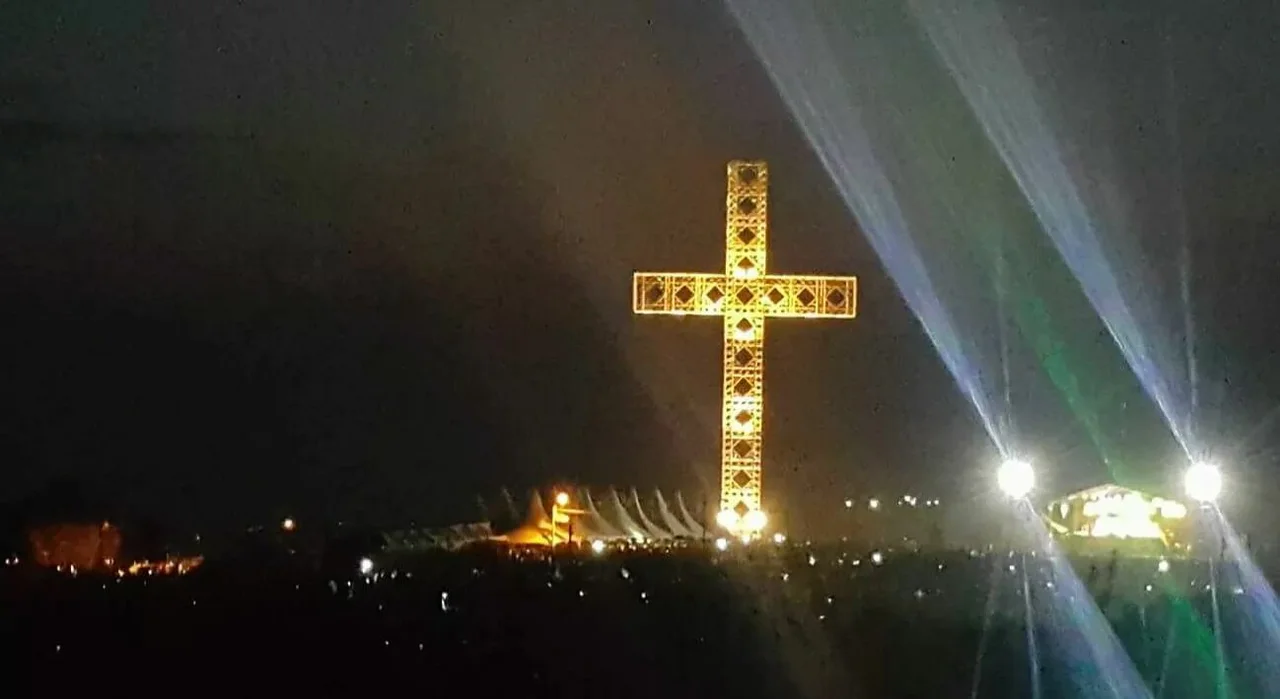
In September and October 1943, British planes bombed Mekelle. In October 1989, the Ethiopian Air Force bombed Mekelle. In June 1998, the Eritrean Air Force bombed the Ayder School in Mekelle, killing twelve. During the Tigray War that began in 2020, the city was bombed again, this time by joint Ethiopian and Eritrean forces. A century of ordinance has fallen on this Tigrayan capital, and yet Mekelle is still a city of around 545,000 people, the second-largest in Ethiopia, ringed by treeless hills and the eucalyptus the twentieth century planted. The 51-meter Tigray Martyrs Memorial, tallest in a skyline that is mostly not tall, pays respects to the 60,000 fighters who died and 100,000 who were injured in the overthrow of the Marxist Derg regime. Mekelle's people have paid repeatedly for the strategic importance of the place they live.
A Tributary District Becomes a Capital
Mekelle begins as a small notation in the tax records of Emperor Tewodros II - a tributary district within Enderta with its own negarit drum. It was Emperor Yohannes IV, the Tigrayan who became atse in the late nineteenth century, who made Mekelle his political capital. The choice was strategic. The town sat close to the rich agricultural areas of Raya Azebo and the salt country of Afar, whose amole salt bars circulated as currency across the highlands. It straddled routes to Shewa, the southern power base of Yohannes's rival Menelik. In 1882 to 1884 the Italian architect Giacomo Naretti built the grand palace that still forms the historic center. Yohannes established the large Edaga Senuy - the Monday Market - that continues to run today. He built the church at Debre Gennet Medhane Alem after the 1871 Raya Azebo campaign. When Italian forces tried to establish a fort near the Enda Eyesus church above Mekelle in October 1895, Ethiopian troops besieged them and cut the water. The Italians surrendered in January 1896. Menelik allowed them to retreat. It was a gesture with complicated consequences.
Italian Occupation and Postwar Growth
Mekelle changed under twentieth-century pressure. The dejazmach Abreha Araya Demtsu built his own splendid palace, now the Abreha Castle Hotel, on a hill opposite Yohannes's grand palace. He founded a new Saturday Market, a new church, and attracted Muslim traders, women service vendors, and army retainers. Trade boomed in the 1920s and early 1930s. Then in November 1935 the Italians occupied the town. The five years of Italian occupation brought rapid modernization - a military airport, the Enda Eyesus fort (now Mekelle University's main compound), paved roads, telephone lines, water pipelines, electricity, clinics, postal services, a cinema hall, and a sports complex. Greek, Arab, and Armenian entrepreneurs arrived. Mekelle was divided into Italian and Native zones and roughly doubled in size. British air bombardment during the Woyane rebellion of 1943 caused heavy damage. By 1938 the town had 12,000 residents, including 100 Italians. The postwar period brought a master plan in 1962, a municipality founded in 1942, oil refineries, flour mills, leather workshops, soap mills - the apparatus of a modern regional capital.
Hunger Camps and a Daring Prison Break
Then came the famine. During the 1983-85 Ethiopian famine, Mekelle became notorious for seven hunger camps around the city housing 75,000 refugees, with 20,000 more waiting to enter. In March 1985, 50 to 60 people were dying in those camps every day. These were not abstract statistics. These were families from the countryside, stripped of their livestock and their seed stock, trying to survive an engineered collapse of the rural economy. In February 1986, in a daring military action, the Tigray People's Liberation Front released 1,800 political prisoners from Mekelle prison. They named the operation Agazi, after a founding TPLF fighter killed in the second year of the civil war. By June 1988 the TPLF controlled all of Tigray except Mekelle and a 15-kilometer radius around it. The Derg responded by burning villages - Addi Gera, Bahri, Goba Zena, Grarot, Issala, Rabea - on June 4 and 5, 1988. Mekelle itself fell to the TPLF on February 25, 1989.
The Tigray War and What the War Looked Like
On June 28, 2021 Mekelle was recaptured by the Tigray Defense Forces after federal Ethiopian forces had held it during the Tigray War. What this meant for civilians needs to be named. Joint Ethiopian and Eritrean forces conducted aerial bombardments on the city. Reports from December 2020 described Eritrean soldiers present in Mekelle, some in Eritrean uniforms, others in Ethiopian uniforms but speaking Tigrinya with Eritrean accents and driving trucks without license plates. Multiple sources reported Ethiopian National Defence Force troops looting property from the Sur Company and transporting it to Addis Ababa. Ethiopian Airlines cancelled four flights to Mekelle. Arrest warrants were issued against anyone accused of collaborating with the TPLF. Civilians were killed, hospitals ran out of supplies, banking and telecommunications were cut for long periods. The Tigray War was one of the deadliest conflicts in Africa this century, and Mekelle was a central target.
What Mekelle Still Holds
Mekelle today is Ethiopia's economic and educational center for the north. Local industry includes Mesfin Industrial Engineering, the Messebo Cement Factory, both under the Endowment Fund for the Rehabilitation of Tigray. The $100 million Mekelle Industrial Park hosts foreign textile companies employing roughly 20,000 people. Yohannes IV's castle complex is a museum where visitors see the emperor's throne, royal bed, ceremonial dress, and rifles. A US Centers for Disease Control-funded public health laboratory provides quality assurance for Tigray's hospitals. Seven sub-cities - Hawelti, Adi-Haki, Kedamay Weyane, Hadnet, Ayder, Semien, and Quiha - make up the city, with the three central sub-cities holding a daytime population more than seven times their nighttime residents as workers commute in. The markets on Saturday and Monday still sell Afar salt among the produce and livestock. In March 2025 a faction of the TPLF led by Debretsion Gebremichael took over several offices in what The Guardian called a coup, with armed men patrolling the streets at night checking identification. Mekelle's story is still being written, and the people writing it are the civilians who have lived through more upheaval than any city should have to endure.
From the Air
Mekelle is at 13.50°N, 39.48°E at 2,254 meters elevation in the Tigray highlands of northern Ethiopia. Alula Aba Nega Airport (HAMK / MQX) serves the city. The eastern edge of Mekelle shows a moderately dense eucalyptus cover; the rest of the surrounding landscape is largely treeless. From altitude the distinctive palace complex of Yohannes IV in the old city center and the 51-meter Tigray Martyrs Memorial Monument in Adi-Haki sub-city are visible. Climate is cool semi-arid (BSk) bordering on subtropical highland - relatively mild year-round with distinct wet and dry seasons. The surrounding terrain is rugged.
Nearby Stories
- Debre Maryam Qorqor 31 km away
- Tigray Province 32 km away
- Simien Mountains 63 km away
- Dallol (hydrothermal system) 64 km away
- Danakil Depression 92 km away
- Simien National Park 104 km away
- Lalibela 139 km away
- Afar Triangle 212 km away