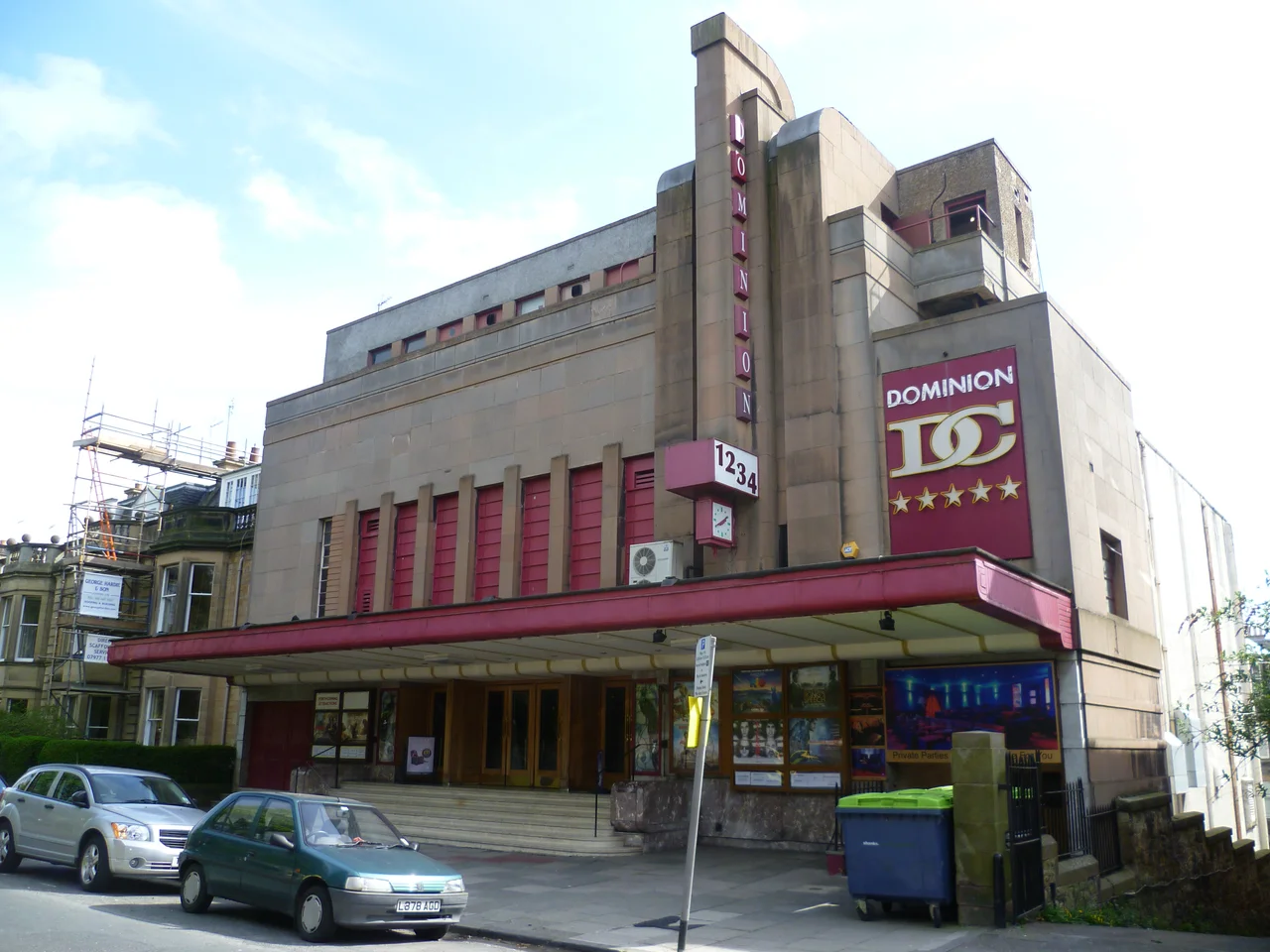

Morningside, Edinburgh
There is a Lothian Buses route, the No. 5, that runs out to Morningside with the picture of a kitten on the side. The cat is Maisie MacKenzie, the title character of a series of children's books by Aileen Paterson. Her livery went on the buses in 2011. Morningside is the sort of place where they put cats on the buses. The accent that Maggie Smith used as Miss Jean Brodie was Morningside. The Dominion Cinema on Newbattle Terrace has been run by the same family since 1938. The Bore Stone, embedded in the wall of a former church, supposedly marks where the Scottish army mustered before marching to Flodden in 1513, though historians dispute the claim. This is a neighbourhood that pays attention to its own myths.
Plague Money and the Burgh Muir
The land that became Morningside was once part of the Burgh Muir, common ground gifted to Edinburgh by King David I sometime in the first half of the 12th century. In the late 16th century the city had to find a way to pay for the cost of dealing with the plague that swept through in 1585. The town council feued out the western part of the Burgh Muir, that is, they sold it on a perpetual lease with annual payments, to raise the money. The dead bought the future of the suburb. Morningside grew up on that feued land as a farming village serving the estates of Canaan, Egypt, Plewlands, and others, and it became the first stop on the principal drove road bringing livestock north into Edinburgh from the farms to the south. The street pattern locked in during the early 19th century when wealthier Edinburgh citizens started building villas on subdivided estate land.
Trains, Trams, Tenements
Transport made Morningside possible as a daily commute. In the 1870s a horse-drawn tram service connected the village to the east end of Princes Street, one of the first such services in Edinburgh. The trams became cable cars, then electric. In 1885 the Edinburgh Suburban and South Side Junction Railway opened, with Morningside Road Station running passengers to Waverley and freight to the goods yard in Maxwell Street. The Braid Estate was developed for housing in the 1890s. By the first half of the 20th century Morningside had schools, churches, a public library, a cinema, and a ballroom. The Public Library at 184 Morningside Road was designed by the city architect Robert Morham, built for £6,000, opened in 1905, extended in 1929. By the 1970s it was one of the busiest libraries in Scotland.
Buildings That Lasted, and Some That Did Not
The Dominion Cinema at 18 Newbattle Terrace is a classic Streamline Moderne building from 1938, owned and operated by the same family since it opened. It is one of the few surviving independent cinemas in Scotland. The Church Hill Theatre at 33 Morningside Road was originally the Morningside High Church, designed by Hippolyte Blanc, converted into a theatre in the 1960s, and is now a Festival venue. Braid Church on Nile Grove, a distinctive octagonal building by George Washington Browne from 1886, is now a pizza restaurant. Falcon Hall, the grandest house in Morningside, sat in 18 acres on the east side of Morningside Road. It was demolished in 1909. The ornamental gates now form the entrance to Edinburgh Zoo. The Toll House at the southern end of Morningside Road was dismantled in 1888 and re-erected as a gatehouse at the Hermitage of Braid, where it still stands as a cafe. Things move around here, but they tend not to vanish entirely.
Miss Brodie and the Morningside Accent
Muriel Spark attended James Gillespie's School for Girls in nearby Marchmont from 1923 to 1935, and used the school as the model for the Marcia Blaine School in her 1961 novel The Prime of Miss Jean Brodie. The novel is set partly in Morningside. When Maggie Smith won an Oscar for the 1969 film adaptation, she used what is often called the Morningside accent, a precise, slightly over-refined Scottish English sometimes described as a pan loaf accent. It is a caricature, but it is rooted in something real about how genteel Edinburgh used to speak. Reginald Johnston, the British diplomat who served as tutor and adviser to the last Emperor of China between 1919 and 1924, was born in Jordan Lane. George Meikle Kemp, the self-taught architect who designed the Scott Monument, was living in Ainslie Cottage in Jordan Lane when he died in 1844. Susan Ferrier, the satirical novelist sometimes called the Scottish Jane Austen, lived in East Morningside House in the early 19th century. The neighbourhood collects literary and political residents and keeps their plaques up.
From the Air
55.93 N, 3.21 W, about 2.5 km south of Edinburgh city centre. Morningside lies on the southern flank of the city, between the Meadows to the north and the Braid Hills to the south, bisected by the A702 (Morningside Road and Comiston Road). From altitude look for the green wedge of the Braid Hills and Blackford Hill marking the southern boundary; the dense Victorian tenement grids of the inner suburb stretch north toward central Edinburgh. Edinburgh Airport (EGPH) is about 11 km west-north-west. Recommended viewing 2,500-3,500 ft. The Pentland Hills rise to the south-west; Arthur's Seat is the dramatic green volcanic peak to the east.
Nearby Stories
- Ardoch Roman Fort 2.2 km away
- Craignethan Castle 3.1 km away
- Haddington 3.8 km away
- Balvaird Castle 4.3 km away
- Battle of Kilsyth 9.4 km away
- Siege of St Andrews Castle 9.9 km away
- Neidpath Castle 11 km away
- Melrose Abbey 15 km away