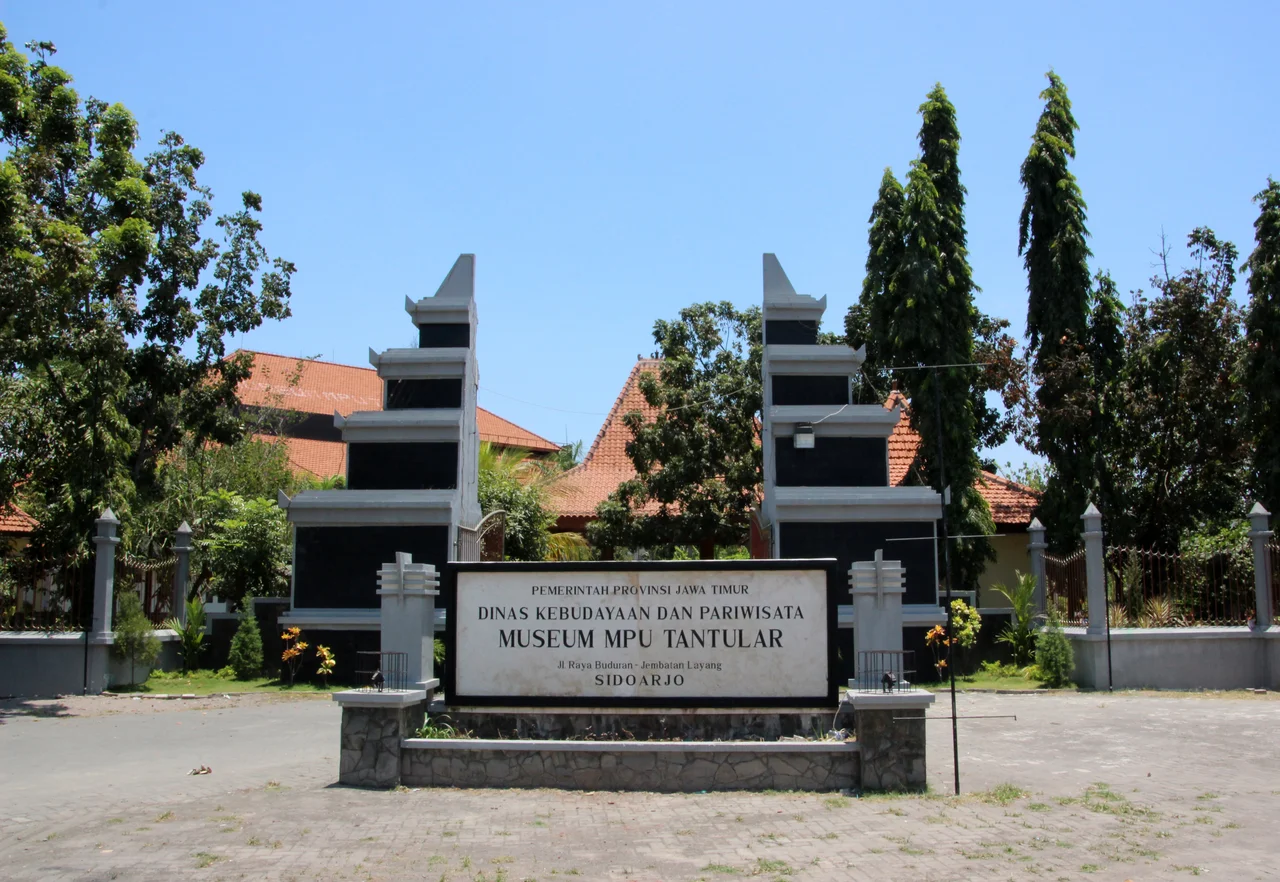

The Collector Who Could Not Stop
Godfried Hariowald von Faber started collecting photographs of Surabaya in 1922 because he could not help himself. A German-born resident of the Dutch East Indies, von Faber had the collector's compulsion -- the belief that if he did not save something, no one would. He photographed street scenes, colonial architecture, Javanese daily life, anything that struck him as worth preserving. By 1933, the collection had outgrown his private life, so he founded a society and gave it a name befitting the colonial era: the Stedelijk Historisch Museum Soerabaia. It was inaugurated at Surabaya's Town Hall on July 25, 1937. What von Faber could not have known was that his museum would outlive the colonial government that sanctioned it, the empire that employed him, and von Faber himself -- though not without several near-death experiences of its own.
From Town Hall to Oblivion
The museum grew quickly. After its inauguration, it moved to a building on Jalan Taman Mayangkara, then expanded again to a larger space on Jalan Simpang 3 -- now Jalan Pemuda 3 -- where it acquired an exhibition room, a library, offices, and an auditorium. Surabayans came to know it simply as Museum von Faber. Then came the Japanese occupation, and the museum closed for nine months. It reopened, but von Faber's world had changed irreversibly. The Dutch East Indies became Indonesia. Colonial institutions lost their patrons. When von Faber died on September 30, 1955, the museum lost not just its founder but its driving purpose. Management fell to a cultural foundation, the Yayasan Pendidikan Umum dan Kebudayaan, but without von Faber's obsessive stewardship, collections were damaged and looted. Pieces of Surabaya's history, carefully gathered over three decades, scattered back into the city that produced them.
Rescued by the Republic
The museum might have disappeared entirely if not for a series of institutional rescues. In 1964, Professor M. Soetopo donated funds to keep the foundation afloat. Then the national government stepped in. On May 23, 1972, the museum reopened under a new Indonesian name: Museum Jawa Timur, the East Java Museum. Two years later, on February 13, 1974, it was formally designated a Museum Negeri -- a state museum -- giving it government funding and official protection for the first time. The inauguration ceremony, held on November 1, 1974, marked the moment when R. Banu Iskandar, head of the cultural foundation, handed the museum's management to Ida Bagus Mantra, the General Director of Culture. A German collector's private obsession had become a public institution of the Indonesian republic.
The Name on the Door
With state status came a new name: Mpu Tantular, after the 14th-century Javanese poet who served in the court of King Hayam Wuruk during the golden age of the Majapahit Empire. The choice was deliberate and resonant. Mpu Tantular authored the Kakawin Sutasoma, a Buddhist poem that contains the phrase Bhinneka Tunggal Ika -- Unity in Diversity -- which Indonesia adopted as its national motto. The poet's name means, roughly, "the one who is not easily swayed," and his great work argued for tolerance between Hinduism and Buddhism at a time when both competed for royal patronage. Naming a museum after him -- a museum founded by a German, sustained by a Dutch colonial government, rescued by an Indonesian republic -- layered the institution with exactly the kind of meaning Mpu Tantular would have appreciated: different origins, one purpose.
Four Addresses, Fifteen Hundred Artifacts
The museum has moved four times since its founding, each relocation reflecting a shift in its identity. From the Town Hall to Jalan Taman Mayangkara, to Jalan Pemuda, back to Taman Mayangkara in 1975 (inaugurated by Governor Sunandar Priyosudarmo on August 12, 1977), and finally, on May 14, 2004, to its current home on Jalan Raya Buduran in Sidoarjo. Today, the museum houses over 1,500 items organized across ten thematic categories: prehistoric artifacts, Hindu-Buddhist relics, Islamic-era objects, colonial-period documents, ethnographic collections, ceramics, coins, manuscripts, and more. The collection spans the full arc of East Javanese civilization, from stone tools chipped by hands that never imagined agriculture to photographs snapped by a German who could not stop documenting a city he loved. Von Faber's original photographs are still among the holdings -- the seed collection that grew into a state museum, moved four times, and outlasted every institution that tried to own it.
From the Air
Located at 7.43S, 112.72E in Buduran, Sidoarjo Regency, approximately 20 km south of Surabaya city center. Nearest major airport is Juanda International (WARR/SUB), located just 5 km to the northeast -- the museum is practically under the approach path. The Sidoarjo area is flat coastal lowland along the Brantas River delta, with extensive aquaculture ponds visible from altitude. The nearby Sidoarjo mud flow (Lapindo mud disaster) crater may also be visible as a distinctive landscape scar to the south. Best viewed on approach to or departure from Juanda.
Nearby Stories
- The Kedopok War: When Probolinggo Rose Against Its Buyer 5.5 km away
- The Floating Colossus of Surabaya 6 km away
- Purwodadi Botanical Garden 9.7 km away
- Madura: Salt, Bulls, and the Island That Emptied Itself 21 km away
- Where Teak Meets Oil 30 km away
- The Train Builders of Madiun 71 km away
- The School That Gave Itself Away 75 km away
- Where Three Worlds Meet: The Great Mosque of Sumenep 89 km away