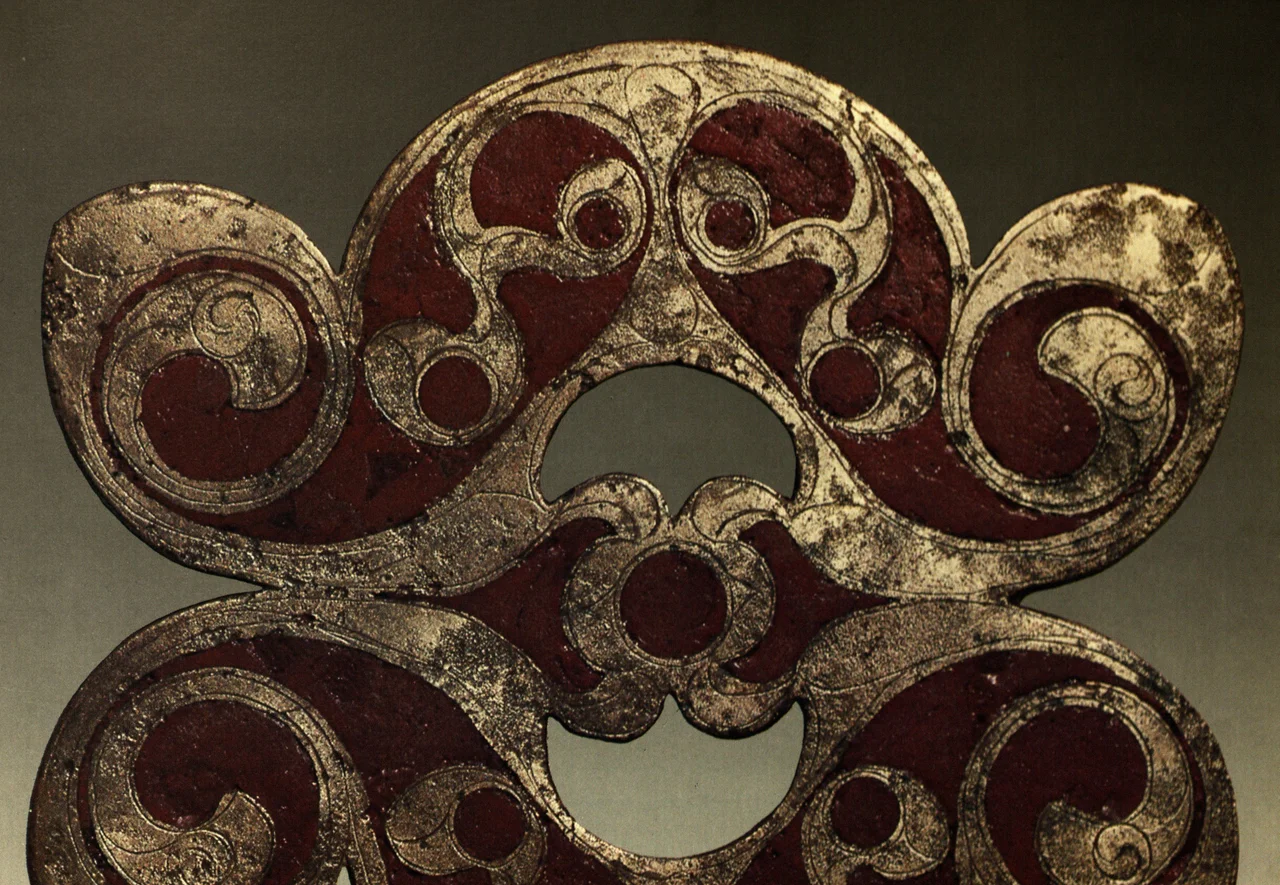

Museum of Archaeology and Anthropology, University of Cambridge
Four spears in a Cambridge museum were last held by members of the Gweagal people of Australia's Botany Bay in 1770, on the morning Captain James Cook arrived. His crew collected roughly fifty of these spears. They passed through the hands of Cook's patron — John Montagu, the 4th Earl of Sandwich — who gave them to his alma mater, Trinity College, Cambridge. Four survive. They are among the very few objects that can be traced with certainty to Cook's first voyage. The spears remain in Trinity's legal ownership, but they are displayed here, in the Museum of Archaeology and Anthropology on Downing Street, a few hundred metres from the River Cam.
Founded in a Pub, Funded by Expeditions
The museum was established in 1884 as the university's Museum of General and Local Archaeology, initially housing antiquities gathered by the Cambridge Antiquarian Society and artefacts from Polynesia donated by Alfred Maudslay and Sir Arthur Gordon. Anatole von Hügel, its first curator, contributed his own collection from the South Pacific. Von Hügel then spent years lobbying for purpose-built premises; the museum moved to its current Downing Street location in 1913, though the galleries were not fully installed until after the First World War. The collections received a decisive expansion through the 1898 Cambridge Anthropological Expedition to the Torres Strait, led by Alfred Haddon and W.H.R. Rivers. That expedition's participants — including Alfred Radcliffe-Brown, John Layard, and Gregory Bateson — were encouraged to continue collecting for the museum throughout their subsequent fieldwork.
An Unlikely Architecture
Walk through the museum building and you will encounter, embedded in its walls, the central section of Inigo Jones's choir screen from Winchester Cathedral. Jones designed the screen in the 1630s. It was removed from the cathedral — these things happened — and eventually found its way to Cambridge, incorporated into this Grade II listed building. The museum's three floors span very different geographies: the ground floor Clarke Hall covers the archaeology of Cambridge and the surrounding region; the first-floor Maudslay Hall focuses on anthropology; the second-floor Andrews Gallery extends to world archaeology. A display case on the ground floor holds a pectoral cross from the Trumpington bed burial, an Anglo-Saxon grave discovered near Cambridge that contained the remains of a young woman on a wooden bed surrounded by iron fittings.
Objects With Complicated Histories
The museum holds Benin Bronzes — a subset of the thousands of objects looted by British forces during the 1897 Punitive Expedition against the Kingdom of Benin, in what is now Nigeria. It holds materials from Cook's Pacific voyages, objects collected during the colonial era across Africa, the Americas, and Oceania. The questions these collections raise — about ownership, about return, about the ethics of what was collected and how — are not unique to Cambridge, but they are very present here. The museum's ongoing project with the British Museum, True Echoes, examines the use of audio recordings within anthropology and maps connections between related collections of objects, photographs, and field notes. The museum's cold war nuclear bunker on Brooklands Avenue, a Grade II listed regional government facility, now serves as a collections storage facility called the Centre for Material Culture.
Darwin's Rocks and Free Admission
The museum holds approximately 2,000 rocks and a few fossils collected by Charles Darwin during the voyage of HMS Beagle between 1831 and 1836. These are part of the Beagle Collection and sit alongside over a million fossils in the Palaeontological Collection. In 2009, to mark the Darwin bicentenary, the museum mounted a large exhibition, 'Darwin the Geologist,' displaying specimens from the voyage and unveiling a portrait bust of the young Darwin by sculptor Anthony Smith. The museum is free to enter, open Monday through Saturday, and regularly participates in Cambridge-wide events including the Cambridge Science Festival. A Haida totem pole from Tanu stands in the building. An Iguanodon skeleton greets visitors at the entrance — incorrectly mounted upright rather than horizontal, a mistake the museum has retained because the posture is now famous as the museum's logo.
From the Air
The Museum of Archaeology and Anthropology is located at 52.203°N, 0.121°E on the University of Cambridge's Downing Site, at the corner of Downing Street and Tennis Court Road in central Cambridge. Cambridge City Airport (EGSC) is approximately 2 nautical miles to the northeast. The museum building is best appreciated from ground level; from the air, the Downing Site is a recognisable cluster of neoclassical buildings south of the city centre. Approach Cambridge from the east via EGSC, which handles general aviation.
Nearby Stories
- Kentwell Hall 2.5 km away
- Thetford Hoard 2.8 km away
- King's Ely 6 km away
- Bedford 7.8 km away
- White House Farm murders 13 km away
- Oundle 14 km away
- Hemel Hempstead 14 km away
- North Weald Airfield 15 km away