
Museum of the Occupation of Latvia
On June 14, 1941, Soviet authorities loaded approximately 15,500 Latvians onto cattle cars bound for Siberia. On the night of March 24-25, 1949, they did it again to roughly 43,000 more, mostly women, children, and the elderly. Of about 93,000 Jews who had lived in Latvia in 1941, perhaps 70,000 were murdered during the German occupation, most of them in the first six months. The Museum of the Occupation of Latvia in Riga exists to record those numbers and the names behind them. It was founded in 1993 by an emigre Latvian historian, Paulis Lazda of the University of Wisconsin-Eau Claire, who proposed the idea to the new republic's Ministry of Culture. The first exhibition opened on July 1, 1993. The museum has been telling Latvia's 51-year story to anyone who comes through Strēlnieku laukums ever since.
The First Soviet Year
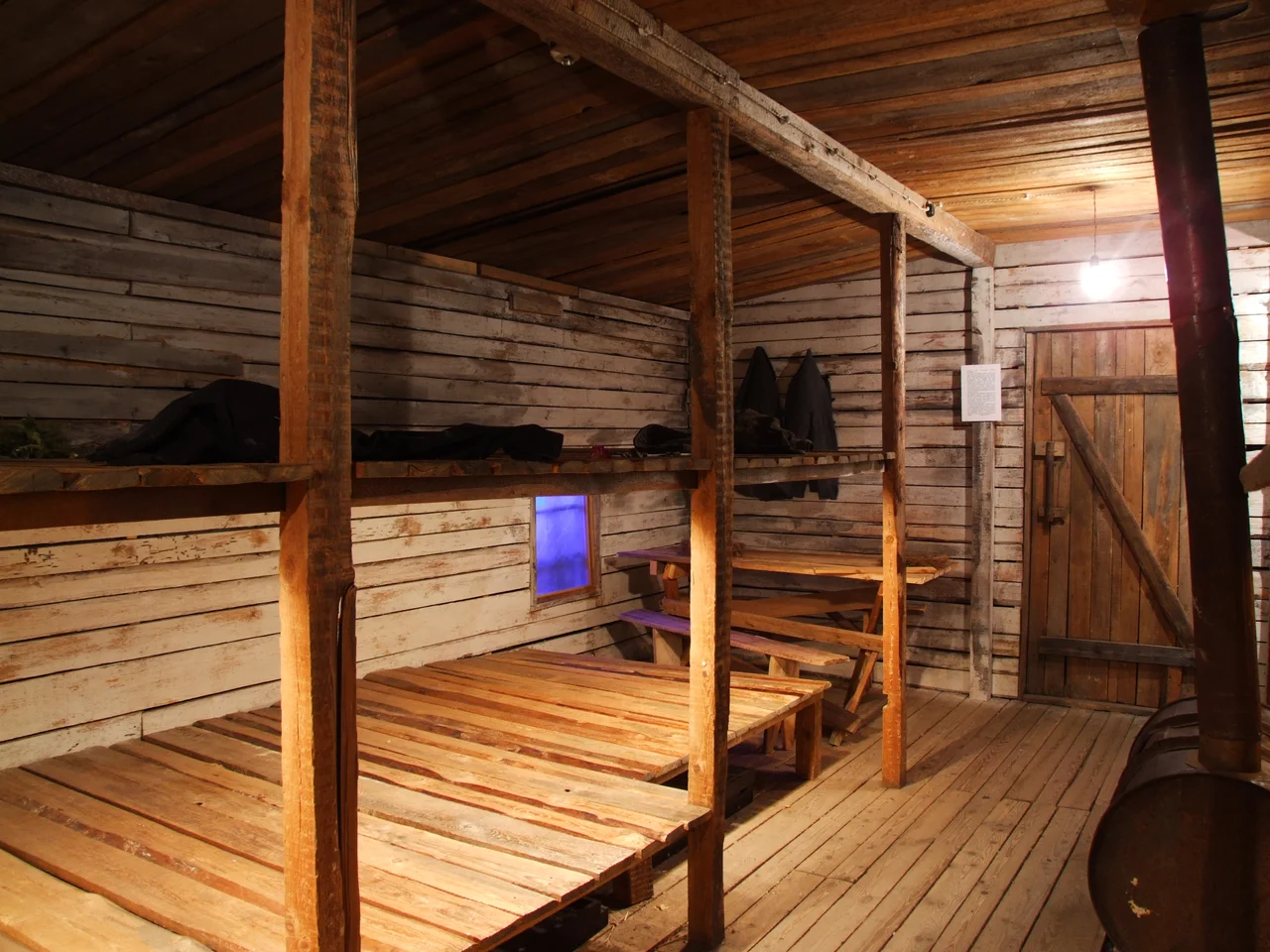
Soviet forces marched into Latvia on June 17, 1940, after the Soviet Union had presented an ultimatum that the small republic could not refuse. By August Latvia had been formally annexed, the elections rigged, the leadership arrested or fled. The June 1941 mass deportation came one week before Germany attacked the Soviet Union. Whole families were taken in the night and given an hour to pack. Men were separated from women and children at junction stations and sent to forced-labor camps in the Gulag, where many died of cold and starvation; women and children went to special settlements in Siberia. Of the roughly 15,500 deported in June 1941, a substantial portion never returned. The museum's reconstruction of a Gulag barrack lets visitors stand inside the kind of structure where many of them lived and died.
The Holocaust in Latvia
When Germany invaded on June 22, 1941, some Latvians initially welcomed the Wehrmacht as liberators from Soviet terror. What followed was something else entirely. Einsatzgruppe A, supported by Latvian collaborator units, began the systematic murder of Latvia's Jews almost immediately. By the end of 1941 the great majority were dead, shot at the Rumbula and Bikernieki forests outside Riga and at killing pits across the country; the Rumbula massacre alone killed about 25,000 people on November 30 and December 8, 1941. The Riga Ghetto was emptied to make room for German Jews deported from the Reich. Of approximately 93,000 Jewish Latvians who had lived in Latvia before the war, perhaps 70,000 were murdered. The museum names them. It does not soften what was done, and it does not let Latvian collaboration be forgotten in the same breath that German guilt is named.
The Second Soviet Occupation
The Red Army returned in 1944 and stayed until 1991. The March 1949 deportation, codenamed Operation Priboi, was carried out across all three Baltic republics on a single coordinated night and removed roughly 43,000 Latvians, again disproportionately women and children, this time targeted as families of suspected resistance fighters and as kulaks blocking collectivization. The forest-brother resistance fought on into the early 1950s and was eventually crushed. Russification proceeded, with massive in-migration of workers from Soviet republics changing the demography of Latvian cities. Latvian language and culture survived in fragments and family memory and underground. When the Singing Revolution began in 1987, when the Baltic Way human chain stretched from Tallinn to Vilnius on August 23, 1989, the half-century of accumulated grief and resolve was finally allowed to speak.
House for the Future
The collection now numbers nearly 60,000 registered items and an audiovisual archive of more than 2,300 video testimonials from deportees and refugees. From 2012 the museum operated temporarily out of Raina bulvaris 7, the former United States Embassy near the Freedom Monument, while the original building was renovated and expanded. The Latvian-American architect Gunnar Birkerts, born in Riga in 1925 and educated as a refugee in Germany before emigrating to America, designed the renovation as the House for the Future. Birkerts died in 2017, before he could see it finished. Construction completed in late 2021. The wall-shaped Tactile of History memorial to the victims of Soviet occupation was unveiled outside in summer 2021. The full museum reopened on June 1, 2022, four months after Russia invaded Ukraine and reminded Latvians, in case they had forgotten, why this museum existed.
From the Air
The Museum of the Occupation of Latvia stands at 56.947 N, 24.107 E on Strēlnieku laukums (Latvian Riflemen Square) in Old Riga, just south of the Daugava River. The Freedom Monument and the spires of Old Riga are nearby landmarks; the broad Daugava and the Akmens tilts (Stone Bridge) define the city's center from altitude. Nearest airport is Riga (EVRA), 10 km southwest. Recommended viewing altitude 2,000-4,000 ft over the Old Town.
Nearby Stories
- Sigulda Castle 15 km away
- Mežotne Palace 18 km away
- Lielvārde Castle 22 km away
- Dobele Castle 32 km away
- Battle of Aizkraukle 39 km away
- Sigulda Medieval Castle 47 km away
- Battle of Saule 54 km away
- Firck Palace 59 km away