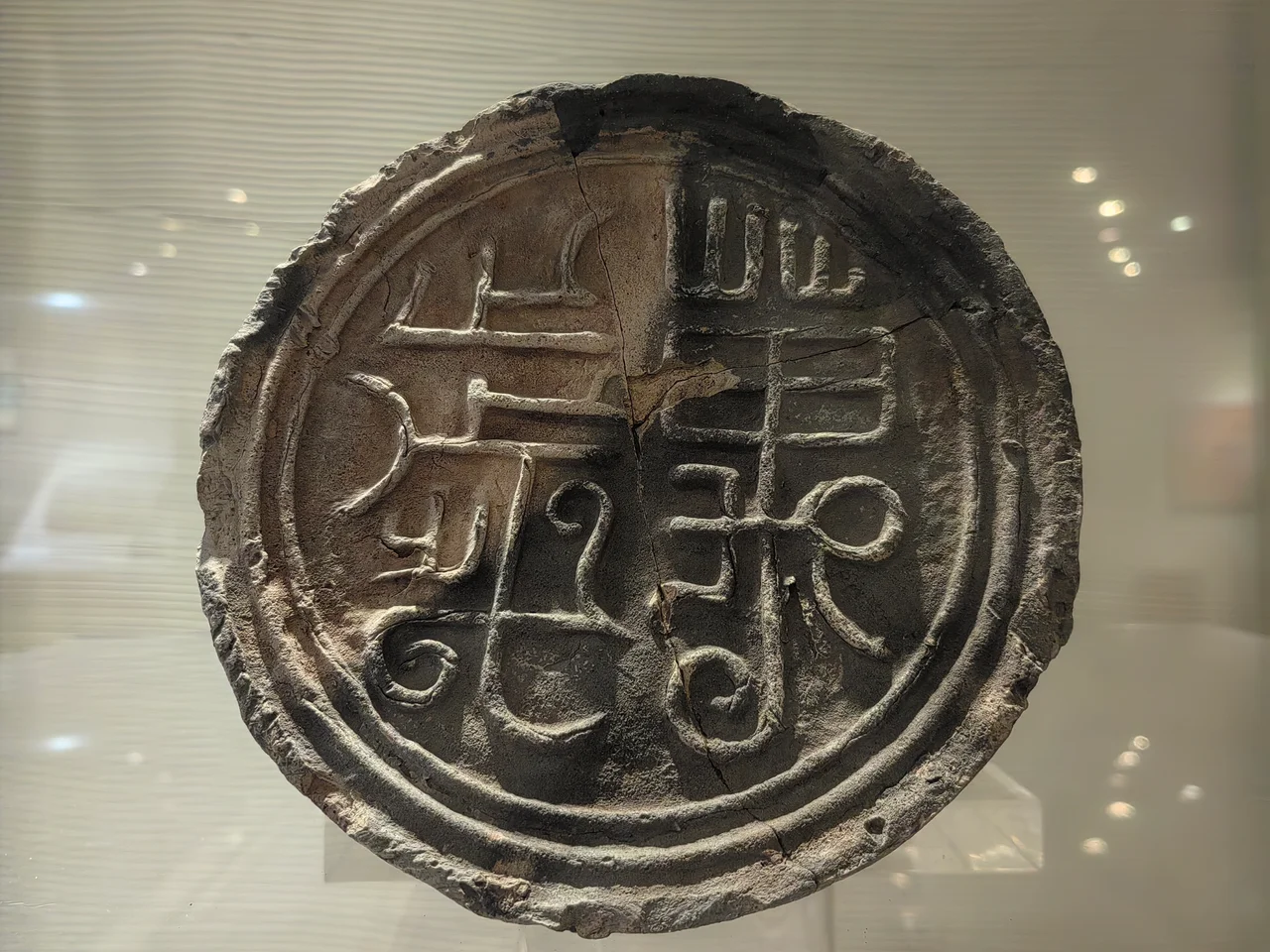

Nanyue King Museum
In June 1983, the Guangdong provincial government was lowering Xianggang Hill by 17 meters to make room for apartment buildings. Bulldozers cut into the hillside and broke open a sealed chamber. Inside, undisturbed for over two thousand years, lay the tomb of Zhao Mo — second king of the Nanyue, a kingdom that ruled the Lingnan region between 204 BC and 111 BC. Workers had not been looking for anything. What they found changed the story of Guangzhou's origins and eventually became the Nanyue King Museum, one of the most architecturally celebrated and archaeologically significant museums in southern China.
A Kingdom Buried Under the City
The Nanyue Kingdom is not widely known outside of China, but its significance to Guangzhou is foundational. Established in 204 BC by a Qin dynasty general named Zhao Tuo, it governed the Lingnan region — the lands south of the Nanling mountains, including modern Guangdong and Guangxi — for nearly a century before the Han emperor finally brought it under imperial control in 111 BC. The kingdom ruled from what is now Guangzhou, and the discovery of Zhao Mo's tomb beneath the hills of Yuexiu confirmed that the city had been a political capital of consequence two millennia before the factory trade made it famous in the West. The tomb's 1983 discovery earned its place in the historical record, and the royal palace ruins found separately in 1995 and afterward confirmed the picture: Guangzhou has been a continuous urban center for over 2,200 years.
What Was Found Inside
Zhao Mo's tomb follows a cross-shaped plan, combining vertical and horizontal designs across seven chambers. The main coffin chamber held what matters most for historical identification: the gold seal of Emperor Wen, inscribed with four seal-script characters meaning "Administrative Seal of Emperor Wen." At 148.5 grams and 98% pure gold, with a dragon-shaped knob arching into an S-curve, it is the largest Western Han gold seal found in China and the only known imperial seal of the Han period with a dragon knob. Its inscription settles, definitively, who lies in the tomb. The western side chamber — functioning as a royal treasury — yielded 295 sets of artifacts spanning gold, silver, bronze, iron, jade, glass, and textiles. Among them was a silver box decorated with embossed garlic-head patterns using the repoussé technique, a method traced not to Chinese craft traditions but to ancient West Asian silversmithing — likely Persian or Hellenistic in origin. That a West Asian silver box rested in a second-century BC tomb in Guangzhou is the kind of evidence that rewrites assumptions about ancient trade.
Jade and the Language of Power
Jade dominated the Nanyue king's burial. A jade burial suit — silk-threaded — covered the king's remains. The tomb yielded 58 jade sword ornaments, the largest such collection from any Han-era tomb. Among the most extraordinary pieces is the Jade Openwork Disk with Dragon and Phoenix motif, in which a coiling dragon and a perching phoenix regard each other across an intricate openwork field — a composition so balanced and technically accomplished that it became the museum's emblem and a cultural ambassador for Guangzhou in official contexts. The jade dancer pendant, a full-round sculpture just 3.5 centimeters tall of a woman mid-dance with carved flowing sleeves, is the only known example of a Han jade dancer rendered in the round. These are not simply grave goods; they are evidence of a workshop tradition at a sophisticated level, producing works that can still stop a viewer cold two thousand years later.
The Building That Houses It
Designing a museum around a royal tomb presented unusual problems. The architects Mo Bozhi and He Jingtang — both associated with the Lingnan architectural tradition, the regional modernism of southern China — built the complex into the hillside above the tomb's original location. Red sandstone, matching the material of the tomb chamber itself, serves as the primary exterior material. A funnel-shaped steel-and-glass canopy covers the tomb protection zone, evoking the truncated pyramidal mound form of Han imperial burials. The main exhibition building is windowless, lit by controlled indoor lighting and a single glazed atrium skylight, designed to recreate something of the tomb's atmosphere. The result won six national and international design awards and has been recognized as a World Architectural Masterpiece of the 20th Century — an achievement for a building whose primary job is to get out of the way of what it houses.
Layers Upon Layers
The palace ruins site — the Site of Palace and Garden — extends the museum's scope from a single tomb to the full sweep of Guangzhou's urban history. Excavations across roughly 12,000 square meters found cultural remains from over a dozen dynasties, stacked in layers up to five meters deep: Nanyue palace foundations beneath Southern Han throne halls beneath Tang military governor's offices beneath Song magistrate's offices beneath Yuan marshal's residences beneath Ming and Qing provincial administration buildings. The continuous occupation of the same ground for 2,200 years, without a break, is exceptional in Chinese urban history. One detail defied easy explanation: octagonal pillars in the Nanyue palace that have no parallel in contemporaneous Chinese architecture but closely resemble Indian building forms of the same period, suggesting maritime exchange via early sea routes. Guangzhou's identity as a trading city, it turns out, goes all the way to the beginning.
From the Air
The Nanyue King Museum is located at approximately 23.1264°N, 113.2642°E in Yuexiu District, in the heart of Guangzhou's urban core. The Site of King's Tomb is built into the hillside near Yuexiu Park. Approaching from the north at 3,000–5,000 feet, Yuexiu District lies between the Pearl River to the south and the older residential hills of the city center to the north. Guangzhou Baiyun International Airport (ZGGG) is approximately 25 km north-northeast of the museum. The Canton Tower to the southeast and the Pearl River provide reliable visual orientation at cruising altitude.
Nearby Stories
- Shunde 12 km away
- 2015 Shenzhen Landslide 15 km away
- Mount Luofu 23 km away
- Qingyuan Maglev Tourist Line 32 km away
- Kaiping 56 km away
- Heyuan 90 km away
- Chikan, Kaiping 92 km away
- Erlitou Site Museum of the Xia Capital 1257 km away