
National Railway Museum
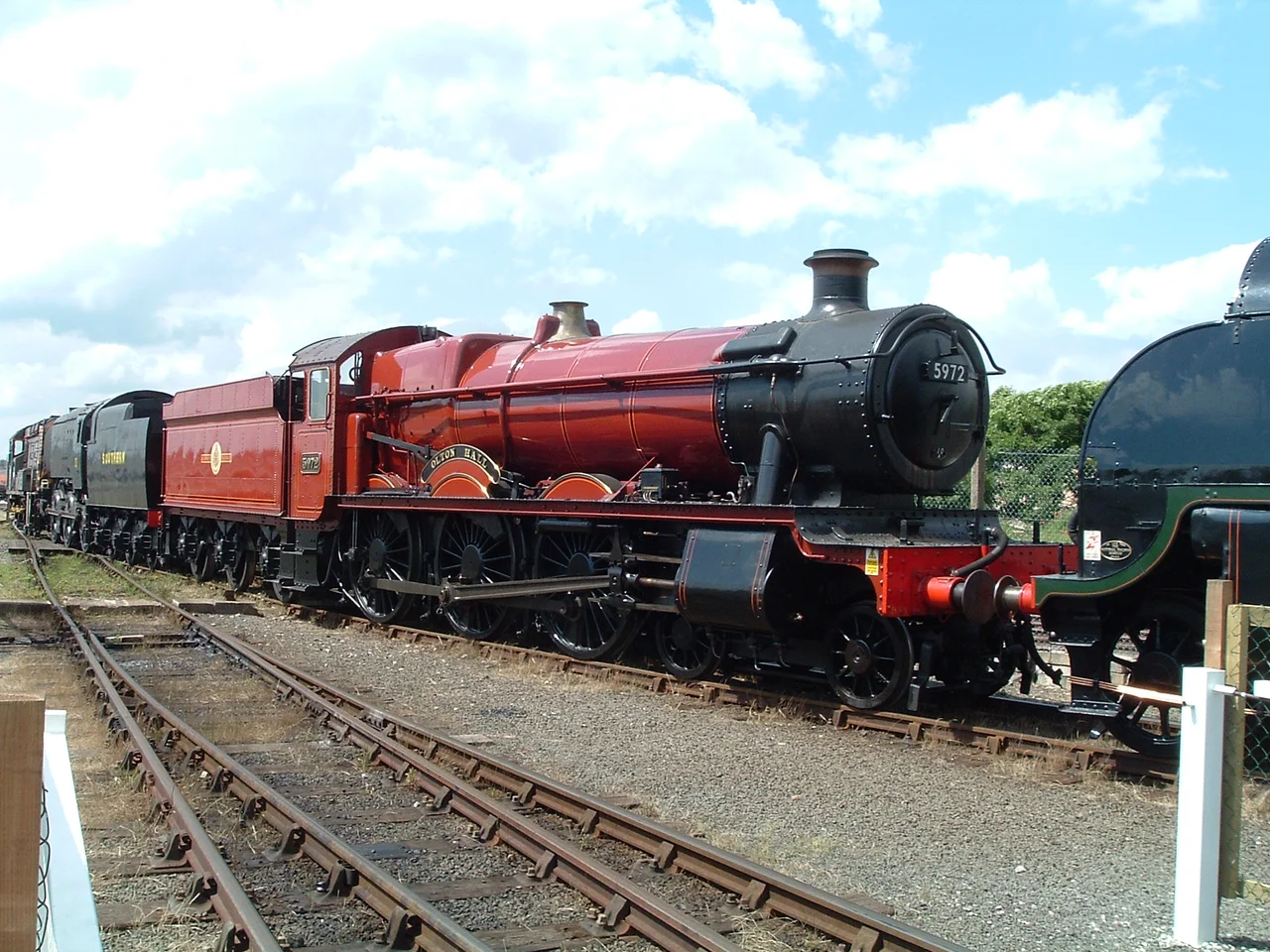
On 3 July 1938, a streamlined blue locomotive named Mallard hit 126 mph on a stretch of the East Coast Main Line. No steam locomotive has ever gone faster. Today, that same engine sits in a converted roundhouse in York, less than a mile from the rails where she made her run - the centerpiece of Britain's National Railway Museum, the country's monument to the technology it gave the world.
Roundhouse Reborn
The museum occupies what was once York North motive power depot - the steam-age roundhouse where engines were turned and serviced alongside the East Coast Main Line. When British Rail stopped running its own museums in the late 1960s, transport historian L.T.C. Rolt led the campaign to consolidate the national collection here, and Parliament agreed in the Transport Act 1968. The Duke of Edinburgh opened the museum in 1975, timed to the 150th anniversary of the Stockton and Darlington Railway. Over a million people came in the first year. Five decades later, more than 6,000 objects fill the Great Hall and the adjacent Station Hall, and admission has been free since 2001. A new £16.5 million Central Hall by architects Feilden Fowles, part of the Vision 2025 masterplan, is knitting the two buildings together for the first time.
The Record-Breakers
Mallard's 126 mph dash, captured on the dynamometer car's paper roll, still hangs near the locomotive itself - a graph that looks like any other until you understand what each tick represents. Her streamlined sister A4s and the A3 Flying Scotsman (added to the collection in 2004) tell the story of the 1930s as a race for speed and elegance. Nearby stands the LMS Princess Coronation Class Duchess of Hamilton, returned in 2009 wearing her full streamlined casing again for the first time since 1947. Evening Star, the last steam locomotive built for British Railways, sits in retirement having barely earned a working life. The collection is roughly 280 vehicles in total - around 100 at York at any time, the rest divided between the sister site at Shildon and other museums.
The Bullet Train and Other Strangers
Most of what you see was built in Britain. The exceptions tell their own stories. A Chinese Class KF7 locomotive, built in 1935 by Vulcan Foundry in Lancashire for the Chinese National Railways, returned to Britain in 1981. A Wagons-Lits sleeping car from the Paris-London Night Ferry service, donated in 1980, opens at one end onto darkness - imagine waking up in your bunk as the train rolled onto the cross-channel ferry. And then there is the leading car of a Japanese 0 Series Shinkansen, donated by the West Japan Railway Company in 2001 - one of only two Shinkansen vehicles displayed outside Japan. It sits at York not as a museum piece but as a gesture between two railway nations: Britain invented the steam railway; Japan invented the high-speed one. Both cars sleep in the same hall.
The Archive Nobody Sees
Behind the public galleries, Search Engine - the museum's library and archive - holds 1.75 million photographs, more than 20,000 books, and a collection of locomotive engineering drawings that the heritage railway movement still buys copies of to build new old steam engines. The recordings of railway sound by Peter Handford preserve what the British countryside sounded like before diesels took over. The National Archive of Railway Oral History, begun in 1999, captures the voices of staff who worked the steam-age system. Most visitors never see any of this. The reading room is open Wednesday through Saturday, and anyone can walk in. The museum's small library card is one of the more quietly remarkable things you can hold.
A City Built Around Trains
York exists in its modern form because of the railways. The Romans founded it, the Vikings ran it, but the North Eastern Railway and its predecessors built the working city that surrounds the museum today. Walking from the medieval walls to the museum takes ten minutes; the route crosses the platforms of York railway station, itself a Grade II* listed Victorian masterpiece. From the museum's balcony, monitors stream live feeds from the York Integrated Electronic Control Centre, where signallers route trains across the whole northeast of England. The past sits in the Great Hall. The present rumbles past the window.
From the Air
National Railway Museum sits beside York railway station at 53.96°N, 1.10°W, immediately west of the medieval city and the River Ouse. Leeds Bradford (EGNM) lies about 22 nm west-southwest; Humberside (EGNJ) about 35 nm southeast. The museum's distinctive rectangular building hugs the East Coast Main Line - from the air, look for the rail yard fanning out next to York's mass of red-roofed buildings and the soaring towers of York Minster a mile to the east.
Nearby Stories
- Scampston Hall 3.5 km away
- Salts Mill 4.7 km away
- Newburgh Priory 6 km away
- Brodsworth Hall 6.2 km away
- Coverham Abbey 16 km away
- RAF Leconfield 17 km away
- Macclesfield Canal 27 km away
- RAF Scampton 35 km away