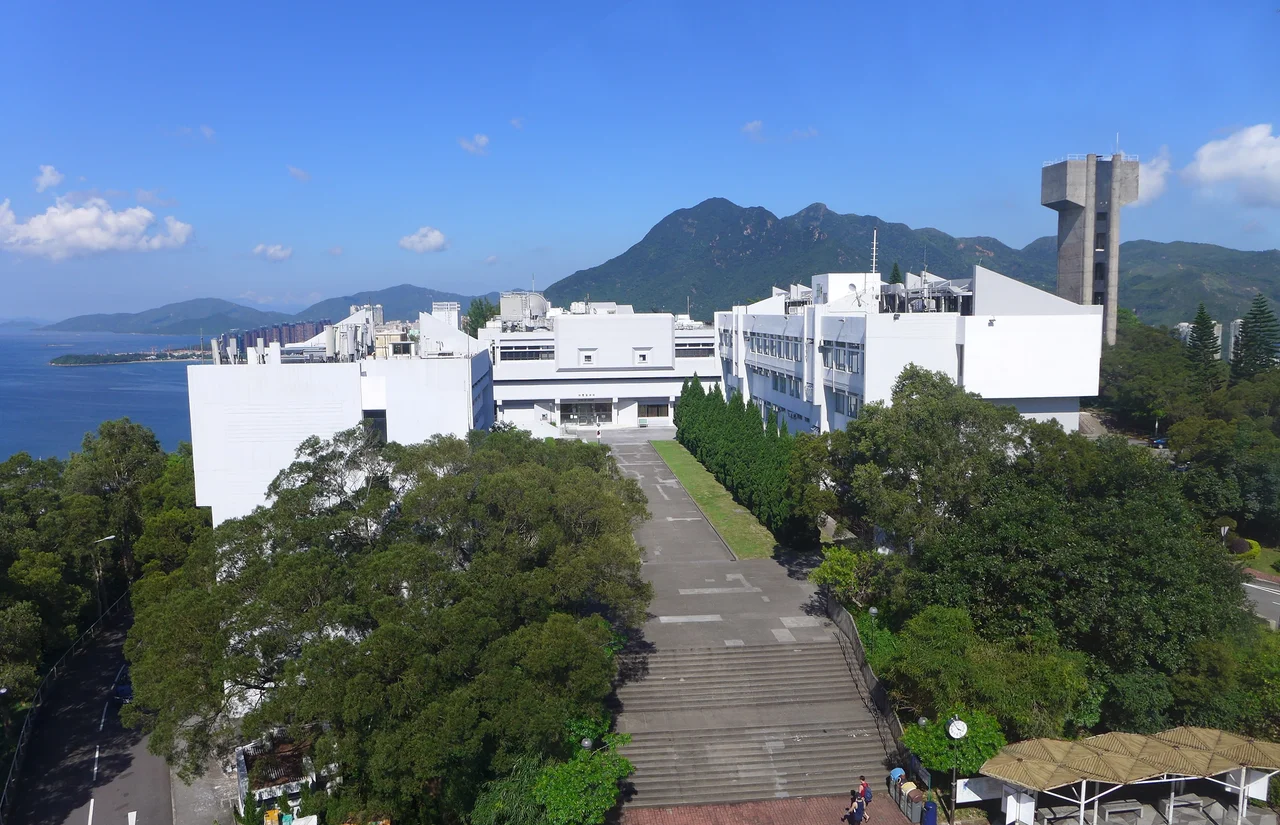

New Asia College
In 1949, as the People's Liberation Army swept through mainland China, a small group of scholars made a desperate crossing into British Hong Kong. They carried almost nothing — no endowment, no building, no government backing — only an unshakeable conviction that Confucian scholarship and Chinese cultural learning must not be extinguished. On a rented floor in Kowloon, Ch'ien Mu, Tang Junyi, and Zhang Pijie opened New Asia College with a handful of students and enormous ambitions. What they built would outlast the political upheavals that drove them into exile.
Scholars in Exile
Ch'ien Mu was already one of China's foremost historians when the Communist revolution forced him south. Tang Junyi, a philosopher deeply invested in the moral philosophy of the Confucian tradition, joined him. Together with Zhang Pijie, they founded New Asia College in 1949 not as a refuge but as a deliberate act of cultural preservation. The name itself signaled intent: a new Asia built on the foundations of the old learning, not in opposition to modernity but in dialogue with it.
The early years were lean. The college had no campus of its own and relied heavily on the Yale-China Association, an American organization that sent recent Yale graduates — known as Yale-in-China Bachelors — to teach English and other subjects. This transatlantic lifeline kept the doors open while the founders built the college's reputation through sheer intellectual force. Ch'ien Mu served as the first president from 1949 to 1965, a sixteen-year tenure that set the tone for everything that followed.
From Kowloon to the Hillside
For its first fourteen years, New Asia College occupied rented premises along Farm Road in Kowloon — not exactly an inspiring setting for the revival of classical scholarship, but the limitations never seemed to dampen the founders' sense of mission. Then, in 1963, the college's trajectory changed entirely. New Asia joined forces with United College and Chung Chi College under a charter granted by the Legislative Council of Hong Kong to form the Chinese University of Hong Kong. The merger gave all three colleges a proper campus in the New Territories, in the township of Ma Liu Shui on the shores of Tolo Harbour.
New Asia's portion of that campus sits on a hillside mount with sweeping views across Tide Cove to the peak of Ma On Shan. A circular road — New Asia Circle — wraps around the college's grounds, and Cheng Ming Link (誠明徑, meaning 'Path of Sincerity and Illumination') winds up to student residences. The Ch'ien Mu Library anchors the campus intellectually, while the Clock Tower, Water Tower, and Amphitheater give it an unhurried, contemplative character that still sets it apart from the broader university.
A Living Confucian Tradition
New Asia College became, over time, a recognized hub for Confucian philosophy and Chinese studies. The college's identity was never merely historical or archival; the founders wanted the classical tradition to remain a living intellectual force. Busts and statues of Ch'ien Mu and Tang Junyi stand on campus today as reminders of that founding spirit — not as relics but as active inspirations for students who still engage with the texts and questions that mattered to the men who fled mainland China with little more than their learning.
The college's alumni list reflects that seriousness. Lap-Chee Tsui, class of 1972, went on to become a geneticist and vice-chancellor of the University of Hong Kong. Yu Ying-shih, who graduated in 1952, built a distinguished career as a historian at Harvard, Yale, and Princeton. Vincent Cheng, class of 1973, eventually chaired the Hongkong and Shanghai Banking Corporation. These are not coincidental achievements — they suggest an institution that trained its students rigorously and sent them into the world with something to prove.
Memory, Stone, and the View Outward
Standing on New Asia's hillside today, the view toward Ma On Shan carries an unmistakable quality of remove. The bustle of Sha Tin and the dense towers of Kowloon feel distant. That physical separation from the city was, in a sense, always built into New Asia's founding idea: a place set slightly apart, where the urgency of the present does not crowd out the long view.
The Pavilion of Harmony sits near the amphitheater, a quiet space that invites reflection in a way that few campus buildings manage. The grounds honor Ch'ien Mu and Tang Junyi not with grandeur but with the kind of modest, purposeful architecture that serious scholarship tends to prefer. New Asia College has never been the largest or most visible part of the Chinese University of Hong Kong, but it remains perhaps the most deliberately intentioned — a college founded by people who understood, from painful personal experience, what it means for a culture to lose its institutions.
From the Air
New Asia College sits at approximately 22.421°N, 114.209°E on the CUHK campus in Ma Liu Shui, New Territories. At 2,000–3,000 feet, the hillside campus is visible along the western shore of Tolo Harbour. The nearest airport is Hong Kong International (VHHH), located roughly 30 km to the southwest on Lantau Island. Ma On Shan peak (702 m) rises prominently to the east and provides a useful visual reference. Sha Tin town lies immediately to the south.
Nearby Stories
- Chapel of St. Francis Xavier 3.5 km away
- Cuiheng 4.1 km away
- 2015 Shenzhen Landslide 16 km away
- Shunde 31 km away
- Wanshan Archipelago 37 km away
- Nanxiong Formation 96 km away
- Heyuan 149 km away
- Checheng Fu'an Temple 629 km away