
Oude Pekela
In 1599, a syndicate called the Frisian Company bought a stretch of swamp along the Pekel A river and cut it into 101 lots. The plan was to dig out the peat, dry it, and sell it to the cities of Holland and Friesland that needed cheap fuel. To do the digging they founded a settlement and named it after the river. Four centuries later, Oude Pekela - Old Pekela in the Groningen dialect - has outlived the peat, the cardboard mills, the boats, and most of the certainties that built it. The town is still here, narrow as the original canal, lined with the houses of the people who worked the strange industries that came and went.
How to Mine a Bog
The veenkolonien - peat colonies - were a specifically Dutch invention. You found a peat bog. You dug a long canal into it. You parceled the land in narrow strips perpendicular to the canal, so every farm had water frontage to ship its product out. You drained, cut, dried, and stacked the peat for years. Then you barged it to the cities. By the time the lot was empty of fuel, the soil beneath was good farmland, and the colony stayed on as an agricultural village. Oude Pekela followed this pattern exactly. By 1808 it housed 3,371 people. In 1704 a second church split it from Nieuwe Pekela. After Napoleon annexed the Netherlands in 1810, both became formal municipalities. They would remain separate until 1990.
From Bog to Baltic
When the peat ran out around 1800, the men of Oude Pekela took to the sea. The Pekel A connected through to the Dollart and out to the Wadden Sea. The first lock had been built in 1717. Local skippers, used to short canal runs, started sailing further - first to Holland's ports, then across the North Sea to England, then to the Baltic and the Mediterranean. Boat builders set up yards along the canal. For a few decades in the nineteenth century, a peat village a hundred kilometres from any real coast was supporting a small ocean-going merchant fleet. When sail and timber gave way to steel and steam, that business migrated to Rotterdam and Amsterdam, and Oude Pekela had to find something else.
Cardboard and Starch
It found cardboard. And potato starch. The post-peat soil grew an excellent industrial potato, and the Groningen farmers' cooperatives developed a starch industry that turned the tubers into adhesive, sizing, and eventually thousands of other derivatives. Oude Pekela's mills produced both - cardboard pulped from straw and waste fibre, starch processed from neighbouring fields. The work was hard. The pay was poor. In 1969, the Communist Party organiser Fre Meis led the cardboard workers out on strike. The CPN took fourteen percent of the vote in Groningen that year and Meis was elected to its executive. The factories kept closing through the late twentieth century. Today, only a hemp processor remains of what was once the town's industrial backbone.
The Jewish Community
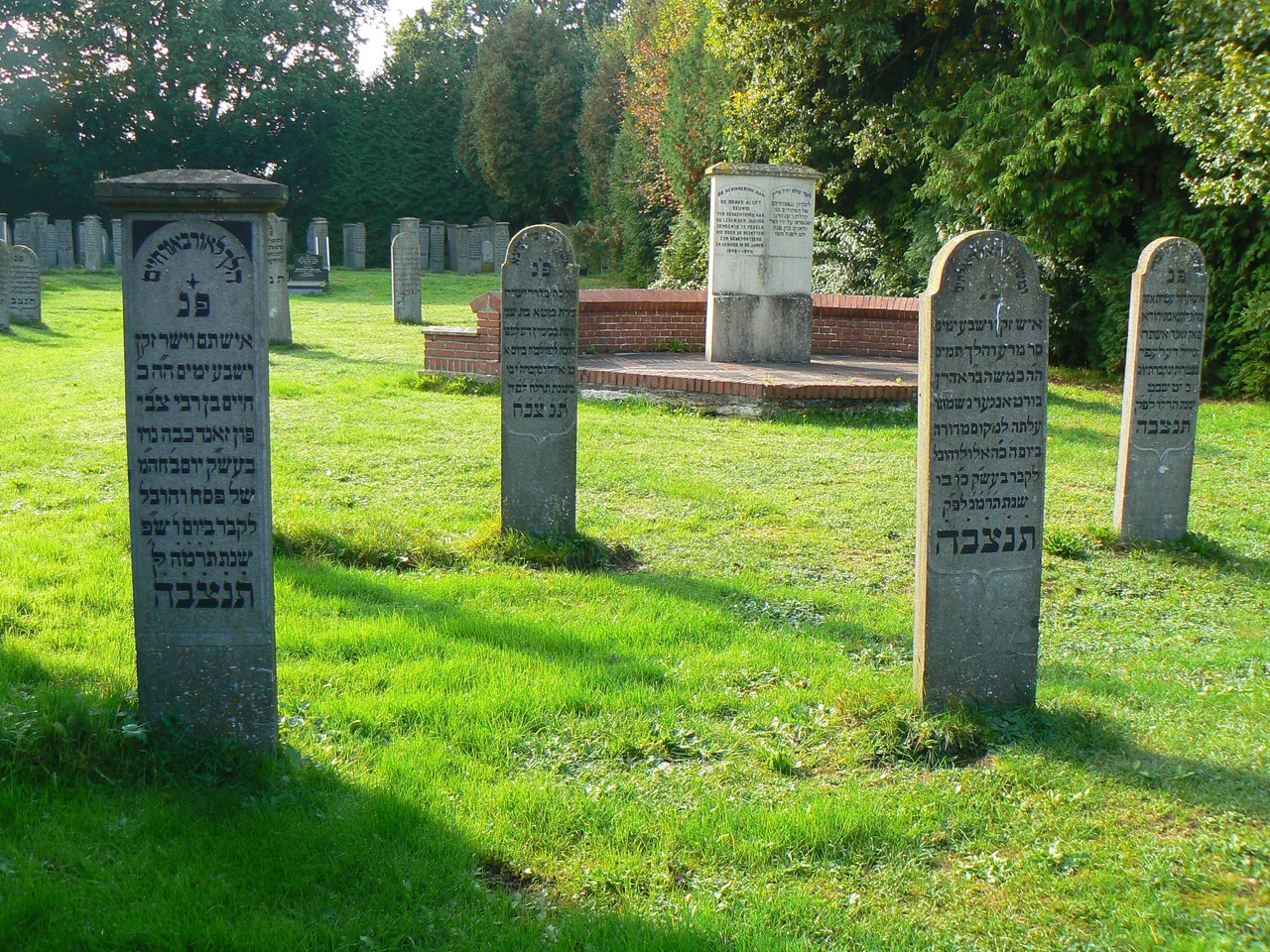
Jews first settled in Oude Pekela in 1685, drawn by the same opportunity that drew everyone: a new town, no guilds, work for anyone willing. They were joined in the late 1700s by families from East Frisia and Poland. The first synagogue went up in 1791; a larger one replaced it in 1884. In 1942, when the German occupation began its deportations, 150 Jews lived in Oude Pekela. Twelve survived the war. The Jewish cemetery still stands on the edge of town, the headstones leaning into Groningen weather. The second synagogue served briefly as a scout hall after the war and was demolished in 1979. Twelve. It is worth saying that number twice.
The Clown
In June 1987, Oude Pekela appeared in newspapers across the Netherlands for an entirely different reason. Parents reported that a clown had been sexually abusing children. The story grew. More parents came forward. Hundreds. There were demonstrations. A police spokesperson used the words 'mass hysteria' in a press conference, which only inflamed the situation further. A massive investigation produced no physical evidence, no consistent witnesses, no clown. On 17 October 1988, prosecutors closed the case. Dutch academics still write about it as a textbook example of a moral panic - a community swept by a fear that became contagious before anyone could ask, calmly, whether the fear was true.
What Remains
Oude Pekela today is poor. Elsevier Weekblad in 2009 and 2010 called it the worst place in the Netherlands to live, a verdict its residents loudly rejected. House prices in 2021 were the most affordable in the country - which can be read either way. The town centre was renovated in stages between 2017 and December 2021, and shops have returned. The old water tower still stands. So does the bronze sculpture Turfkruiwagen - the peat wheelbarrow - which Frans Kokshoorn made in 2009 as a monument to the work that built the town. Around 8,000 people live here. They keep going.
From the Air
Coordinates 53.10°N, 7.01°E. Oude Pekela sits about 5 km southwest of Winschoten, near the German border. From 3,000-5,000 ft the town's linear peat-colony structure is unmistakable - a long, thin strip of houses lining both sides of the canalised Pekel A river, with narrow farmland lots fanning out perpendicular to the canal. Nearest airport: Groningen Airport Eelde (EHGG, 50 km west). The N367 provincial road connects the town to the A7 motorway. The German border is roughly 10 km east.
Nearby Stories
- Low-Frequency Array 0.9 km away
- Eemshaven Railway Station 2.9 km away
- Nuis, Netherlands 3 km away
- Upstalsboom 3.4 km away
- Leer, Lower Saxony 7.9 km away
- Schiermonnikoog National Park 8.6 km away
- Börger 9 km away
- Drenthse Veenkolonien 9.9 km away