.jpg)
Pembroke College, Cambridge
Marie de St Pol was the widow of the Earl of Pembroke and a member of the de Châtillon family of France. On Christmas Eve 1347, King Edward III granted her a licence to found a new college in Cambridge. The founding documents she drew up were unusually strict: they required students to report fellow students who drank excessively or visited disreputable houses, set penalties for drunkenness and lechery, demanded all debts be settled within two weeks of term's end, and imposed limits on graduation party sizes. The college she created — the third-oldest at Cambridge — is still here, still named after the earldom of the husband she had outlived, and still carrying the heraldic bars of the de Valence family on its coat of arms.
A Promise Made in Prison
Matthew Wren was a fellow of Pembroke College and later chaplain to King Charles I before the Civil War. Oliver Cromwell imprisoned him. He spent eighteen years in the Tower of London. When he was finally released, he remembered a promise and fulfilled it: he hired his nephew, the young Christopher Wren, to build a chapel at his former college. The Pembroke College Chapel was consecrated on St Matthew's Day, 1665. It is the first complete building Christopher Wren ever designed — predating St Paul's Cathedral and his great London churches by decades. The eastern end was extended in 1880 by George Gilbert Scott. The original chapel building, which predated Wren's commission, now houses the Old Library, whose ceiling features a striking 17th-century plasterwork design by Henry Doogood showing birds in flight.
Pitt the Younger and the Seat That Shaped Britain
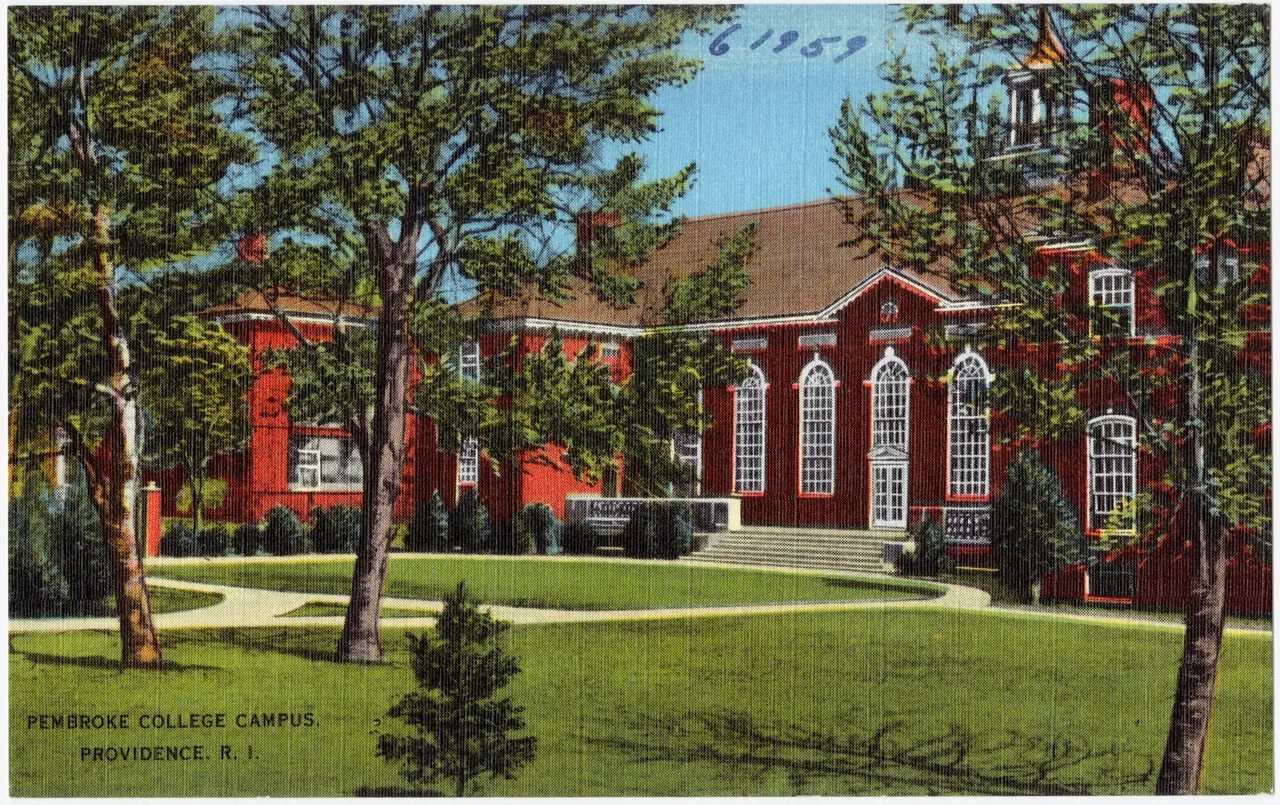
William Pitt the Younger arrived at Pembroke in 1773, aged fourteen, having been granted special dispensation as the son of a former Prime Minister. He went down without taking his degree — he was too ill, and in any case his distinction in the university examinations had already made his reputation. He became Prime Minister at twenty-four, the youngest in British history, and served twice. The connection between Pembroke and British politics runs through the centuries. Edmund Spenser, who wrote The Faerie Queene, was here. Roger Williams, the Baptist theologian who founded Rhode Island in America, studied at Pembroke; the women's college at Brown University was named Pembroke College in his honour. The college bowling green is reputedly among the oldest in continuous use in Europe.
A Bequest That Changed Sound
In 2015, the college received a bequest of £34 million from the estate of Ray Dolby, the American inventor who created the Dolby noise reduction system. Dolby had studied at Pembroke. The gift was believed to be the largest single donation to a Cambridge college in the university's history. The Pembroke Players, the college's dramatic society, has produced a remarkable series of alumni: Peter Cook, Eric Idle, Tim Brooke-Taylor, and Clive James all trod its boards. John Sulston, who won the Nobel Prize in Physiology or Medicine in 2002 for discoveries about genetic regulation of cell death, and Naomie Harris and Tom Hiddleston, both prominent film actors, also passed through Pembroke. The college has more than 700 students and fellows and has stood second in the Cambridge Tompkins Table academic rankings in multiple recent years.
Buildings Across Eight Centuries
Pembroke's oldest building is its gatehouse, the oldest college gatehouse in Cambridge. Old Court was the university's smallest original court at 95 by 55 feet, though it was enlarged in the 19th century. The Hall was rebuilt in 1875–76 by Alfred Waterhouse — who then had to be dismissed as architect in 1878 after relations broke down, replaced by George Gilbert Scott. In the gardens, a row of Plane Trees and a semi-wild patch known as the Orchard create a rare sense of wildness within the city. By popular legend, the Ivy Court is haunted. The college continues to expand: in 2017 it launched a campaign to enlarge its footprint across Trumpington Street by roughly a third. Female undergraduates were first admitted to Pembroke in 1984.
From the Air
Pembroke College lies at 52.202°N, 0.119°E on Trumpington Street, in central Cambridge. The college and its gardens are adjacent to the Fitzwilliam Museum and close to the River Cam. Cambridge City Airport (EGSC) is approximately 2 nautical miles to the northeast. From low altitude in clear conditions, Pembroke's Gothic Revival buildings and Christopher Wren's chapel can be distinguished from the general mass of Cambridge's college buildings. The approach to Cambridge over flat Cambridgeshire farmland provides excellent visibility of the city centre.
Nearby Stories
- Kentwell Hall 2.5 km away
- Thetford Hoard 2.8 km away
- King's Ely 6 km away
- Bedford 7.8 km away
- White House Farm murders 13 km away
- Oundle 14 km away
- Hemel Hempstead 14 km away
- North Weald Airfield 15 km away