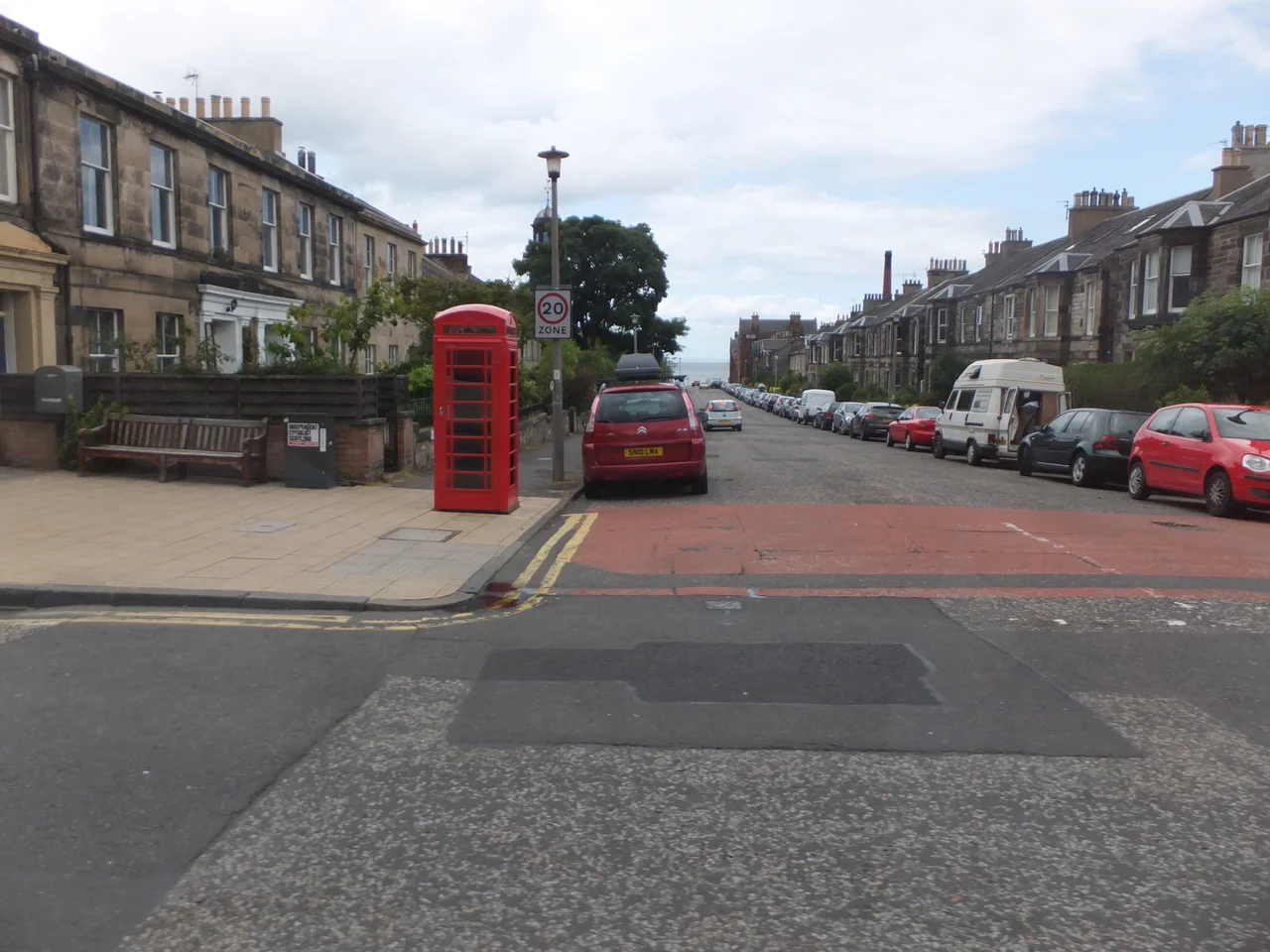

Portobello, Edinburgh
In 1742, a Scottish sailor named George Hamilton built a small cottage on the moor east of Edinburgh and gave it a strange name. He had served under Admiral Edward Vernon at the Battle of Porto Bello in Panama three years earlier, and the British victory had stayed with him. He called his little home Portobello Hut. Other cottages joined his. A village rose around the name. Today, three miles east of Edinburgh's city centre, that act of homesick whimsy has become a sandy promenade where wild swimmers brave the Firth of Forth year-round and dolphins occasionally pass offshore.
From Figgate Muir to Brick Town
Before Hamilton arrived, the place was known as Figgate Muir, a stretch of moorland through which the Figgate Burn flowed from Duddingston Loch down to a broad sandy beach. The monks of Holyrood Abbey grazed cattle here, giving the name its likely meaning - cow road, the same root as Edinburgh's Cowgate. Sailors and smugglers worked the coast in the 18th century. Then a man named Jameson noticed something the monks had missed: a rich seam of clay near the burn. He built a brick and tile works, then an earthenware pottery. The clay reshaped everything. By the 19th century Portobello was making bricks - Portobello brick became its own category - alongside glass, lead, paper, soap, mustard, and pottery. A pleasant beach village had become an industrial town.
Walter Scott's Three Days
In 1802, Walter Scott was serving as quartermaster of the Edinburgh Light Horse, a volunteer cavalry unit that drilled on Portobello Sands. During a charge he was kicked by a horse and confined to his lodgings for three days. He spent the time finishing The Lay of the Last Minstrel, the long narrative poem that made him famous. It is a strange thing to consider as you walk the promenade today - that a foundational work of Scottish Romantic literature was completed by a man recovering from a horse-kick a few yards from the beach. Decades later another battle over the beach unfolded, slower and stranger: Sir William Rae, a former Lord Advocate, sued a landowner who had walled off his stretch of sand in 1842. The case reached the House of Lords. In 1849 the walls came down.
The Victorian Resort
The Promenade went up shortly afterward, two miles of public seafront secured by Rae's lawsuit. The town fully committed to its new identity. Portobello Pier opened in 1871, 1,250 feet of iron and timber stretching into the Forth, designed by Sir Thomas Bouch - the same engineer whose Tay Bridge would collapse a few years later, killing seventy-five people. The pier itself was kinder. It carried a restaurant and observatory at its end until rust and the Great War finished it in 1917. The Portobello Baths opened in 1901 with one of the only three remaining public Turkish baths in Scotland. The open-air pool, heated by waste steam from the red-brick power station, drew visitors from Glasgow when the Fair holiday started. Sean Connery worked there as a lifeguard before he was Sean Connery.
Decline and Reinvention
The resort peaked late in the 19th century and slowly faded. The funfair lasted until 2007 before being cleared for housing. The power station came down. The pool closed in 1979. By the end of the 20th century the Promenade had few attractions specific to a seaside town, just the Tower Amusements arcade still keeping a flame alive. Then something turned. In 2016 Portobello became the first urban community in Scotland to register a Community Right to Buy, purchasing Bellfield Old Parish Church for £600,000 to run as a community centre. In 2019 it was voted the best neighbourhood in the UK at the Urbanism Awards. The Town Hall, closed in 2019 for crumbling masonry, reopened in 2023 under a community lease at one pound per year. Wild swimmers meet on the beach through the winter. Beach volleyball draws crowds. Porty, as locals call it, has come back without erasing what it was.
From the Air
Portobello sits at 55.95N, 3.11W, on the southern shore of the Firth of Forth three miles east of Edinburgh's centre. Best viewed at 2,000-3,000 feet to take in the two-mile crescent of sandy beach and Promenade, with Arthur's Seat rising to the west and Musselburgh stretching east. Edinburgh Airport (EGPH) lies 9 miles to the west. Coastal weather is changeable - haar (sea fog) from the Forth can roll in quickly.
Nearby Stories
- Blackness Castle 2.2 km away
- Skateraw Lifeboat Station 2.8 km away
- RAF Charterhall 5.6 km away
- Ochil Hills 6.3 km away
- Innerleithen 12 km away
- Falkland Palace 14 km away
- New Lanark 18 km away
- Bell Rock Lighthouse 21 km away