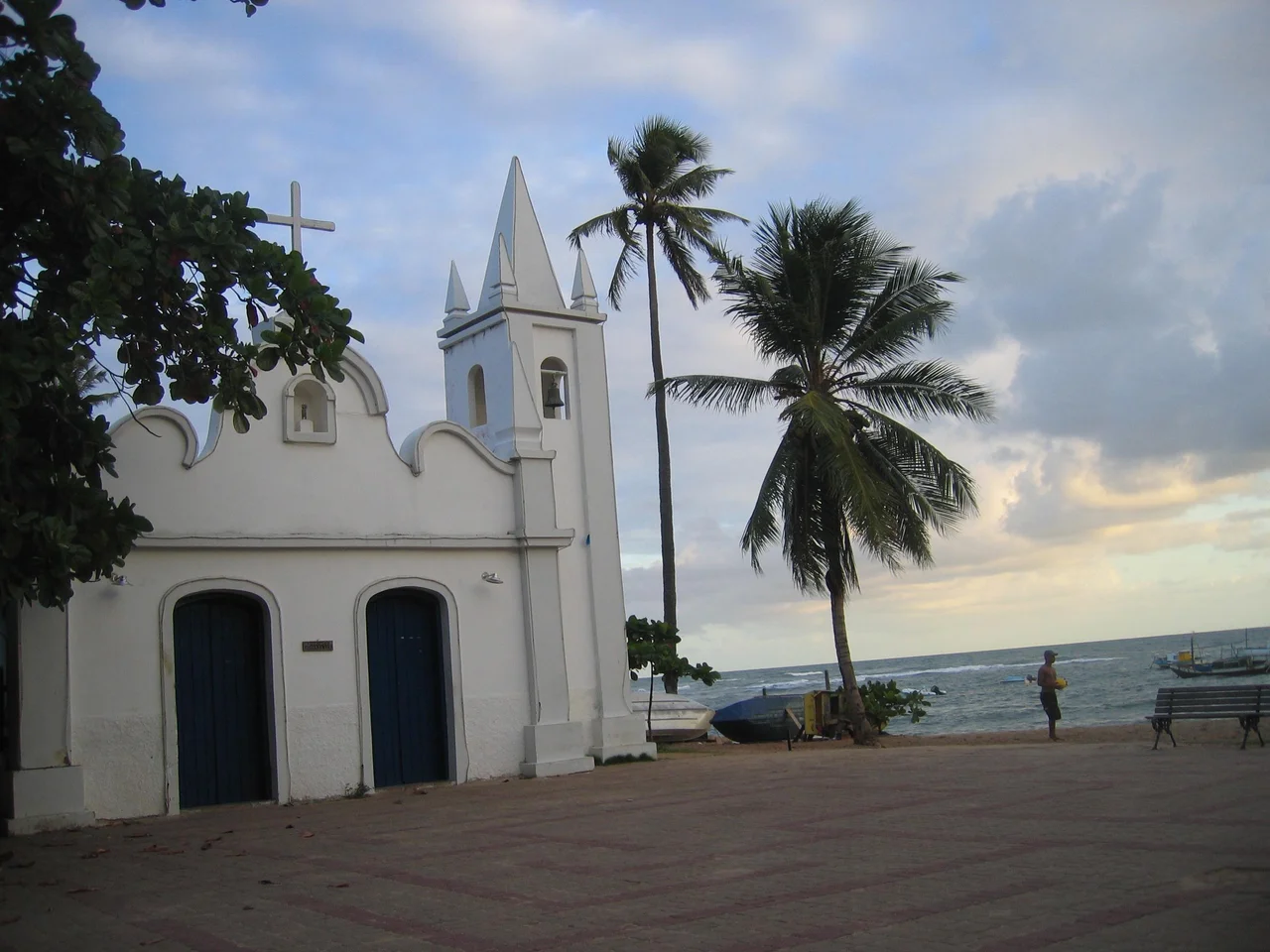

Praia do Forte
Every November, leatherback and loggerhead sea turtles crawl out of the Atlantic surf onto this stretch of Bahian coast to dig their nests, as they have for longer than anyone knows. Researchers from Projeto TAMAR arrived in 1982, when Praia do Forte was a fishing village of about 500 people, because these beaches are one of the most important turtle-nesting sites in Brazil. Forty-plus years later the turtles still come, the village has grown into a tidy tourist town eighty-two kilometers north of Salvador, and the hatchlings that scrabble out of the sand at dusk still make their comical dash for the white line of the waves.
Arriving from Salvador
The bus takes about ninety minutes to two hours from Salvador, running up the Linha Verde coastal highway from the Rodoviária bus station or from Calçada, near the bottom of the Elevador Lacerda in the Cidade Baixa. Salvador Bahia Airport lies northeast of the city, which makes it simple to skip Salvador entirely if you want to go straight to the beach - airport buses run directly to Praia do Forte at 10:30 and 14:30. Once you arrive, the town is small enough to walk everywhere. A single shop-lined lane curves from the bus drop-off toward the beach and past the entrance to Projeto TAMAR, where tourist shops sell every conceivable variation on the turtle-themed souvenir alongside bikinis, artisanal jewelry, and the local Bahian handicrafts.
Turtles, Tide Pools, and Whales
Projeto TAMAR, the national sea-turtle conservation program, uses Praia do Forte as its headquarters. The open-air visitor center keeps rescued turtles in large saltwater tanks, explains the life cycles of the five species that nest on Brazilian beaches, and releases newly hatched turtles back to the sea in season. The beach itself rewards long walks. At low tide, pools form in the hollows of the offshore reef, teeming with small fish, hermit crabs, and anemones you can peer at from the rocks. Farther down, past the project enclosure, the swimming turns excellent - clear water, shoals of reef fish visible without a mask, and surf gentle enough for children. Humpback whales breed along this coast from July through October, and it is not unusual to see one breach past the breaking waves from a beach chair.
Beyond the Sand
A few kilometers inland the Sapiranga Ecological Reserve protects a pocket of Atlantic rainforest, with marked trails that wind past bromeliads, palm groves, and bird life noisy enough to wake you up. The trails work for walking or horseback; both are available through local operators. Four-wheeled motorbikes roar through on some routes, which locals increasingly regard as the latest invasive species. Back in town, you can hire bicycles, surf the gentler breaks at the nearby beaches, or train capoeira with local groups such as Grupo Esporão, where teachers with names like Contra-Mestre Fuampa will patiently show a visitor how to fall correctly. Boutiques scattered along the main lane sell clothing and ceramics that do not feature turtles.
Back to the City
Some travelers make Praia do Forte their whole Bahia experience - fly in, stay a week at a pousada, fly home, never see Salvador. That is a mistake. Ninety minutes down the road lies the oldest European-founded city in Brazil, the Pelourinho World Heritage Site, the Afro-Brazilian cultural heartland that invented capoeira, Candomblé, and Carnaval as the rest of the world now recognizes them. The whole point of Praia do Forte is that you can spend the morning with baby turtles and the evening in a drum circle in Pelourinho. The coastal strip north of Salvador reads like a series of low-key companion pieces to the city - Praia do Forte the quiet one, Arembepe further south where the hippies settled in the 1970s, Costa do Sauípe the planned resort complex. Each offers a different angle on a coastline that has been shaped by the same currents and the same history for five hundred years.
From the Air
Praia do Forte sits at approximately 12.58°S, 38.01°W on the Linha Verde coast of Bahia, 82 km north-northeast of Salvador. The nearest commercial airport is Salvador Bahia Airport (ICAO: SBSV, IATA: SSA), approximately 50 km south-southwest; shuttle buses run direct to Praia do Forte. From 4,000-6,000 feet the coastline shows white sand beaches, coconut groves, and a pale-green offshore reef line that breaks the Atlantic swell. Trade winds are steady from the east-southeast; the wet season runs April through July, and October through March offers the best humpback whale sightings offshore.
Nearby Stories
- Salvador Bahia Airport 21 km away
- Rio São Francisco Mangroves 28 km away
- MV Araraquara 47 km away
- Morro de São Paulo 67 km away
- SS Annibal Benévolo 103 km away
- Pé de Serra 115 km away
- SS Baependy 135 km away
- Roncador Field 1113 km away