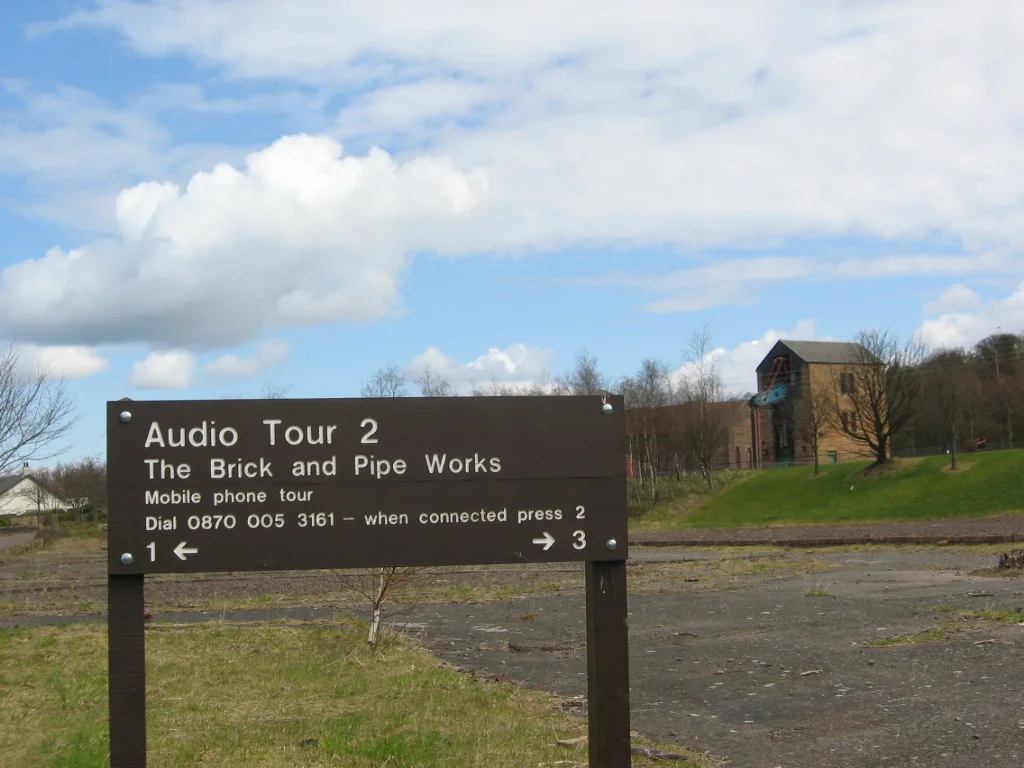

Prestongrange Museum
The Cornish beam engine at Prestongrange is enormous. Its cast-iron beam is so heavy that the front wall of the engine house had to be built nearly seven feet thick just to hold the main pivot bearing. The engine was made in Plymouth, used in three Cornish mines, then bought by the Prestongrange Coal and Iron Company in 1874 and shipped north. For eighty years it pumped water from the pit at 2,955 litres a minute. It is the only one left in Scotland - and the reason a colliery slated for demolition became a museum instead.
Eight Centuries of Industry
Few places in Scotland have been worked as continuously as the stretch of coast between Musselburgh and Prestonpans. Monks from Newbattle Abbey were mining coal here in the 12th century, making this one of the earliest sites of British coal mining. The estate appears in the earliest written account of Scottish collieries, dated to between 1180 and 1210. A harbour grew up at Morrison's Haven in the 16th century. Glass works followed in the 17th, potteries in the 18th, a brickworks and chemical industry in the 19th. Salt boiling, soap making, sulphuric acid production - all of these once happened within sight of the Firth of Forth. By the time the National Coal Board began closing East Lothian's collieries in the 1960s, the layers of industrial history at Prestongrange ran deep.
The Mine That Became a Museum
Prestongrange Colliery closed in 1962. The site was being cleared when a retired mining engineer named David Spence proposed something unusual: leave it standing. Save it. A steering committee formed in 1968. Volunteers from coalfield communities cleared the site themselves and assembled exhibits from collieries closing across central Scotland. The National Mining Museum formally opened at Prestongrange on 28 September 1984. It was a fitting site for three reasons. The estate appears in the oldest written record of Scottish mining. The colliery contained Scotland's first deep shaft, sunk by Matthias Dunn of Newcastle in 1830 to the Great Seam at 420 feet down. And it housed that one surviving Cornish beam engine. In 1992 the focus split: the National Mining Museum moved to Lady Victoria Colliery at Newtongrange, and Prestongrange became an industrial heritage museum covering everything else - the salt, the glass, the pottery, the chemicals.
What Stands Today
The Hoffmann Continuous Kiln still rises from the site, a great brick oval where bricks were fired in a slow rotation around a permanent flame. The category-B listed power house remains. The 16th-century harbour at Morrison's Haven is gone but its outline lingers. Rolling stock sits on the railway remains. The Visitor Centre houses an exhibition tying it all together, and a self-guided audio tour - narrated by John Bellany, the painter born in nearby Port Seton - walks visitors through the grounds. Each year the museum hosts the Three Harbours Festival jointly with Prestonpans, Cockenzie and Port Seton, and the grounds become part of the re-enactment of the 1745 Battle of Prestonpans. The miners who worked Prestongrange for a thousand years are gone, but the machines they relied on, and the kilns and the pottery sites and the colliery power station, remain - quiet now, watched over by their own ghosts.
From the Air
Prestongrange Museum sits at 55.96N, 3.00W, on the East Lothian coast on the B1348 between Musselburgh and Prestonpans. Best viewed at 1,500-2,500 feet to spot the distinctive Hoffmann Kiln, beam engine house, and chimney. Edinburgh Airport (EGPH) lies 13 miles to the west. The Firth of Forth is to the north - look for the offshore Cockenzie windfarm substation.
Nearby Stories
- Blackness Castle 2.2 km away
- Skateraw Lifeboat Station 2.8 km away
- RAF Charterhall 5.6 km away
- Ochil Hills 6.3 km away
- Innerleithen 12 km away
- Falkland Palace 14 km away
- New Lanark 18 km away
- Bell Rock Lighthouse 21 km away