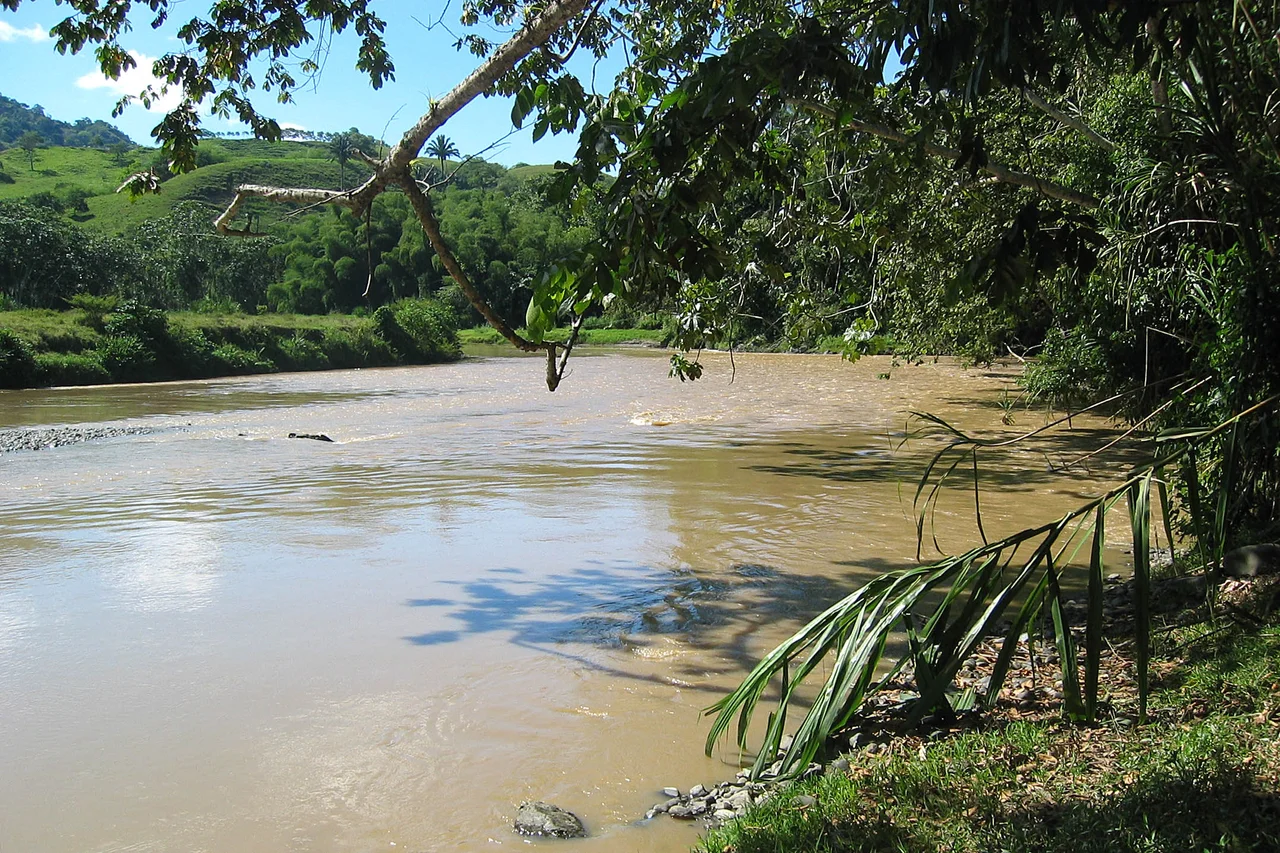

Quindío Department
Open a map of Quindío and the town names read like an atlas of homesickness: Armenia, Montenegro, Circasia, Salento, Génova, Córdoba, Filandia. The settlers who reached this corner of the Colombian Andes in the 1840s - peasants from Antioquia pushing south through cloud forest and bamboo - named their new towns after places the world thought it had forgotten. Filandia is the prettiest of the bunch: a compound of Latin filia and Andia, "daughter of the Andes." The department itself is small, just 0.2 percent of Colombia's territory and only twelve municipalities - but it grows some of the finest coffee in the world under the tallest palms on Earth.
The Quimbaya and the Pijao
The Quimbaya civilization occupied this land until roughly the 10th century BC, leaving behind the gold work that now fills the Quimbaya Museum: intricate poporos, anthropomorphic figures, tunjos. When the Spanish arrived, the people in these valleys were the Pijao, a Carib-descended federation whose resistance to colonization was famously fierce. Over the following centuries the Pijao population was ground down by slavery, armed confrontation, and the massacres of the rubber boom; the forest swallowed the territory again and left it nearly empty for generations. About 2,000 Amerindians remain today in a reservation near La Tebaida, the only descendants of the civilizations that built this landscape.
The Antioquian Colonization
Salento was founded in 1842, the first new settlement in the repopulation of the range. Throughout the 19th century, peasant families from Antioquia made the journey south - a migration that Colombians call the colonización antioqueña and that gave the region its lasting paisa identity. There were no roads. Trade moved by muleteer caravans (arriería) or, where mules could not go, by silleros: human porters who carried other humans on wooden chairs strapped to their backs. The memory of the silleros, who carried merchants, priests, women in labor, and aging settlers over the passes of the Central Range, is kept alive in the Yipao parade each October in Armenia, where jeeps compete in ludicrous feats of cargo-stacking in the settlers' honor.
The National Tree
In the Cocora Valley, the Quindío wax palm grows taller than any other palm on Earth - some specimens reach 60 meters, slender trunks crowned with tufts of fronds that sway against the cloud forest. On September 16, 1985, president Belisario Betancur signed Law 61, declaring Ceroxylon quindiuense the national tree of Colombia. The law forbids cutting the palm and authorizes the government to buy land to protect it. The palm had almost vanished: its fronds were cut for Palm Sunday processions each spring, and its waxy resin was extracted for candles and polish. The Cocora Valley is now the best place on the planet to see the surviving stands - a dream-landscape of green pastures dotted with 150-foot palms, mist running between them like a second river.
Coffee Culture
Quindío sits inside the Colombian Coffee-Growers Axis - the eje cafetero - and produces some of the highest-quality coffee beans in the country. The volcanic soils here, enriched by ancient eruptions, are exceptionally fertile. The weather has two rainy seasons (April and November) and two dry ones, a bimodal rhythm that suits coffee bushes. The economy orbits the bean: the Colombian National Coffee Park in Montenegro turns the story of production into a theme park, the National Coffee Party has been held in Calarcá since 1960, and local cuisine bends toward coffee in forms most outsiders never encounter - coffee wine fermented from the berries, coffee arequipe (a caramel spread), and the carajillo, a Spanish-Colombian cocktail of hot coffee, sugarcane aguardiente, and cinnamon. UNESCO recognized the whole Coffee Cultural Landscape of Colombia as World Heritage in 2011.
The Christmas Panther
On the night of December 7, the rural pueblos of Quindío glow. The Alumbrado de Navidad, the Candlelight Festival tied to the Feast of the Immaculate Conception, fills streets and courtyards with lanterns and candles. Alongside the candles, in many homes, sits a small blue figure with a yellow tail: the Quimbayan Christmas Panther, el puma de navidad. It is a genuine syncretism - Spanish Catholic colonists arrived in the 1850s with their tradition of candlelight for the Virgin, and local Quimbaya belief already held that fire protected people from pumas. The two traditions fused: the candle both honored the Virgin and held the puma at bay, and the puma itself became part of the iconography. Descendants of the Quimbaya, many of them mestizo families in the rural pueblos, still display the blue panther each December. It is the only Christmas figure of its kind anywhere in the Andes.
Birds, Orchids, Bamboo
Quindío is the natural habitat of 520 bird species and about 60 mammal species - a startling density for a department this size. The area holds the largest diversity of Heliconia species in the world and staggering numbers of orchids (Cattleya, Odontoglossum, Miltonia, Phragmipedium, Peristeria). The yellow-eared parrot, Andean guan, and Colombian weasel are all endemic and all threatened, because the páramo and cloud forest that once covered this territory are shrinking under coffee, cattle, and plantain. Guadua, a tropical bamboo that grows thicker and faster than most, still shelters watersheds and builds farmhouses across the department. In the space of a single morning, a traveler can walk past 150-foot palms in the Cocora Valley, taste trout in Salento cafés, see a puma-shaped Christmas ornament in a Quimbayan home, and drink a coffee that began as a cherry on a bush the settlers' great-grandparents planted.
From the Air
Quindío covers the western slope of Colombia's Central Range at roughly 4.53°N, 75.67°W, between about 1,100 m in the La Vieja river valley and over 4,500 m at Nevado del Quindío (technically just across the department boundary). The capital Armenia is served by El Edén International Airport (SKAR). The region lies roughly equidistant from Bogotá, Medellín, and Cali. From altitude it reads as a mosaic of coffee terraces, bamboo forests, and mountain ranges running north-south; Cocora Valley's signature wax-palm stands are recognizable as bright green pastures punctuated by tall palm crowns. Mountain weather is bimodal with rainy peaks in April and November; cloud forest keeps the upper slopes misty.
Nearby Stories
- Valle del Cauca Department 41 km away
- Manizales 45 km away
- Tolima Department 60 km away
- San Francisco, Cundinamarca 108 km away
- Tutunendo 114 km away
- Sabana Formation 116 km away
- Villavicencio 178 km away
- Gulf of Tribuga 182 km away