
Tolima Department
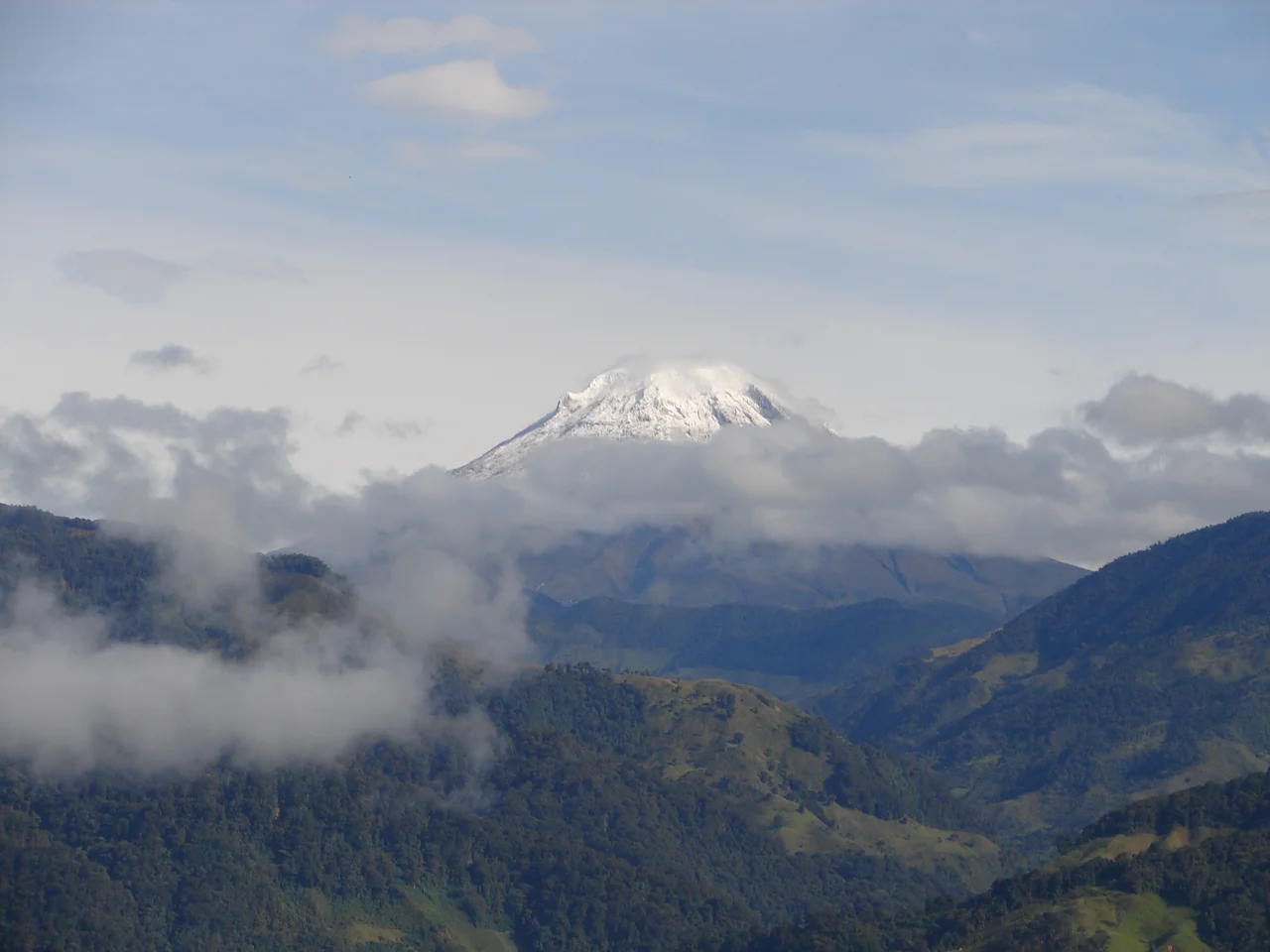
The name means snowed. Tolima is what the Pijao called the mountains that crown their ancestral territory, and the department took the name when it was carved out of Cundinamarca in 1861. At the high end, Nevado del Tolima rises 5,215 meters (17,110 feet) above sea level, its summit a glacier-capped cone that last erupted in 1943. At the low end, wide valleys drop below 400 meters, where temperatures regularly push past 40 degrees Celsius. This is one of the 32 departments of Colombia, and it contains, within 23,562 square kilometers, nearly every ecosystem the Andes offer.
The Pijao and the Panche
Before Spanish contact, two peoples of the same linguistic family divided Tolima between them. The Pijao lived in the south. The Panche held the north, in the foothills running down to the Magdalena Valley, and were widely known as fierce warriors. The Panche fought the Muisca for control of the emerald mines - those impossibly green stones that to this day make Colombia the world's primary source - until, on 20 August 1538, a combined Spanish and Muisca force defeated them at the Battle of Tocarema. Spanish conquistador Sebastián de Belalcázar had come up from the south in 1537 after founding Cali and Popayán, heading toward where Gonzalo Jiménez de Quesada had just founded Bogotá. On the way north, Belalcázar founded the settlement that would grow into Ibagué. Captain Andrés López de Galarza completed the founding of Ibagué later, and added Cajamarca further west.
The Musical City
Ibagué, Tolima's capital, is known throughout Colombia as la Ciudad Musical - the musical city - and carries the title with some legitimacy. It hosts one of the country's classic conservatories, the Conservatorio del Tolima, founded by Alberto Castilla in the early twentieth century. Castilla also composed the Hymn of Tolima Department. The department produces the Colombian Folkloric Festival and the Concurso de Duetos Garzón y Collazos, a competition for two-voice vocal duos. The Fiestas de San Pedro in Espinal and San Juan in Natagaima fill streets with music and dance. Tolima has also produced writers - Arturo Camacho Ramírez, Juan Lozano y Lozano, Diego Fallon, the contemporary novelist William Ospina, the New York-based novelist James Cañón - and more than a few painters: Darío Jiménez, Jorge Elías Triana, Carlos Granada, Julio Fajardo.
Armero
On 13 November 1985, Nevado del Ruiz - the volcano that stands on Tolima's northern border with Caldas - erupted. The eruption itself was moderate. What made it catastrophic was ice. The heat of the eruption melted portions of the summit glacier, and the resulting lahars - torrents of water mixed with ash, rock, and mud - surged down the volcano's slopes. They hit the town of Armero in the middle of the night. Approximately 23,000 people died. The town was erased; most of its site is now memorial ground. Warnings had been issued, but the local authorities had hesitated to order an evacuation. The story of a thirteen-year-old girl named Omayra Sánchez, trapped in the mud and debris for three days as rescuers tried without success to free her, was broadcast around the world and came to symbolize the tragedy. Tolima's capital Ibagué sits at the foot of another large active volcano - Nevado del Tolima itself - and the Combeima River that passes through parts of Ibagué threads down from that volcano. Residents of Tolima know how fast the geology can move.
Where Two Cordilleras Run
The department's geography is defined by its vertical range. The Central Cordillera of the Colombian Andes fills the west. The Eastern Cordillera rises along the southeastern edge, containing the source of the Cabrera River. Between them runs the Magdalena Valley - the main north-south artery of Colombia's interior, carrying the Magdalena River from high Andean sources to the Caribbean coast. The Saldaña, Cabrera, Coello, Tetuán, Gualí, Recio, and Prado rivers are among the Magdalena's tributaries within Tolima. The Saldaña alone drains 9,800 square kilometers - 41.5 percent of the department's area - and feeds the irrigation systems that support the rice paddies around the towns of Saldaña and Purificación. The Prado Dam, on the river of the same name, holds back the largest freshwater lake in central Colombia and has become a tourist destination of its own. Two national parks - Las Hermosas and Nevado del Huila - protect the Central Cordillera's high terrain within the department's jurisdiction, including the country's second-highest active volcano, the Nevado del Huila.
Ten Presidents and a Tamal
Tolima has produced ten Colombian presidents: Domingo Caycedo, José María Melo, Manuel Murillo Toro, José María Rojas Garrido, Miguel Abadía Méndez, Alfonso López Michelsen, Darío Echandía, Carlos Lozano y Lozano, Gabriel París, and Deogracias Fonseca. It has also produced the Tamal Tolimense - rice and yellow peas combined with pork, chicken, beef, egg, and vegetables, wrapped in a plantain leaf and steamed - which has traveled beyond the department to become one of Colombia's best-known regional dishes. Lechona, yellow peas and meat stuffed back into a whole roasted pig, is similarly Tolima's and similarly national. Empanadas of corn dough stuffed with potato, rice, and meat; the small pastries called achiras; bizcocho calentano; and the cheese called quesillo wrapped in plantain leaves round out the pantry. Avena is the regional drink - cold oat milk, sweetened, served on hot afternoons in the Magdalena Valley. It is the drink of a department where the mountains produce cold air and the valleys produce heat, and any sensible traveler finds a way to make peace with both.
From the Air
Centered at approximately 4.05°N, 75.25°W in central Colombia. Ibagué's Perales Airport (SKIB/IBE) is the main hub; the Nevado del Tolima and Nevado del Ruiz volcanoes are significant aviation hazards during eruption periods. Best viewed across the Magdalena Valley from 10,000-20,000 feet - the contrast between the valley's geometric agricultural patterns and the rising cordilleras is dramatic. Look for Nevado del Tolima's distinctive glaciated cone (5,215 m) and the Prado Reservoir's irregular shape. Volcanic ash notams should be checked before any flight in the region.
Nearby Stories
- Valle de Cocora 27 km away
- San José del Palmar 65 km away
- Valle del Cauca Department 68 km away
- Sabana Formation 82 km away
- Une 100 km away
- Popayán 174 km away
- San Vicente del Caguán 195 km away
- San Agustín culture 239 km away