
Quinkan Rock Art
Look up into the shelters of the Laura sandstone and the figures are waiting. Tall, slender beings stretch toward the rock ceiling, arms long enough, the stories say, to shelter a child or point the way through country. Beside them crouch shorter, heavier shapes, watchful and not to be trusted. These are the Quinkans, and they have looked down from these escarpments for far longer than almost any images made by human hands anywhere on Earth. This is one of the great galleries of the world, and it belongs to people who are still here.
Timara and Imjim
Quinkan Country takes its name from these spirit beings, and they come in two kinds. The Timara are the tall ones, guardians who watch over the living and especially over children, a gentle but unyielding presence keeping an eye on anyone who strays toward danger. The Imjim, sometimes called Anurra, are the short, stocky figures, and their nature turns darker; they are feared as beings that steal children away in the night. Painted across the shelters in red ochre, with white, yellow, black and a rare blue among them, the Quinkans are not relics of a closed-off past. They remain figures of living significance to the Western Yalanji, Kuku Warra, Possum and Balnggarrwarra Guugu Yimidhirr peoples whose country this is.
Deep Time on Stone
The scale here resists easy comprehension. Across vast stretches of rugged sandstone plateau southeast of Laura, archaeologists have dated evidence of Aboriginal occupation to around 34,000 years ago, with rock art reaching back tens of thousands of years. A 1980 heritage assessment called this one of the largest bodies of ancient art in the world, outstanding in variety, quantity and quality alike. People are painted here, and animals, and the tracks of both, alongside the mythical beings, set down in painting, stencil and engraving. To stand in a shelter at Split Rock, open to visitors south of Laura, is to read a record kept continuously across a span of time that dwarfs the whole of written history.
When the Miners Came
In the 1870s the Palmer River gold rush drove thousands of European and Chinese miners straight through this country, churning between the goldfields and the port at Cooktown. The collision was violent. Aboriginal people defending their land met armed parties and the machinery of a colonial government determined to control them, and the clashes left deep wounds. What matters most is what the violence did not erase. Through dispossession and through decades of policy designed to break their connection to country, the Traditional Owners held on. The galleries were never abandoned. The stories were never lost. The connection to this land endured, carried forward by people who refused to let it go.
The Keepers of the Country
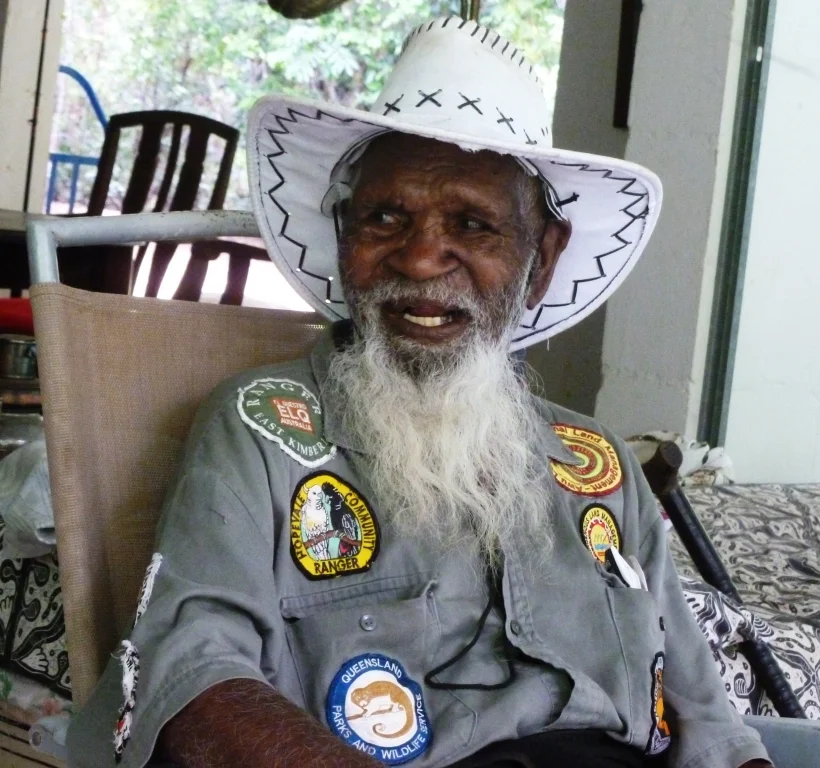
Two brothers carried that responsibility through the modern era. George Musgrave, a Kuku Thaypan elder and renowned bush tracker who died in 2006, and Tommy George, who died in 2016, gave their lives to protecting the rock art and to teaching younger Traditional Owners the stories bound up in it. Together they helped found the Ang-Gnarra Aboriginal Corporation at Laura and the Laura Festival of Traditional Dance and Culture, the world's longest-running celebration of its kind, where performers from across Cape York raise plumes of ochre dust on a dancing ground near Laura. Quinkan Country joined Australia's National Heritage List in 2018, and in 2024 the cultural landscapes of Cape York Peninsula were placed on the nation's UNESCO World Heritage tentative list. The recognition is welcome. It only confirms what the custodians have always known.
From the Air
The Quinkan rock art galleries lie among sandstone escarpments and plateaux south and east of Laura on Queensland's Cape York Peninsula, centred near 15.82 degrees S, 144.42 degrees E, roughly 50 km west of Cooktown. From the air the country reads as ridged, ochre-toned sandstone broken by shelters and gullies above savannah woodland; the art itself is hidden in overhangs and is not visible from altitude. Please note that the Quinkan Reserves are held by Aboriginal Trustees and closed to public access, and many sites are sacred; visits are by guided tour through the Quinkan Regional Cultural Centre, with Split Rock open to self-guided visitors for a fee. Dry season (May to October) gives the clearest flying. Nearest airstrip is at Laura; Cooktown Airport (YCKN) is about 50 km northeast, and Cairns (YBCS) is the major gateway some 250 km south.
Nearby Stories
- Maytown 7 km away
- Old Laura Homestead 20 km away
- Nuggety Gully Water Race and Chinese Camp 29 km away
- Palmer River Gold Company Dredge 33 km away
- Guugu Yimithirr language 35 km away
- Daintree National Park 51 km away
- Musgrave Telegraph Station 83 km away
- Georgetown: The Piece of North America in the Outback 257 km away