
The Rivonia Trial
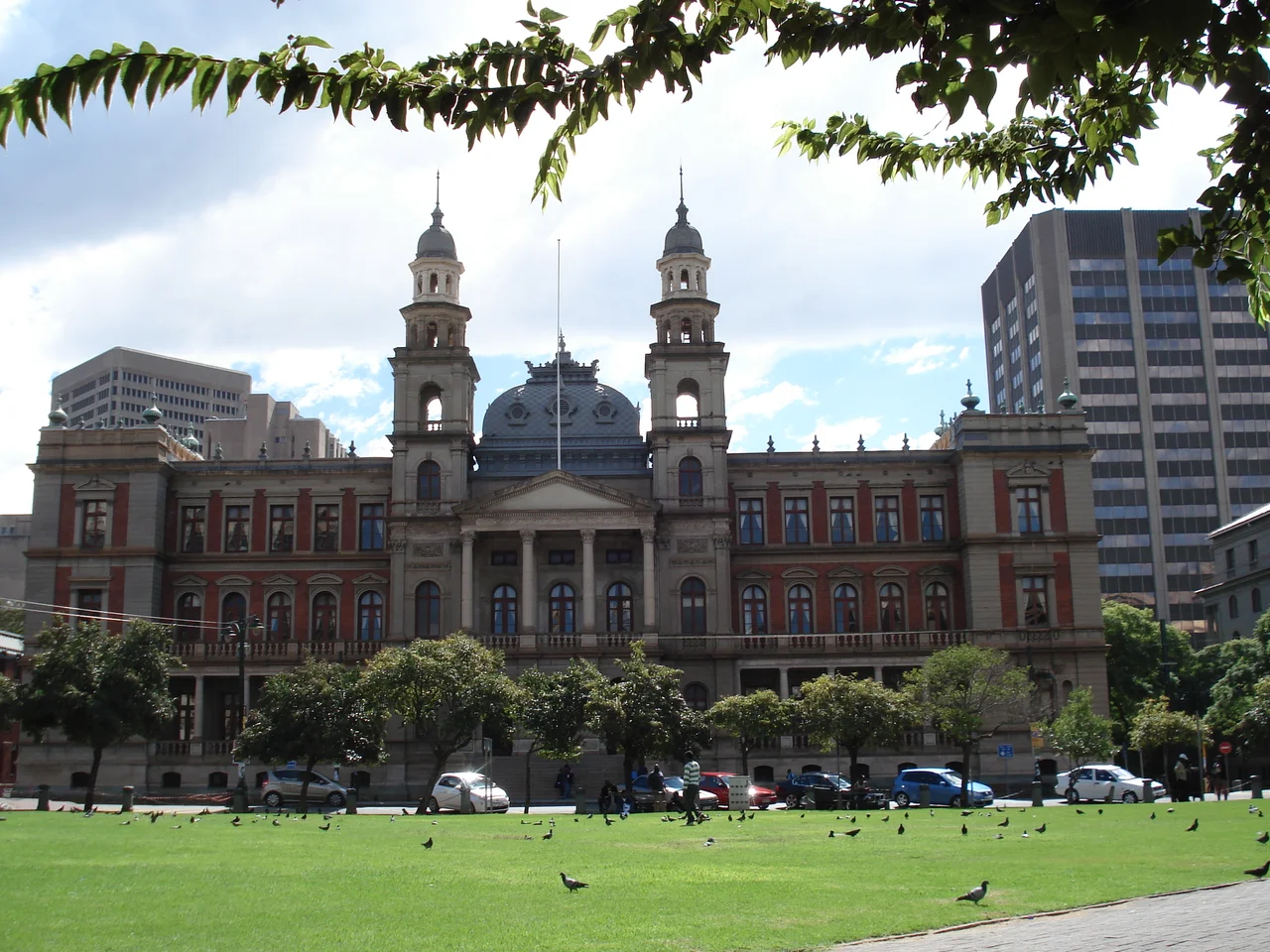
"It is an ideal for which I am prepared to die." Nelson Mandela spoke those words on 20 April 1964, standing in the dock of the Palace of Justice in Pretoria, the apartheid state arrayed against him and a death sentence hanging over the room. His lawyers had begged him to soften the line, fearing it would send him to the gallows. He kept it. The Rivonia Trial would send Mandela and seven others to prison for life - and, in doing so, would help lay the foundations of the democracy that South Africa eventually became.
The Farm at Liliesleaf
It began with a raid. On 11 July 1963, South African police descended on Liliesleaf Farm in Rivonia, a quiet suburb of Johannesburg that had served as the secret headquarters of uMkhonto we Sizwe, the newly formed armed wing of the African National Congress. Mandela himself had hidden there earlier, posing as a gardener and cook named David Motsamayi before his arrest the previous year. The police seized a roomful of leaders in a single sweep - Walter Sisulu, Govan Mbeki, Ahmed Kathrada, Denis Goldberg, Raymond Mhlaba, Elias Motsoaledi, Andrew Mlangeni, and others. With its high command captured, the liberation movement faced its gravest crisis. The men were held for ninety days without charge, incommunicado, some of them beaten and tortured.
The State Versus Mandela and Others
The trial that followed was filed as Criminal Case No. 253/1963 - The State versus Nelson Mandela and Others. It opened in October 1963 before Judge Quartus de Wet, with Percy Yutar prosecuting on charges of sabotage and conspiracy to overthrow the government. The accused were a deliberate cross-section of the struggle: African, Indian, and white South Africans, several of them Jewish, standing trial together against a system built on keeping races apart. Their defense, led by the courageous advocate Bram Fischer alongside George Bizos and Arthur Chaskalson, faced a prosecutor who declared the seized plans sufficient to "blow up a city the size of Johannesburg." The death penalty was never formally requested, but everyone in the courtroom understood it was the likeliest outcome.
The Speech from the Dock
Rather than testify and submit to cross-examination, Mandela chose to make a statement - a three-hour address that turned the proceedings inside out. He did not deny the turn to sabotage; he explained it, tracing how decades of peaceful protest had been met only with deepening repression, leaving few avenues but armed resistance, undertaken with care to spare human life. He spoke of his vision of a democratic South Africa where Black and white might live as equals. The speech is remembered as one of the great orations of the twentieth century, and as one of the founding moments of South African democracy. He ended by saying he had cherished the ideal of a free society - and that, if needs be, it was an ideal for which he was prepared to die.
Life, and the Long Road Back
On 11 June 1964, Judge de Wet delivered his verdict; on 12 June he handed down the sentences. Eight of the accused were convicted and sentenced to life imprisonment; Lionel Bernstein alone was acquitted. They had escaped the gallows, but most would spend the better part of their lives behind bars - Mandela for 27 years, much of it in a limestone quarry on Robben Island; Denis Goldberg for 22 years in Pretoria Central Prison, the only secure wing then holding white political prisoners. The world did not look away. The United Nations Security Council condemned the trial, and sanctions followed. One by one, across the 1980s, the prisoners walked free, until Mandela emerged in February 1990 to lead his country to its first democratic election. The trial recordings, once captured on obsolete Dictabelts, were painstakingly restored and inscribed by UNESCO on its Memory of the World Register - so that the voice that said those words can still be heard.
From the Air
The Rivonia Trial unfolded at the Palace of Justice on Church Square, near 25.75°S, 28.19°E in the heart of Pretoria, and at the nearby Old Synagogue. The arrests took place at Liliesleaf Farm in Rivonia, a suburb of Johannesburg roughly 50 km to the south. From the air, look for the formal layout of Church Square at the city center, ringed by historic government buildings. The nearest major airport is OR Tambo International (FAOR), about 50 km south; Wonderboom Airport (FAWB) lies just north of Pretoria. Clear, dry winter skies give excellent visibility over the city's historic core.
Nearby Stories
- Little Foot 3.9 km away
- Hartebeesthoek Radio Astronomy Observatory 18 km away
- Boksburg explosion 23 km away
- Tswaing crater 24 km away
- Secunda CTL 69 km away
- Sun City 71 km away
- Bushveld Igneous Complex 87 km away
- Battle of Bergendal 127 km away