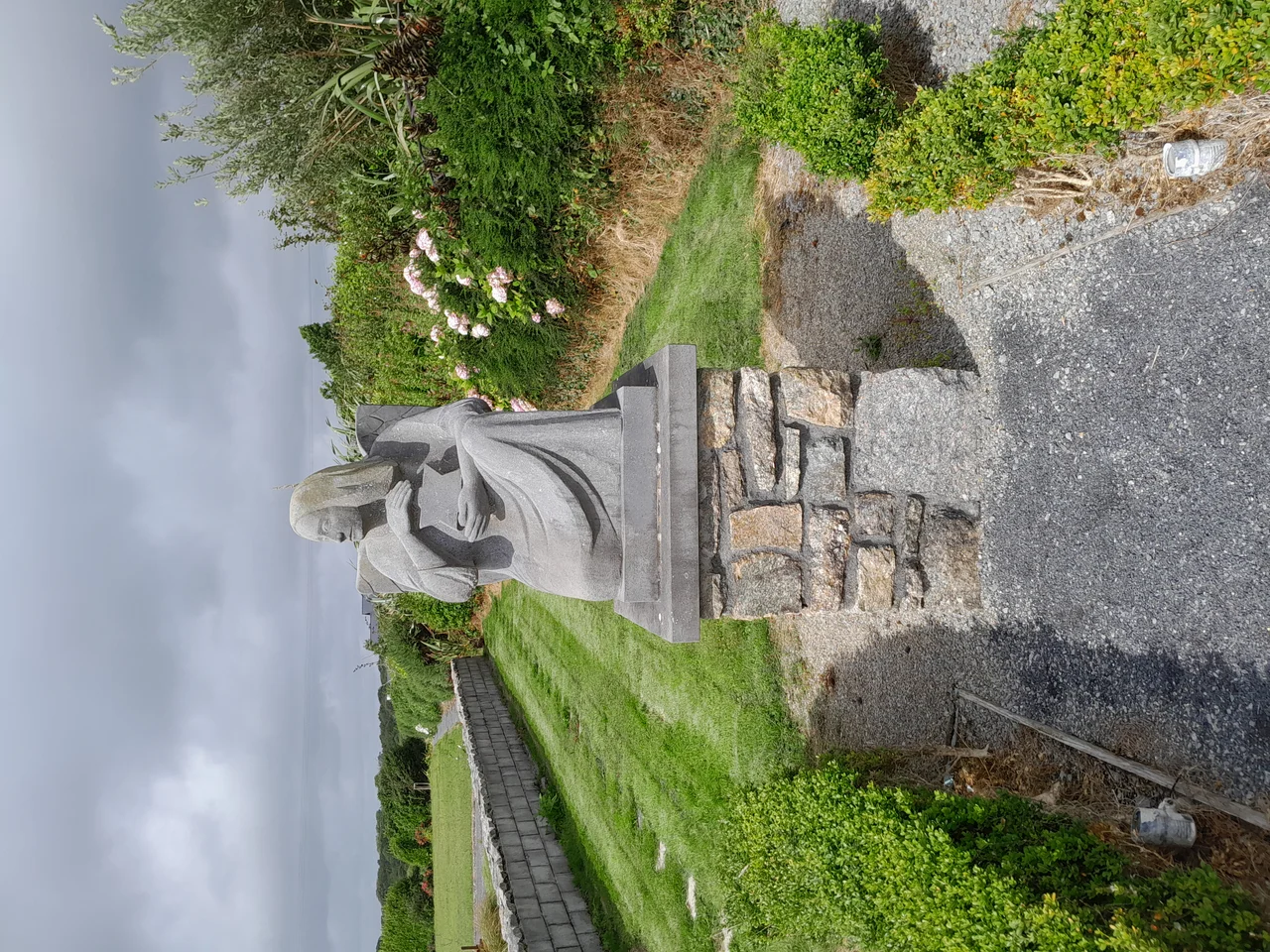

Diocese of Galway, Kilmacduagh and Kilfenora
The name is the size of a sentence: Galway, Kilmacduagh and Kilfenora. Three ecclesiastical entities folded into one diocese through a series of papal compromises and Tudor-era reorganisations. Galway from the city; Kilmacduagh from the seventh-century monastery of St Colman MacDuagh under his leaning round tower in south Galway; Kilfenora from the small cathedral town in the Burren of County Clare. The current ordinary is Bishop Michael Duignan, appointed on 11 February 2022, who also serves as bishop of the neighbouring Diocese of Clonfert - a doubling-up that the Holy See announced in 2021 to reflect the shrinking number of Catholic clergy in modern Ireland.
Three Cathedrals, One See
The diocese covers Galway city, parts of County Galway, and the northern coastal strip of County Clare. Large population centres beyond the city include Ennistymon at the foot of the Cliffs of Moher, Oranmore east of Galway Bay, and Oughterard on the road to Connemara. The cathedral church is the Cathedral of Our Lady Assumed into Heaven and St Nicholas in Galway - the limestone-domed building completed in 1965 on the site of the city prison. Two further historic cathedrals survive in the diocese's older constituent territories: the ruins at Kilmacduagh, with their famous leaning round tower (about 60 cm out of plumb), and the tiny medieval cathedral of St Fachanan at Kilfenora, which has some of Ireland's finest high crosses preserved under a glass canopy installed in 2005.
The Wardenship of Galway
From 1484 to 1831, Galway's ecclesiastical affairs were managed under a strange and Galway-specific arrangement called the Wardenship of Galway. The fourteen merchant Tribes of Galway, the city's mercantile rulers, had secured a papal privilege from Pope Innocent VIII to elect their own Warden of St Nicholas's Collegiate Church - a kind of pseudo-bishop with jurisdiction over a small area, independent of the Archbishop of Tuam. It was an institutional expression of Galway's stubborn independence from its hinterland. The Wardenship survived for 347 years through Reformations, plantations, the penal era, and Catholic Emancipation, before Pope Gregory XVI abolished it in 1831 and erected the new Diocese of Galway in its place. Edmund Ffrench was the last warden and the first administrator of the new arrangement.
Pope Benedict XIV's Compromise
The bishopric of Kilmacduagh had existed since the early medieval centuries. Kilfenora's bishopric was created in the twelfth century. Both were ancient and both were small. In 1750 Pope Benedict XIV decreed that the two should be united - but with a twist that solved a delicate jurisdictional problem. Kilmacduagh sat in the ecclesiastical province of Tuam. Kilfenora sat in the province of Cashel. To respect both metropolitan archbishops, the pope decreed that the single ordinary would alternate: bishop of one diocese, apostolic administrator of the other. The first holder of this arrangement was Peter Kilkelly, Bishop of Kilmacduagh since 1744, who became Apostolic Administrator of Kilfenora in September 1750. Since then Kilfenora has been administered as an apostolic vicariate - meaning the pope, technically the universal bishop of every diocese, exercises authority through a vicar.
1883 and After
Bishop John McEvilly of Galway was made Apostolic Administrator of Kilmacduagh and Kilfenora in 1866. When he was made coadjutor of the Archdiocese of Tuam in 1878, he kept Galway. When he succeeded as archbishop of Tuam in 1881, he kept Kilmacduagh and Kilfenora. Pope Leo XIII finally regularised the situation in 1883: the Diocese of Galway was united with the Diocese of Kilmacduagh in perpetuum, and the ordinary of the united diocese was permanently appointed Apostolic Administrator of Kilfenora. The diocese thus became - and remains - Galway, Kilmacduagh and Kilfenora: one bishop, two dioceses united, one apostolic vicariate administered. In 2021 the Holy See announced a further consolidation, attaching the neighbouring Diocese of Clonfert to the same ordinary. Michael Duignan, Bishop of Clonfert, took over Galway as well on 11 February 2022.
The Five Deaneries
Today's diocese is organised into five deaneries, each headed by a Vicar Forane appointed by the bishop. The Deanery of Galway City East takes in the cathedral parish along with Ballybane, Ballinfoyle, Good Shepherd, Mervue, Renmore, Saint Augustine, Saint Francis, and Saint Patrick. Galway City West covers Knocknacarra, Sacred Heart, Salthill, Saint Joseph, and Saint Mary in the Claddagh. Galway Rural handles the Gaeltacht and the western suburbs - An Spideal, Barna, Castlegar, Killanin, Lettermore, Moycullen, Oranmore, Oughterard, Rosmuc, Shrule. The Deanery of Kilmacduagh covers the south Galway hinterland: Ardrahan, Ballinderreen, Clarinbridge, Craughwell, Gort and Beagh, Kilbeacanty and Peterswell, Kilchreest and Castledaly, Kinvara. And the Deanery of Kilfenora, alone over in County Clare, handles the Burren parishes: Ballyvaughan, Carron and New Quay, Ennistymon, Kilfenora, Liscannor and Moymore, Lisdoonvarna and Kilshanny. From the medieval Tribes' Wardenship to the modern diocese, the story is one of small places remembered by name even as their structures are folded into larger administrative shapes. Kilfenora still names a deanery. Kilmacduagh still names a diocese. Galway still has its bishop.
From the Air
The cathedral seat of the diocese is at 53.28 N, 9.06 W in Galway city. The diocese itself covers an irregular territory: Galway city, north-western County Galway including the Gaeltacht out to Rosmuc, the coastal strip south to the County Clare border, and across the bay into the Burren region of north Clare as far south as Ennistymon. Galway Airport (EICM) is about 8 km east of the cathedral. The historic Kilmacduagh monastic ruins lie about 35 km south of Galway near Gort; Kilfenora is about 60 km south-west, in the heart of the Burren. Best viewed in clear westerly conditions - the diocese spans some of Ireland's most distinctive scenery.
Nearby Stories
- Inis Oirr 3.9 km away
- Milltown, County Galway 4.2 km away
- Kilmacduagh Monastery 6.4 km away
- Ahascragh 8.9 km away
- Acadamh na hOllscolaíochta Gaeilge 12 km away
- Roscommon 17 km away
- Croagh Patrick 20 km away
- Lorrha 21 km away