
Royal Albert Hall
The original name was going to be the Central Hall of Arts and Sciences. Then Queen Victoria came in 1867 to lay the foundation stone, still in widow's black six years after her husband's death, and quietly added two words. The Royal Albert Hall of Arts and Sciences. It became the practical half of his memorial - the decorative half being the gilt-encrusted Gothic spire directly across Kensington Gore in the gardens. Prince Albert had imagined a permanent campus of museums and concert halls funded out of the profits of his 1851 Great Exhibition. He died in 1861 without seeing any of it built. The hall, like the wider South Kensington district his admirers nicknamed Albertopolis, is what England did with his grief and his blueprint after he was gone.
The Echo No One Solved
The hall is an ellipse - 272 feet by 236 on the outside, the great glass and wrought-iron dome rising 135 feet above the floor. Civil engineers Francis Fowke and Henry Y. D. Scott of the Royal Engineers drew on ancient amphitheatres and on the ideas of Gottfried Semper. It opened officially on 29 March 1871, brought forward at Victoria's request from the planned May date. In the first concert, the acoustic problem made itself impossible to ignore: the dome bounced sound back as a strong echo. Joke quickly went around that the hall was the only place where a British composer could be sure of hearing his work twice. Engineers tried a canvas awning under the dome. That helped a little, and gave shade. The echo was finally tamed only in 1969, when an array of fibreglass acoustic diffusers known as 'mushrooms' was hung from the ceiling. They are still there. The hall now has a seating capacity of 5,272, though in less safety-conscious decades it accommodated as many as 12,000.
A Stage Big Enough for Everything
Almost anything that wants a large London audience eventually finds its way to the Albert Hall. Wagner himself conducted there in May 1877 - the first half of each of eight concerts in a Grand Wagner Festival, then handing the baton to Hans Richter and watching from an armchair on stage. Saint-Saens performed in 1871. Rachmaninoff played his Prelude in C-sharp minor at a Ballad Concert in 1911. Albert Einstein led a 1933 meeting for refugee academics on the run from Nazi Germany. In 1926 a young Lew Grade won the World Charleston Championship, judged by Fred Astaire. The hall hosted boxing from 1918 - including, shamefully, a colour bar that ran from 1923 to 1932 preventing Black boxers from fighting there, before later being broken by Frank Bruno, Lennox Lewis, Henry Cooper, and Prince Naseem Hamed. Cirque du Soleil has played there almost every January since 1996. The Proms - the world's largest classical music festival, by some measures - moved in during 1941 after the Queen's Hall was bombed, and have come every summer since. The Royal Choral Society first performed at the hall on 8 May 1872; since 1876 they have given Handel's Messiah every Good Friday.
Pink Floyd, Adele, and a Man in a Gorilla Suit
On 26 June 1969 Pink Floyd staged a concert that involved actual cannons being fired, furniture being assembled live on stage, and a man in a gorilla suit wandering the audience. At one point Rick Wright climbed to the pipe organ for the closing section of 'A Saucerful of Secrets,' joined by brass from the Royal Philharmonic Orchestra and the ladies of the Ealing Central Amateur Choir. The Beatles' producer Norman Smith conducted. Decades later, Pink Floyd put part of the recording on their 2014 album The Endless River. In 1973 The Rocky Horror Show premiered at the Royal Court not far away, but it was at the Albert Hall that Adele performed her one-night-only show on 22 September 2011 - a recording that became the best-selling music DVD of 2011 and ultimately sold over three million copies worldwide. Eric Clapton has now played the hall more than 200 times. He once said performing there feels like 'playing in my front room.'
The Voice of Jupiter
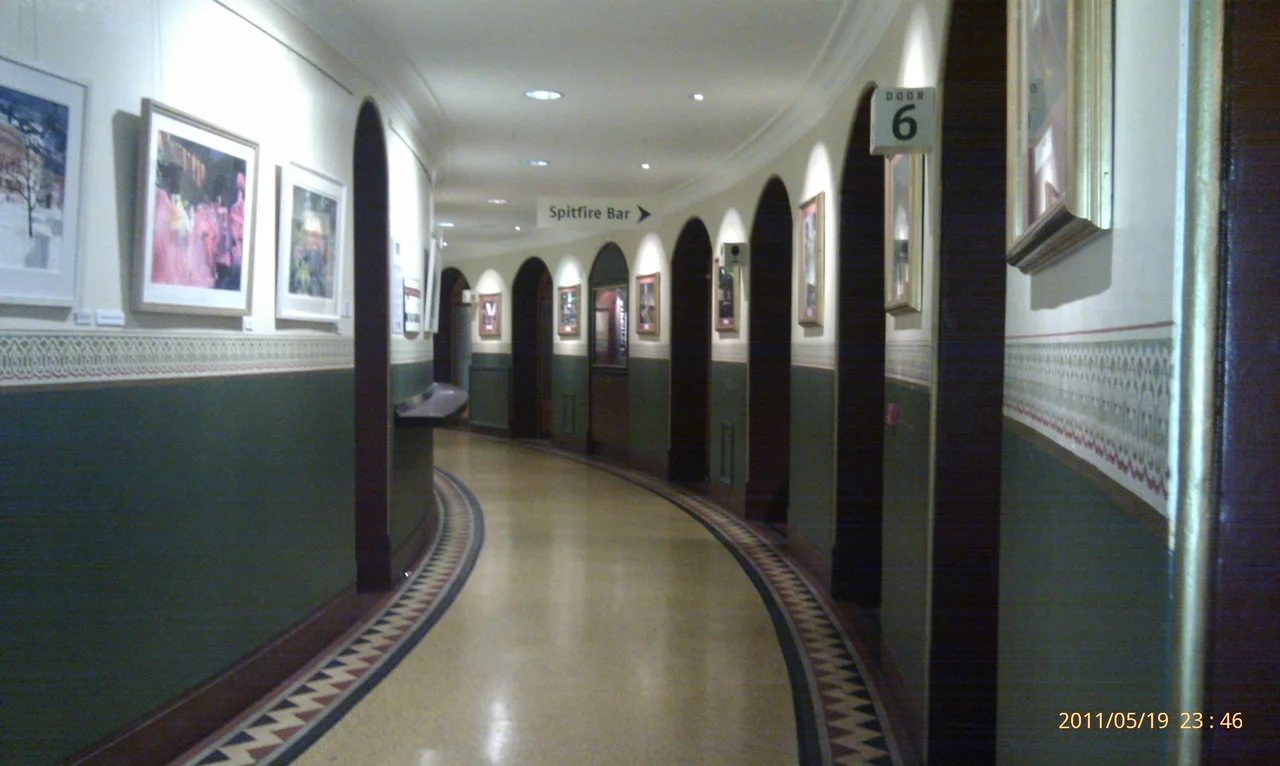
Above and behind the stage looms one of the great pipe organs of Europe: 9,997 pipes, 147 stops, the second-largest in the British Isles after the Grand Organ in Liverpool Cathedral. 'Father' Henry Willis built it for the hall's opening in 1871. Harrison and Harrison rebuilt it in 1924 and again in 1933. Between 2002 and 2004 Mander Organs rebuilt it once more, restoring its nickname - the Voice of Jupiter - to full thundering authority. During the war the hall suffered minor damage in October 1942 bombing, but German pilots reportedly used its distinctive shape as a landmark for navigation, which probably saved it from worse. From 1996 to 2004 a 40 million pound renovation, funded by the Heritage Lottery Fund and Arts Council England, added a new south porch (door 12), underground vehicle access, improved seating, better acoustics, and new bars. The Victorian identity was deliberately preserved while the building got ready for another century of use.
The Nation's Village Hall
The hall has been called, affectionately, 'The Nation's Village Hall.' That is the right word for it. The Salvation Army has hosted over 400 events there since 1895. The Festival of Remembrance happens every November on the eve of Remembrance Sunday. Imperial College London and the Royal College of Art hold their graduations there each summer. The Teenage Cancer Trust has put on charity concerts there most years since 2000, with Roger Daltrey of The Who at the helm until 2024. UFC 38 - the first UFC event held in the UK - took place there in 2002. The first official sumo tournament outside Japan happened there in 1991. The hall hosted the world premieres of four James Bond films, multiple Phantom of the Opera anniversaries, the Royal Variety Performance's 100th anniversary in 2012, and the British Academy Film Awards from 2017. In 2018 a Walk of Fame was installed outside, recognising the Suffragettes (who met inside), Churchill (who spoke there), Einstein (likewise), Muhammad Ali (who fought there and called it 'a helluva hall'), and Clapton. Most years it is fully booked. Most weeks something has happened there that someone, somewhere, will remember for the rest of their life.
From the Air
The Royal Albert Hall sits at 51.501 N, 0.177 W in South Kensington, central London, on the northern edge of the Albertopolis museum quarter. Look for the elliptical dome immediately south of Kensington Gardens, directly across Kensington Gore from the Albert Memorial. Nearest major airports: London Heathrow (EGLL) twelve miles west; London City (EGLC) eight miles east. From cruise, find Hyde Park's southwest corner and the green expanse of Kensington Gardens - the hall sits as a distinct round red brick form on the south side.
Nearby Stories
- Battle of Britain, Northfleet 1.1 km away
- Bayham Old Abbey 5.4 km away
- Catharine Macaulay 6.4 km away
- Hatfield rail crash 8.8 km away
- Chequers 8.9 km away
- Chelmsford Cathedral 10 km away
- Queen Victoria Hospital 13 km away
- Fishbourne Roman Palace 36 km away