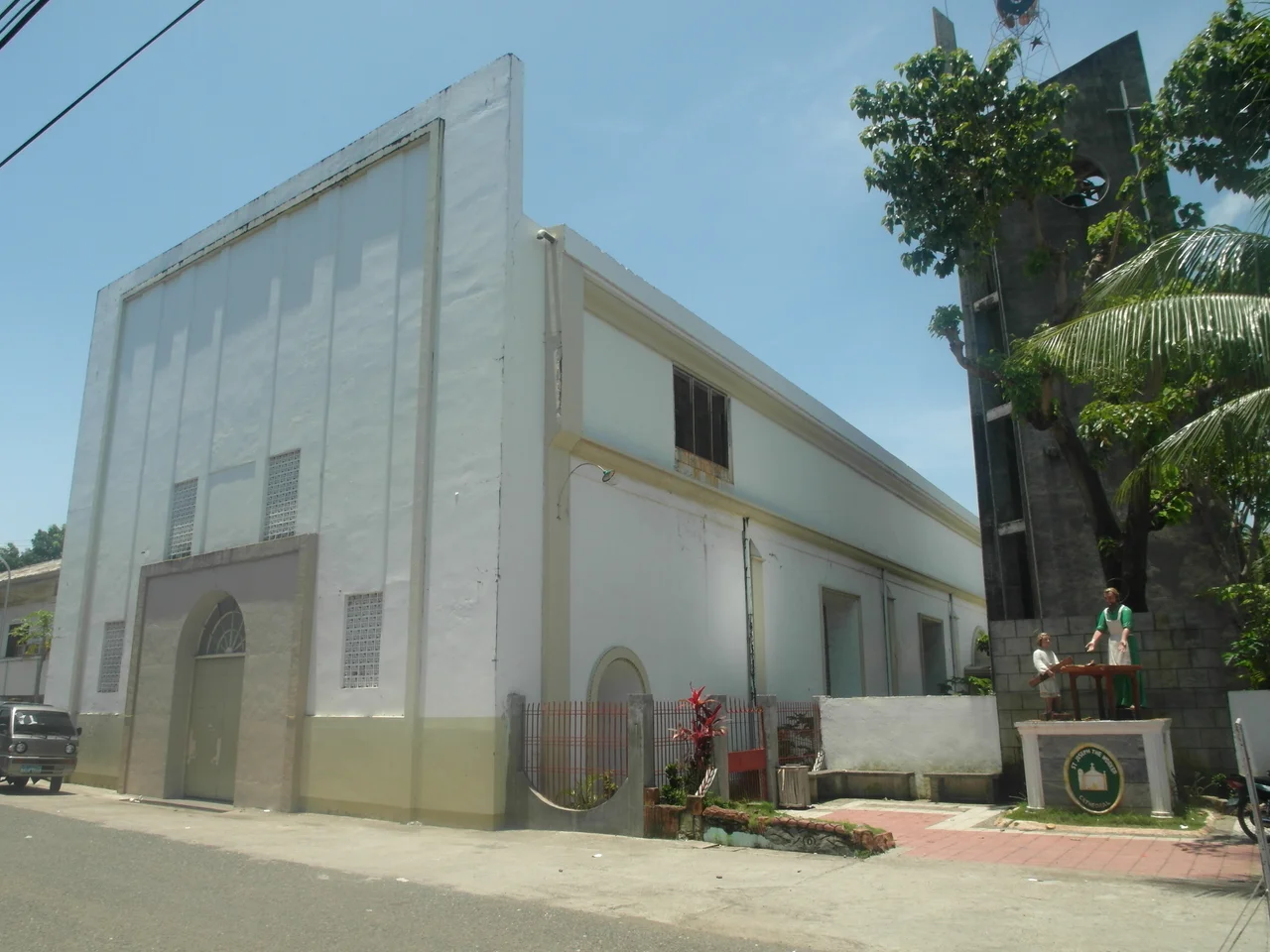

San Jose de Buenavista
The old capital was killing people. Hamtic, wedged into swampy lowlands on Panay's southwest coast, suffered from high mortality rates and earthquake damage that made each year feel like a gamble against geography. In 1787, Alcalde Mayor Juan de Montinola and Father Martin Iglesias proposed what must have seemed obvious to everyone except those with property in the old town: move the capital to higher ground. The site they chose offered elevation, clean air, and a panoramic view of the coast -- qualities the Spanish summarized in a single word they appended to the settlement's patron-saint name. San Jose de Buenavista. The town with the good view.
From Swamp to Summit
Before it was San Jose de Buenavista, the settlement was called Tubigon, from the Kinaray-a word tubig meaning water -- an apt description for a place defined by its swampy terrain. The parish of Tubigon was established in 1733 under the jurisdiction of Hamtic, then the provincial capital. As the settlement grew, it acquired a new name honoring its patron saint, Saint Joseph, and eventually the suffix that distinguished it from every other San Jose in the Philippines. The leaders of Hamtic resisted the move, understandably protective of their established farms and stone buildings. The Spanish government compromised: on January 16, 1792, San Jose became an independent pueblo, and in 1802 it was officially designated the capital of Antique province. The higher ground had won.
A Revolution Passes Through
During the Philippine Revolution, San Jose de Buenavista became the final Spanish stronghold in Antique. On November 24, 1898, after a two-day struggle known as the Battle of Antique, revolutionary forces led by General Leandro Fullon captured the town. The victory established a short-lived revolutionary government before American forces arrived in early 1899. A fierce skirmish at the Malandog River, involving American naval bombardment, ended with the town's occupation on January 20, 1899. When the Taft Commission visited on April 11, 1901, to establish a civil government, they appointed General Fullon -- the same man who had fought the Spanish -- as the first provincial governor under American rule. The irony was not lost on anyone.
The Language the Mountains Gave
Kinaray-a, the native language of San Jose de Buenavista, takes its name from iraya, a word for the people who lived in the mountain areas of Antique. It remains the primary language of the municipality, with Hiligaynon serving as a second tongue. This linguistic identity anchors the town's cultural calendar. Since 1971, San Jose has hosted the Binirayan Festival during the last week of December, a theatrical celebration commemorating the founding of the first Malayan settlement in what is now the Philippines. The festival transforms the town into a stage for indigenous heritage, even as modern infrastructure -- a recently upgraded airport, the Boulevard Esplanade -- reshapes its physical landscape.
Where Memory Meets the Street
Evelio Javier Freedom Park sits directly in front of the Antique Provincial Capitol, its location chosen for precision rather than convenience. A marker within the park denotes the exact spot where Governor Evelio B. Javier was assassinated on February 11, 1986 -- just thirteen days before the People Power Revolution would topple the Marcos regime. Javier's death became a rallying point for democratic resistance in the Visayas. Today, his name graces the province's only commercial airport, which recently underwent a 1.576-billion-peso upgrade to accommodate jet aircraft. The town that once escaped a swamp continues to reach for higher ground, though now the elevation it seeks is economic and cultural rather than geographic.
From the Air
Located at 10.743N, 121.941E on the southwest coast of Panay Island. Evelio B. Javier Airport (RPVB) serves the town with commercial flights. The municipality is visible as the largest urban area on Antique's coast, approximately 97 km from Iloilo City. Best viewed at 3,000-8,000 feet AGL. The coastal setting with mountains to the east makes for dramatic approaches.
Nearby Stories
- Tigbauan Church 16 km away
- Jalaur Dam 17 km away
- Cuyo, Palawan 30 km away
- Guimaras Oil Spill 41 km away
- Maniguin Island Lighthouse 60 km away
- Republic of Negros 143 km away
- Coron, Palawan 157 km away
- San Vicente, Palawan 223 km away