
São Luís
Most travelers arrive in São Luís on the way to somewhere else. The Lençóis Maranhenses - an Atlantic coastal expanse of white sand dunes punctuated by seasonal freshwater lagoons - are roughly 260 kilometers to the east, and São Luís is the logical staging point: the closest airport, the best hotels, and a historical center that is worth several days on its own terms. By the time the dune trip gets booked, the city has usually reeled the traveler in. It has the feel of a place that has been absorbing outsiders for four centuries - first indigenous Tupinambá, then French founders, then Portuguese administrators, then Dutch invaders, then enslaved Africans whose descendants shaped the food, the festivals, and the religion - and it shows that layering in the way it moves.
Two Centers, One City
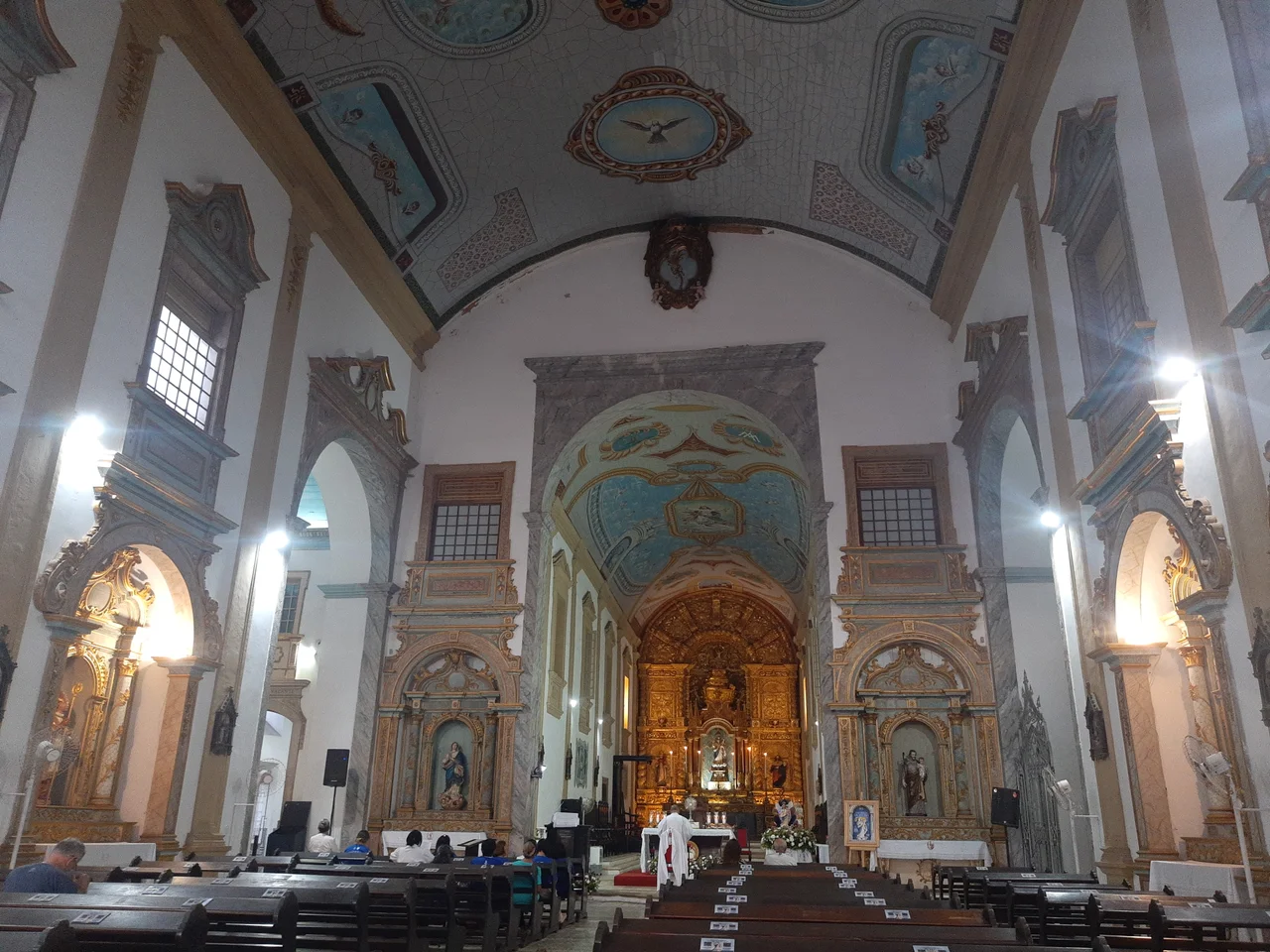
For a visitor there are two São Luíses. The first is the Centro Histórico, set just south of the Anil River on the western shore of São Luís Island - UNESCO-listed, cobbled, densely packed with tile-faced sobrados, and home to most of what will fit on a postcard. This is where the Palácio dos Leões (the governor's seat), the Teatro Arthur Azevedo (the second-oldest theater in Brazil), the Convento das Mercês, the Igreja do Desterro, and the Solar São Luís - a three-story azulejo-clad mansion considered the largest tiled building in the country - all cluster within a few blocks. The second São Luís gathers around the Lagoa da Jansen on the north coast, where the city's urban beaches, more affluent neighborhoods like Ponta do Farol and Ponta da Areia, and most of the upscale nightlife sit. You can sleep in either. Most visitors pick the Centro.
A Schedule Written by the Tide
The beaches here play by different rules than the famous ones down in Natal or Maceió. Tidal variation around São Luís Island is extreme - the sea can recede almost a kilometer at low tide on some stretches, then return to bury the sand entirely at high tide. Local routines adjust accordingly. Bars along the Lagoa da Jansen and Calhau fill up on Sundays when the Centro goes quiet. On weekdays, the Centro's bars and the art cinema in the Old Town take over, though Sundays there are effectively dead. For a practical reason to care about the tide: several beaches are unsuitable for bathing on any given day, and SEMA, the state environment department, publishes daily laudos de balneabilidade - bathing reports - that locals actually check before swimming.
A Festival Calendar That Won't Quit
São Luís has two seasons of cultural intensity. The first is Bumba Meu Boi, running from about June 13 to June 30, when hundreds of groups perform a grand musical pantomime through the city's squares. Costumed dancers play Settlers, Indians, spirit workers, Afro-Brazilian characters, and forest spirits in a narrative centered on a bull, with matracas (wooden clappers), drums, and continuous song. The version that survives in São Luís is considered the richest in Brazil, kept alive largely by the city's Black community. The second flank of the calendar is reggae. São Luís is nicknamed the Brazilian Jamaica - more than 200 radiolas (massive custom sound systems) operate across the metropolitan area - and the Museu do Reggae Maranhão at Rua da Estrela 124 gives the scene its archive. The city's version of the genre is slower, more sensual than Kingston's, and it has its own local vocabulary: a hit track is a melô or a pedra, a stone.
Flavors the Tourist Board Did Not Make Up
Eating in São Luís means Maranhense specialties that do not travel well and are therefore worth traveling to. Arroz de cuxá - rice cooked with the tart leaf cuxá (vinagreira), dried shrimp, and gergelim - is the plate that most signifies home. Peixada, a fish stew, and shrimp pies fill out the seafood side. To drink, there is a local pink soda named Jesus - so named not for religion but for its inventor Jesus Norberto Gomes, who patented the formula in 1920 - and Cajuína, the clarified amber cashew-fruit soft drink immortalized in Caetano Veloso's song of the same name. The local cachaça brand is Mangueira. Rua Grande, the central pedestrian mall, handles most daytime shopping, while the Calhau beach area supports pousadas, beach bars, and a handful of restaurants for travelers who prefer sand to cobblestones.
Going Next
From São Luís's port, a one-hour ferry crosses São Marcos Bay to Alcântara, a time-capsule colonial town whose ruined mansions have been slowly collapsing into tropical vegetation since the 19th-century cotton collapse. Tides determine the sailing schedule - mostly 07:00 and 09:00 departures, with returns in the late afternoon - so double-checking at the ticket office the day before is wise. Further inland, the Lençóis Maranhenses are reached through Barreirinhas by a 4-5 hour bus or jeep trip. The dunes are best visited from June to September, when the lagoons between them fill with rainwater and the whole landscape becomes an alternating grid of white sand and blue water. The city and the dunes together make the case. São Luís is not a layover.
From the Air
São Luís at 2.49°S, 44.24°W on the northwestern end of São Luís Island. Cruise at 5,000-8,000 feet for a clear view of the colonial grid, Lagoa da Jansen to the north, and the Anil River estuary. Marechal Cunha Machado International Airport (SBSL) is the primary field, about 13 km southeast of the Centro Histórico. For onward tourism, Barreirinhas (gateway to Lençóis Maranhenses) has a small airstrip (SNZR) to the east. Cross São Marcos Bay westward to see Alcântara and the Alcântara Space Center (SBAL). Best visibility in the August-November dry season; expect heavy cloud cover January-May.
Nearby Stories
- Baixada Maranhense Environmental Protection Area 19 km away
- Metal Open Air 33 km away
- Lençóis Maranhenses 53 km away
- Ilha de Santana Lighthouse 55 km away
- Maranhão mangroves 74 km away
- Chapada Limpa Extractive Reserve 126 km away
- Santa Inês 149 km away
- German submarine U-164 (1941) 471 km away