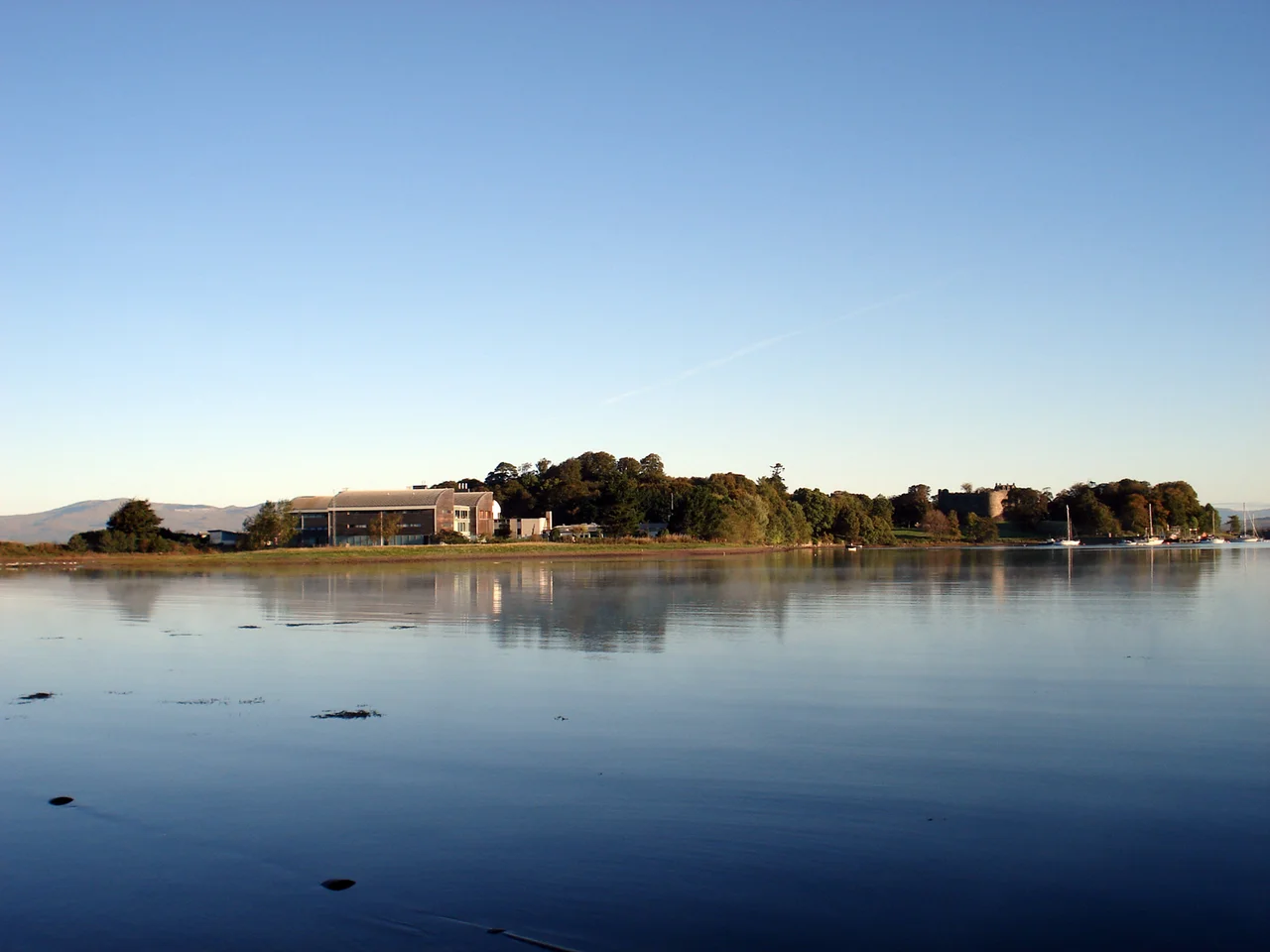

Scottish Association for Marine Science
In August 2024, Nature Geoscience published a paper that complicated everything biology textbooks say about oxygen. Professor Andrew Sweetman of the Scottish Association for Marine Science, based on a stretch of coast near Oban, reported the first measured evidence that the deep seabed - thousands of metres down, in total darkness, far below the reach of photosynthesis - is producing oxygen. Not consuming it. Producing it. The result hit the press hard, raised more questions than it answered, and was the latest extraordinary moment in the history of an institute that has been doing this kind of thing since the year of the first electric streetlight in Britain.
Born From The Challenger
SAMS - the Scottish Association for Marine Science - is the oldest ocean research and education charity in the United Kingdom. It was founded in 1884 by Sir John Murray, the Edinburgh-born oceanographer who served on HMS Challenger, the 1872-76 round-the-world expedition that effectively invented modern oceanography. Murray spent the rest of his career working through Challenger's haul of samples, sediments, and soundings, and the institute he founded was his way of building a permanent base for the kind of work the Challenger had only sketched. The first home was the Scottish Marine Station at Granton, just outside Edinburgh - Scotland's first marine research station. Within a decade activities began transferring to Millport on the Isle of Cumbrae, where a purpose-built laboratory opened in 1897 and stayed for the next seventy years.
Moving To The Open Water
In 1967, after eight decades of work in the relatively sheltered Firth of Clyde, the Association moved north and built new facilities near Oban on the open west coast of Scotland - a location with easy access to deep water, oceanic conditions, and the kind of variety of habitats that the Firth of Clyde could not match. In 1992 the institute took its current name. The labs were rebuilt and re-equipped in 2004, new teaching facilities followed in 2010, and the Ocean Explorer Centre at Dunbeg opened in 2014 to bring visitors into the work. Today SAMS sits within the European Marine Science Park near Dunbeg, a founding partner of the University of the Highlands and Islands, and an associate institute of the United Nations University - a tiny shoreline campus with global research reach.
The Dark Oxygen Problem
What Sweetman's team found in 2024 is still being argued over. For more than a century, biology has been clear that oxygen on Earth comes from photosynthesis - plants on land, algae and cyanobacteria in the ocean's sunlit zone. The deep sea, in this picture, is purely an oxygen consumer; the dissolved O₂ down there originally came from the surface and was carried into the depths by sinking, cold water. Sweetman measured oxygen production at the abyssal seafloor, in the dark. The proposed mechanism involves the polymetallic nodules that carpet parts of the Pacific deep sea - the same nodules that mining companies want to extract for cobalt and nickel. If the nodules are somehow producing oxygen, removing them might do something terrible to deep-sea ecosystems we barely understand. The finding remains contested. It is the kind of question that SAMS exists to ask.
Algae, Robots, And The Arctic
The institute's three research programmes span the discovery of basic ocean processes, the response of coastal systems to human pressure, and the development of a sustainable blue economy. Physicists, mathematicians, biologists, geologists, chemists, social scientists, engineers - they all work the same coastline. SAMS operates a Scientific Robotics Academy that uses flying, surface, and diving robots for everything from aerial habitat mapping to deep-water property surveys, and it hosts the Culture Collection of Algae and Protozoa, the largest single collection of algae and protists in Europe. The commercial arm, SAMS Enterprise, manufactures autonomous sensors for snow and ice measurements in extreme environments - the SIMBA buoys are used in Arctic research worldwide. The combination of pure science, applied research, education, and instrument manufacturing makes the institute unusually integrated for its size.
Marine Science With A View
Students who come to SAMS to study marine science can pick degrees that include Marine Biology, Arctic Studies, or Oceanography and Marine Robotics. The campus looks straight out across the Firth of Lorn to Lismore and Mull. Boats leave from the institute's pier. The Ocean Explorer Centre, opened in 2014 by Michael Russell MSP when he was Scottish Cabinet Secretary for Education, hosts visitors and brings the research into the open. There are very few places in the world where you can do a PhD in deep-sea ecology with a view of Hebridean islands from your office window. SAMS has been a quiet anchor in Scottish science since 1884, and the dark oxygen paper is just the latest reminder that the ocean still has plenty left to teach.
From the Air
The SAMS campus sits at Dunbeg, near Oban, at 56.45115 N, 5.440741 W, on the north shore of Dunbeg Bay where it opens into the Firth of Lorn. From cruising altitude the campus appears as a cluster of low buildings on a small headland, with a research pier on the bay. Oban Airport (EGEO) at Connel is 1.5 nm north-east - very close. The Ocean Explorer Centre is on the same site. Lismore island lies 4 nm west, Mull about 12 nm west. The European Marine Science Park hosts several other research operations alongside SAMS. The location was specifically chosen in 1967 for its access to oceanographic conditions: open water on the doorstep, deep channels nearby, and weather typical of the open North Atlantic.
Nearby Stories
- Inner Hebrides 2.1 km away
- Arrochar Alps 6.7 km away
- Glenfinnan Monument 10 km away
- Slate Islands, Scotland 12 km away
- Lochaber Narrow Gauge Railway 13 km away
- 2009 Buachaille Etive Mòr Avalanche 15 km away
- Muck 18 km away
- Colonsay 25 km away