
Sham Shui Po Barracks
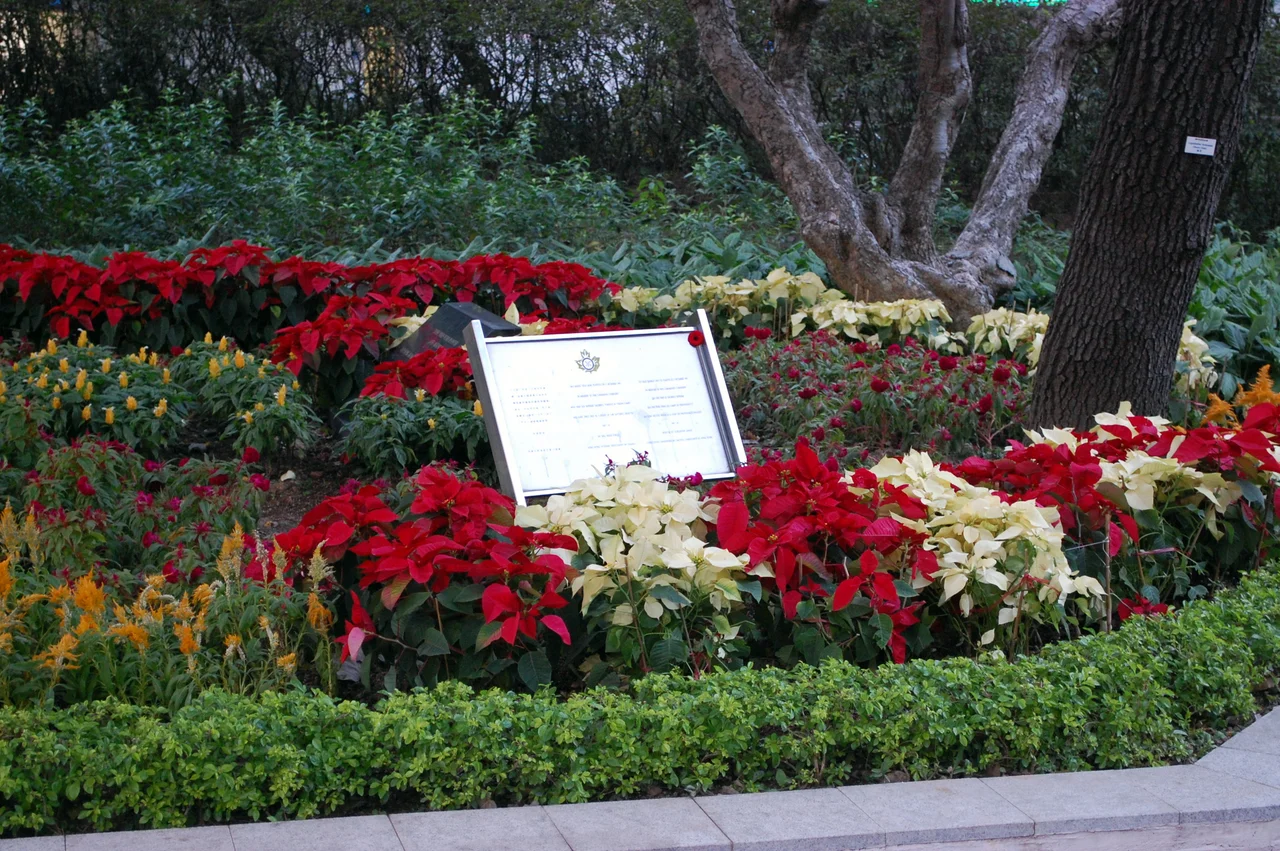
The buildings are gone. Where British, Indian, and Canadian soldiers once suffered through years of imprisonment, there are now apartment towers and a public park. But in one corner of Sham Shui Po Park, maple trees stand in a quiet row — planted in memory of the Canadian soldiers held here during the Japanese occupation of Hong Kong. And nearby, plaques mark what happened on this ground. The site asks something of anyone who walks past it: a moment's acknowledgment that ordinary men endured extraordinary suffering here, and that many of them did not survive.
Garrison Years
Sham Shui Po Barracks was built in the 1920s on the Kowloon Peninsula, a British Army facility bounded by Fuk Wa Street to the east and Tonkin Street and Camp Street to the west. The complex was divided between Hankow Barracks and Nanking Barracks — names that reflected the colonial habit of orienting itself toward China — with a large parade ground between them. Married quarters were later built in the Jubilee Buildings.
The barracks was a functioning garrison for nearly two decades, housing British troops who were part of Hong Kong's peacetime defense. When the Pacific War began in December 1941 and Japanese forces swept down the Kowloon Peninsula, the facility's role changed almost immediately. The Battle of Hong Kong lasted 18 days. On Christmas Day 1941, the colony surrendered.
The Prisoners
The Imperial Japanese Army converted Sham Shui Po into a prisoner-of-war camp, and it became the main POW facility in occupied Hong Kong. British, Indian, and Canadian soldiers — many of them from the Royal Rifles of Canada and the Winnipeg Grenadiers, who had arrived in Hong Kong just weeks before the attack — were imprisoned within its perimeter walls.
Conditions inside were brutal. Food was scarce and of poor quality; disease moved through the overcrowded barracks with little resistance. In 1942, a diphtheria epidemic killed a significant number of prisoners. Dysentery, beriberi, and malaria were constant threats. Men who had arrived as soldiers found themselves reduced to bartering whatever possessions remained for scraps of food. Letters home were censored or never sent. For years, families in Britain, India, and Canada waited for word.
All shipments of prisoners transferred to Japan — to labor in mines, factories, and shipyards — departed from Bamboo Pier in Sham Shui Po. The conditions on those transport ships, later known as 'hell ships,' often killed men before they reached their destinations. Sham Shui Po was not just a place of suffering in itself; it was a staging point for suffering that spread far beyond Hong Kong.
Liberation and Aftermath
Japan surrendered in August 1945, and the men still alive at Sham Shui Po were liberated. By the end of the war, Sham Shui Po was the only POW camp still operating in Hong Kong; the only other Allied facility was a hospital at what was then the Central British School, now King George V School. The survivors left behind a place marked by years of privation, and the barracks returned briefly to British military use.
In 1959, the military transferred a strip of land to the Hong Kong government to allow Lai Chi Kok Road to be extended. The camp found a different use in the late 1970s and early 1980s, when it housed Vietnamese refugees arriving in Hong Kong in large numbers following the end of the Vietnam War. Tens of thousands of people fleeing violence and instability passed through this and other camps in the territory over the following years — another chapter of displacement written on the same ground.
What Remains
The barracks was redeveloped for housing in the early 1990s. Every military structure was demolished. What replaced them was Sham Shui Po Park and the surrounding apartment estates — the ordinary fabric of a dense urban neighborhood.
In the park, the memorial plaques are modest in scale. The maple trees are growing. They were chosen deliberately: maples are the tree most associated with Canada, and the Canadian soldiers who died here — young men from the prairies and the cities of a country that had never expected to fight a war in the South China Sea — deserve their particular acknowledgment. Many did not make it home. Those who did carried the memory of Sham Shui Po for the rest of their lives.
Hong Kong has built over much of its wartime history. But the maples remain in the park, and they are not decorative.
From the Air
Sham Shui Po Barracks stood at approximately 22.332°N, 114.158°E in the Sham Shui Po area of Kowloon, west of the peninsula's urban core. The site is now Sham Shui Po Park, visible from the air as a green patch in the dense residential fabric of western Kowloon. Victoria Harbour is approximately 2 km to the south; the harbor crossing to Hong Kong Island is visible to the southeast. The nearest major airport is Hong Kong International Airport (VHHH) on Lantau Island, approximately 15 km to the west. Recommended viewing altitude for the Kowloon Peninsula area is 3,000–5,000 feet; approach from the south over the harbor offers the best orientation to the district's geography.
Nearby Stories
- Chapel of St. Francis Xavier 3.5 km away
- Cuiheng 4.1 km away
- 2015 Shenzhen Landslide 16 km away
- Shunde 31 km away
- Wanshan Archipelago 37 km away
- Nanxiong Formation 96 km away
- Heyuan 149 km away
- Checheng Fu'an Temple 629 km away