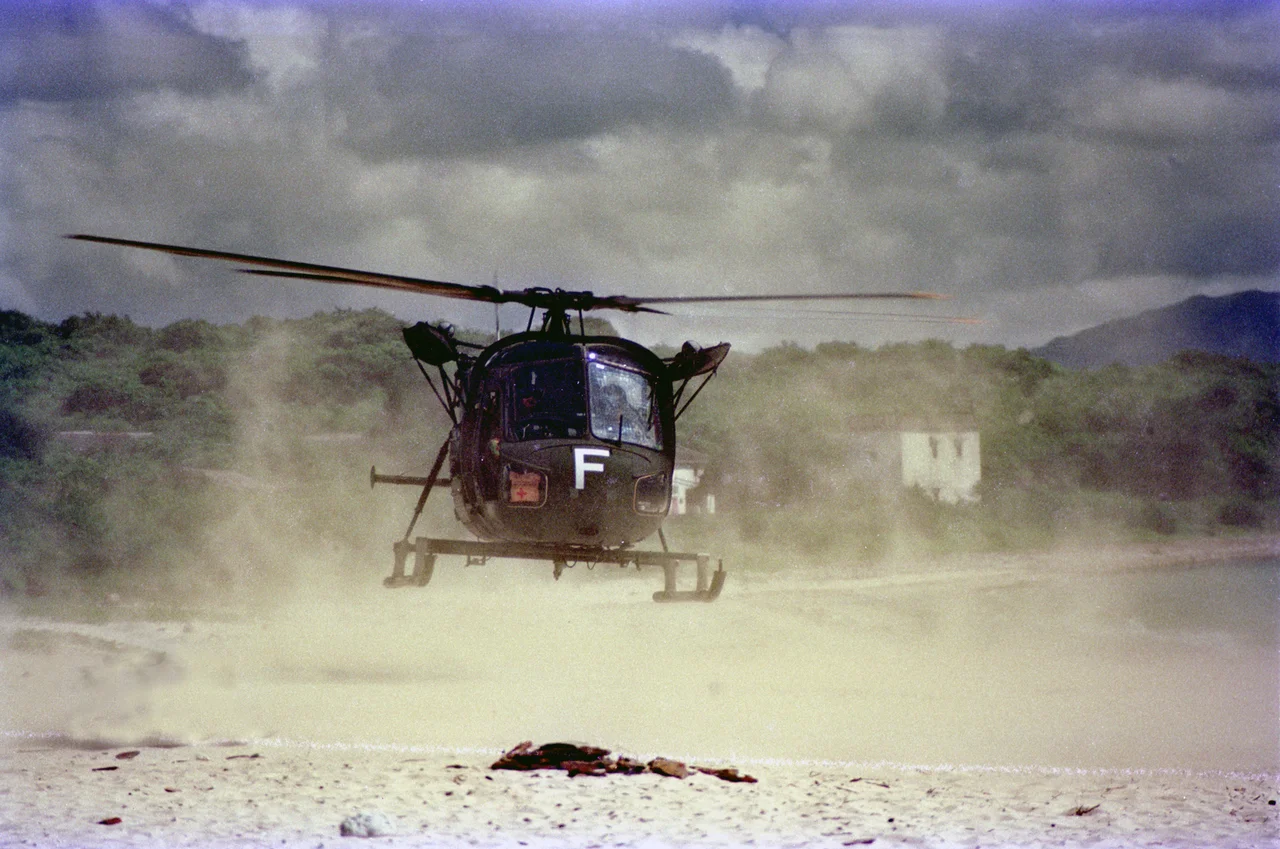

Shek Kong Airfield
A runway that has served almost every kind of purpose a piece of flat ground can serve: military airfield, refugee camp, civilian flying club. Shek Kong Airfield (ICAO: VHSK) sits in the broad Kam Tin valley of the New Territories, sheltered by mountains on three sides. Its history mirrors Hong Kong's own twentieth century — colonial administration, Japanese occupation, Cold War anxieties, waves of refugees, and finally the 1997 handover that changed everything. Under each successive flag, the airfield remained. Only its masters changed.
Built Against the Japanese
Construction of the airfield began in 1938, when Britain recognised that Japanese expansion across China posed a credible threat to its Hong Kong colony. The intention was to establish a defensive air capability in the broad valley north of Tai Mo Shan, the territory's highest peak. The project was interrupted almost immediately: Japanese forces occupied Hong Kong from late 1941 until mid-1945, and during those years the runway fell into disuse, the land returning partly to cultivation as food shortages made every field precious. When construction resumed after the war, the airfield was completed and handed to the Royal Air Force. The station was officially designated Royal Air Force Sek Kong — known generally as RAF Sek Kong — and it became a permanent feature of the British military presence in the territory for the decades that followed.
The Refugees on the Runway
After the fall of Saigon in 1975, tens of thousands of Vietnamese refugees began arriving in Hong Kong by boat. The colony became one of the primary first-asylum destinations in Southeast Asia, receiving people who had risked their lives at sea to escape the new communist government in Vietnam. RAF Sek Kong was drawn into this humanitarian crisis. From 1989 to 1993, half the runway was closed and converted into temporary housing — mainly tents and Quonset huts — to shelter Vietnamese refugees and, later, those classified as economic migrants awaiting forced repatriation. 24 Vietnamese people — nearly half of them children — died in a fire and riot at the Sek Kong detention centre on 3 February 1992. The images of a military airfield repurposed as a detention facility, its taxiways lined with temporary shelters, captured a tension that the colony struggled to resolve: how to manage the human cost of regional upheaval when the gates of a small territory could absorb only so much. The detention centre closed in 1993.
Handover and the PLA
On 1 July 1997, sovereignty over Hong Kong transferred from Britain to China, and RAF Sek Kong transferred with it. The Royal Air Force left; the People's Liberation Army Air Force arrived. The airfield was redesignated Shek Kong Airfield and became the sole PLAAF base in the Hong Kong Special Administrative Region, falling under the Southern Theater Command Air Force. The transition was symbolic in ways that went beyond the change of flag over the control tower. For nearly sixty years, the airfield had been a pillar of British colonial presence in the New Territories. Its departure signalled the end of an era that had begun in 1938 with the threat of Japanese bombs and ended with the handshake of a diplomatic settlement.
Between Military and Civilian
For a period during the British era, Shek Kong offered something unusual: a military airfield with weekend civilian access. The Hong Kong Aviation Club was based at the station, giving private pilots and flying enthusiasts a rare opportunity to operate light aircraft out of a military facility. It was an arrangement that reflected the particular character of colonial Hong Kong — a territory where military and civilian life coexisted in close quarters, and where pragmatism often trumped strict demarcation. That civilian use ended with the handover. The PLAAF now operates the field for military purposes only. The Aviation Club relocated. What remains visible from the surrounding hills is a single runway cutting across the valley floor — one of the flattest pieces of ground in the otherwise mountainous New Territories.
From the Air
Shek Kong Airfield (ICAO: VHSK) is located at approximately 22.436°N, 114.081°E in the Kam Tin valley of the New Territories, roughly 30 km northeast of Hong Kong International Airport (VHHH). The airfield lies in a broad, relatively flat valley floor between Tai Mo Shan to the south and the hills of Pat Heung to the north. Caution: this is an active military airfield operated by the People's Liberation Army Air Force; the airspace is restricted. Visual identification from higher altitudes is straightforward — the single runway is clearly visible cutting east-west across the valley. For general aviation, VHHH is the primary Hong Kong gateway.
Nearby Stories
- Chapel of St. Francis Xavier 3.5 km away
- Cuiheng 4.1 km away
- 2015 Shenzhen Landslide 16 km away
- Shunde 31 km away
- Wanshan Archipelago 37 km away
- Nanxiong Formation 96 km away
- Heyuan 149 km away
- Checheng Fu'an Temple 629 km away