
Siege of Cahir Castle
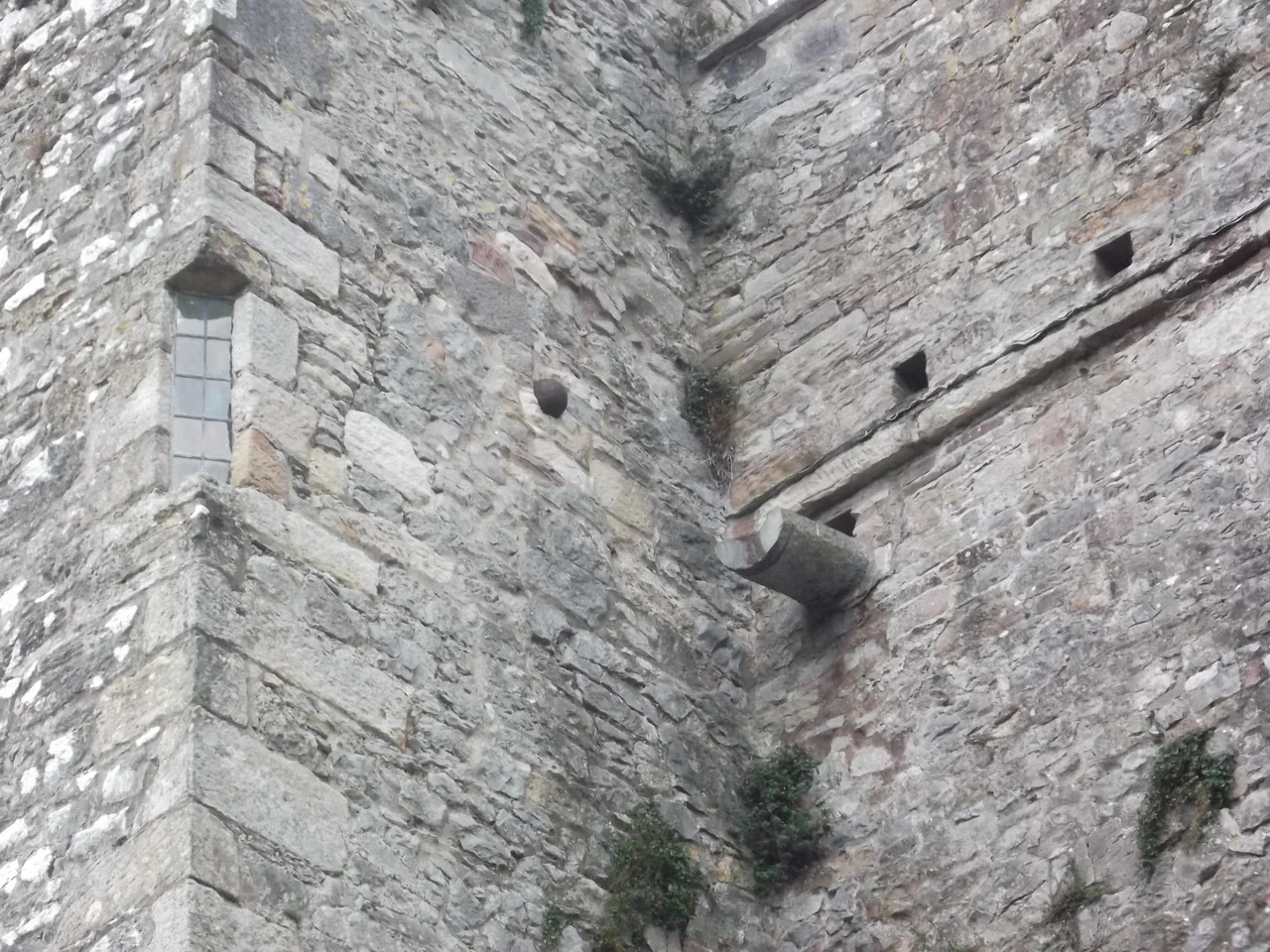
When word reached London that the Earl of Essex had taken Cahir Castle - the strongest fortress in Ireland, an island stronghold on the River Suir held by the Catholic Butlers - the queen was not impressed. The defenders, Elizabeth I sniffed, had been merely "a rabble of rogues." Essex had landed in Ireland in April 1599 with sixteen thousand troops and thirteen hundred horse, the largest army ever sent across the Irish Sea. By May he had reduced one of the kingdom's most formidable castles. He had every reason to be pleased. The queen's verdict damaged him politically and contributed to his eventual destruction. A cannonball is still lodged in the wall of the main tower at Cahir, fired in those May days of 1599 by Essex's gunners and never since removed. It is one of the most tangible relics in Ireland of the long Tudor war that crushed the old Gaelic and Catholic order.
The strongest castle in Ireland
Cahir Castle sat on a rock in the middle of the River Suir, with a great keep behind six stout towers and thick curtain walls. For any English army hoping to push west into rebel country it had to be reduced. The owner was Thomas Butler, 4th Baron Cahir, an Irish nobleman trying to walk the dangerous middle line between loyalty to the Crown and sympathy for the southern Catholic rebellion of the Nine Years War. The castle was held in his absence by his brother, James Galdie - nicknamed "the Englishman" - with a garrison whose exact size the contemporary accounts do not record but which was probably no more than a few hundred men. Essex came up the Suir in May 1599. He had taken Derrinlaur Castle first, almost without a fight. As his army marched from Clonmel to Cahir, Lord Cahir gave assurances that his brother would surrender as soon as the English came in view. James Galdie had other ideas.
Dragging guns by hand
On the morning of 25 May 1599, Essex divided his army into three battles - vanguard, main, and rearguard - and brought his artillery up by water to the quay at Clonmel. Then came the hard part: dragging the guns the ten miles to Cahir. With no draught horses available, the cannons and culverin were hauled by hand in poor weather over bridges that groaned under their weight. Essex rode ahead, overtook the vanguard, and stopped a mile short of the castle to wait for the artillery to catch up. When Lord Cahir was sent ahead with Henry Danvers to call on his brother to surrender, the men who came out to parley answered with threats and insults. Essex placed Lord Cahir and his wife under guard, accusing them of breach of faith. In a council of war held in the presence of the Earl of Ormond, the decision was made to bombard. The army was running short of supplies, the river plain was a swamp of disease, and rumour put a rebel relief force of 5,000 in the vicinity.
Whitsun Sunday cannonade
George Bingham, who had successfully besieged Maguire's island castle at Enniskillen in 1594, surveyed the ground with Essex in the evening. They chose an approach along the east bank by way of old ditches and a wall, and ordered a trench dug to within fifty paces of the castle. The engineers worked behind gabions - wicker baskets filled with earth - to shield them from musket fire. Their own musketeers and caliver men kept the defenders' heads down. On the morning of Whitsun Sunday, 27 May, the guns opened fire at point-blank range. The first surprise: the cannon's carriage broke at the second shot. Repairs took a day and a half. Then a ball stuck in the culverin and had to be cleared. Once the guns were properly in action, fifty shots silenced the garrison. They dared not stay in any tower or fight on that side of the castle. During the cannonade, the contemporary accounts say, Lord Cahir and his wife - the captive negotiators - wept like children.
Escape through a watermill
Across the river, the rebel White Knight - Edmund Fitzgibbon - tried to relieve the castle with a few score kerne, the light-armed Gaelic foot. They could only withdraw the unfit defenders. Essex sent Christopher St Lawrence, the son of Lord Howth, to break the bridges connecting the castle to the west bank and to take the small island that carried them. By 28 May, with the cannonade resumed at close range, the east wall was breached. Climbing ladders, sows (movable protective screens), and petards (wooden cases of gunpowder for blowing in doors) were prepared for an assault the next morning. During the night the garrison tried to slip away. Charles Percy and St Lawrence's Flanders veterans spotted them. At least eighty were killed along the riverbank. James Galdie himself escaped with some of his men through a sink shaft under a watermill - the kind of detail that makes the contemporary accounts feel modern, a slipping-away through the only crack the besiegers had not closed. On the morning of 29 May, Essex entered the deserted castle.
A rabble of rogues
Essex left a hundred men under George Carey - who had taken a face wound in the siege from which he would later die - and crossed the Suir to enter rebel territory in west Munster. The artillery was mounted on the castle walls, the breaches repaired, the sick and wounded sent back to Clonmel. He made much of his victory in despatches to London. The queen demeaned it. Her phrase that Galdie's defenders were merely "a rabble of rogues" travelled in the court correspondence of the summer and lodged in the political memory. Within months Essex's Munster campaign had collapsed. He concluded a controversial truce with Hugh O'Neill, returned to England without permission, and tried to patch up his relations with the queen. Two years later he was executed for treason. In 1600 the castle was retaken without a shot by 60 rebels under James Butler, then surrendered again to Sir George Carew. Cahir Castle survived. Its medieval fabric is one of the most complete in Ireland today. The cannonball stuck in the main tower wall has been there since 1599 - Essex's mark, a queen's contempt, and the moment when stone walls began to mean less than gunpowder.
From the Air
The siege took place at the site of Cahir Castle, 52.38 N, 7.93 W, on its island in the River Suir in central County Tipperary. Waterford (EIWF) is 32 nm east-southeast; Cork (EICK) 36 nm southwest; Shannon (EINN) 48 nm north-northwest. Recommended viewing altitude 1,500-2,500 ft AGL to see the castle, the river bend, the line of the modern bridge (built atop the medieval crossing), and the open ground east of the castle where Essex emplaced his guns. The Galtee Mountains rise to the northwest (Galtymore 919 m), the Knockmealdowns to the south. Clonmel lies 10 nm east - Essex's start point for the artillery's overland haul.
Nearby Stories
- All Together Now (festival) 1 km away
- Molana Abbey 4.1 km away
- Castle Oliver 4.7 km away
- Holy Cross Abbey 9.4 km away
- Siege of Kilkenny 9.4 km away
- Waterloo Round Tower 13 km away
- Castletroy 14 km away
- Ramsey Island 141 km away