.jpg)
Siege of the Chinese University of Hong Kong
In November 2019, a university campus became a battlefield. What began as a protest action on 11 November — students at the Chinese University of Hong Kong disrupting traffic near the Tolo Highway to support a city-wide general strike — escalated within hours into sustained confrontations between protesters and police that would last five days. At least 119 people were injured. The events at CUHK shook Hong Kong and drew international attention, and they unfolded against the backdrop of a city already six months deep into one of the largest protest movements in its history.
The Campus at the Center
The Chinese University of Hong Kong occupies a hillside campus in the New Territories, overlooking Tolo Harbour. On 11 November 2019, demonstrators calling their action 'Dawn Action' set out to obstruct traffic during morning rush hours as part of a broader general strike. At CUHK, protesters threw objects onto the railway tracks near University MTR station. Police responded by shooting pepper bullets and firing tear gas into the campus. The university suspended classes.
The No. 2 Bridge — a pedestrian overpass connecting the campus to the highway — became the immediate flashpoint. Police cordoned off the Tolo Highway. The university president, Rocky Tuan, contacted police urging calm. University security staff tried to mediate. Attempts to prevent further escalation that first day failed to hold. Both sides dug in for what came next.
The Second Day
On 12 November, the confrontation intensified. Starting at 7 a.m., police and protesters faced off again at No. 2 Bridge, with protesters attempting to prevent the police from clearing roadblocks. Vice-presidents of CUHK tried to negotiate — those talks collapsed. By 3 p.m., police had fired tear gas into the campus, and protesters responded with bricks and petrol bombs.
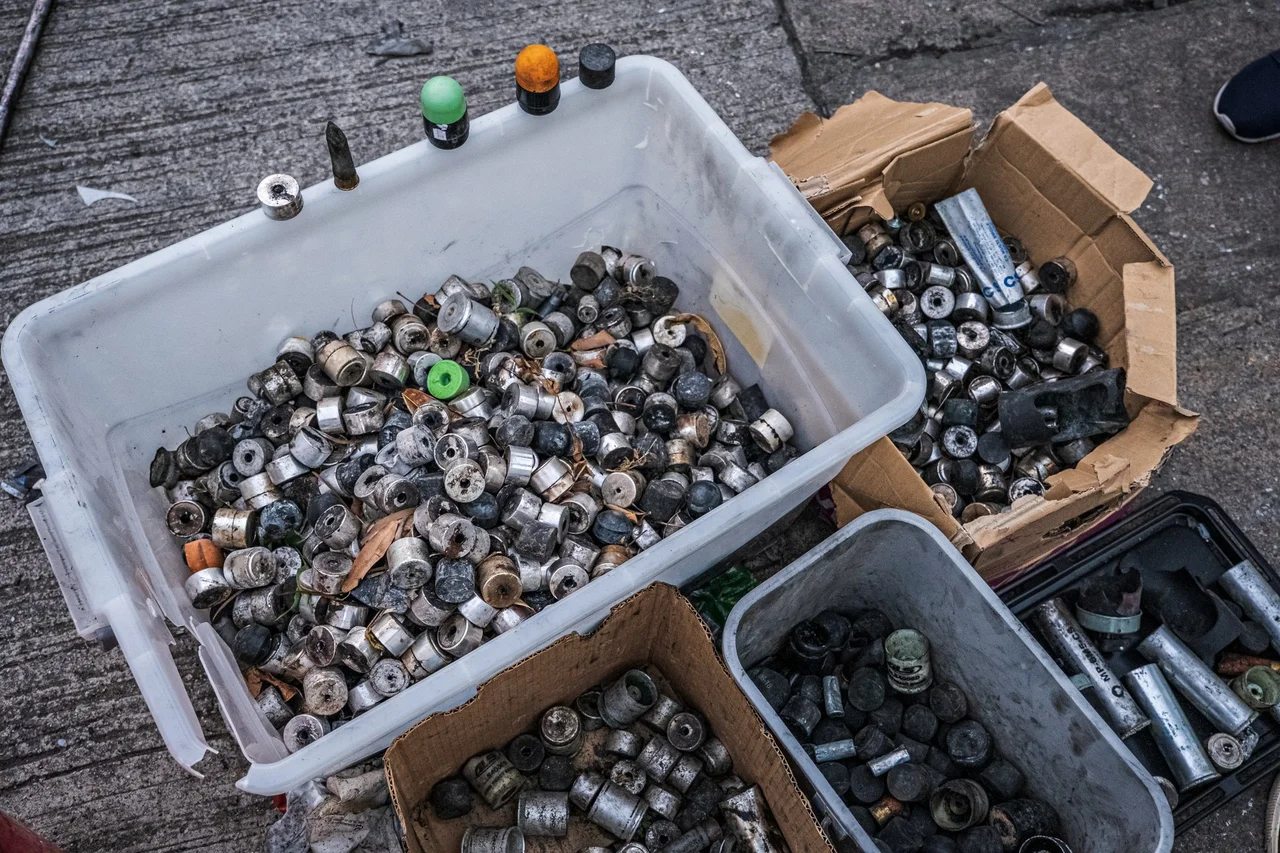
In the evening, several CUHK alumni returned to campus in solidarity with the students. Rocky Tuan was present and again sought negotiation with police representatives. Police rejected the request and ordered him to leave, stating he could not control the situation. At 7:30 p.m., with Tuan still on campus, police fired tear gas again; protesters hurled petrol bombs in response and forced a police retreat. Water cannons were deployed briefly around 10 p.m. before police announced they were withdrawing to prevent further escalation. A volunteer paramedic reported at least 119 people injured. Police announced 142 arrests that day and reported they had deployed approximately 1,567 tear gas canisters, 1,312 rounds of rubber bullets, 380 bean bag rounds, and 126 sponge grenades.
The City Beyond the Campus
While the confrontation at CUHK held the city's attention, protesters elsewhere in Hong Kong took coordinated actions to draw police resources away from the campus. At Festival Walk mall in Kowloon Tong, protesters entered after it closed early and set a large Christmas tree on fire; glass balustrades and doors were smashed. A mobile phone shop in Causeway Bay was set alight. In Sheung Shui, a train was firebombed and objects thrown on tracks. In Mong Kok, roads were blocked and public infrastructure vandalized. In Tin Shui Wai, protesters besieged a police station and set it on fire. A police van was burned in Sha Tin.
The spread of unrest across the city reflected both the reach of the protest movement and the degree to which CUHK had become a focal point. The campus was not isolated — it was connected, in real time, to a city in upheaval.
The Occupation and Its Divisions
After 12 November, protesters who remained on campus fortified it. Barricades went up at entrances using bricks and furniture. A gymnasium was converted into a first-aid station. Supporters delivered food and medical supplies from across the city. Police evacuated a group of mainland Chinese students by boat; the Taipei Economic and Cultural Office arranged transport for 85 Taiwanese students to return to Taiwan.
At 3 a.m. on 15 November, three masked protesters held a press conference and offered to reopen one lane of the Tolo Highway in each direction as a gesture of good faith, demanding the government hold the scheduled 24 November District Council elections, release those arrested, and establish an independent inquiry within 24 hours. The CUHK Students' Union stated their members had not participated in this press conference and questioned the offer. One lane in each direction was cleared at 6 a.m., but the Transport Department kept the highway closed for safety reasons. It formally reopened at noon. By 7:30 p.m., after Chief Secretary Matthew Cheung rejected the protesters' demands, protesters blocked the highway again. That night, protesters began leaving — divisions over strategy had emerged, with some arguing that the campus occupation did not fit the fluid, mobile approach the movement had relied on since June.
Aftermath and Responses
The standoff at CUHK fed directly into what followed at the Hong Kong Polytechnic University, where protesters who had withdrawn from CUHK joined those already stationed there. Police besieged PolyU beginning 17 November, blocking all exits and detaining at least 500 people in what became the longest single confrontation of the protest movement — more than 1,000 people were arrested during that siege.
The academic group Scholars' Alliance for Academic Freedom condemned the police operations at CUHK as unlawful. University presidents across Hong Kong issued a joint statement expressing regret that campuses had become occupied and calling on the government to resolve what they described as a 'political deadlock.' The police maintained that no warrant was required to enter campus under the Public Order Ordinance. A Hong Kong Police Force spokesman described CUHK as a 'weapon factory' and warned that protesters' actions were approaching terrorism. In 2021, several students arrested on 11 and 12 November 2019 were tried and convicted; sentences ranged up to nearly five years in prison. Following the siege, the university introduced security checks at its entrances.
From the Air
The Chinese University of Hong Kong is located at approximately 22.42°N, 114.21°E on a hillside overlooking Tolo Harbour, in the Sha Tin area of the New Territories. From a low flight altitude of 2,000–4,000 feet, the tiered campus and the No. 2 Bridge over Tolo Highway are visible. The university MTR station sits at the campus's base. The nearest major airport is Hong Kong International Airport (ICAO: VHHH), approximately 40 km to the southwest on Lantau Island. Sha Tin New Town and the Tolo Harbour corridor are prominent landmarks when approaching from the south.
Nearby Stories
- Chapel of St. Francis Xavier 3.5 km away
- Cuiheng 4.1 km away
- 2015 Shenzhen Landslide 16 km away
- Shunde 31 km away
- Wanshan Archipelago 37 km away
- Nanxiong Formation 96 km away
- Heyuan 149 km away
- Checheng Fu'an Temple 629 km away