
Sipadan
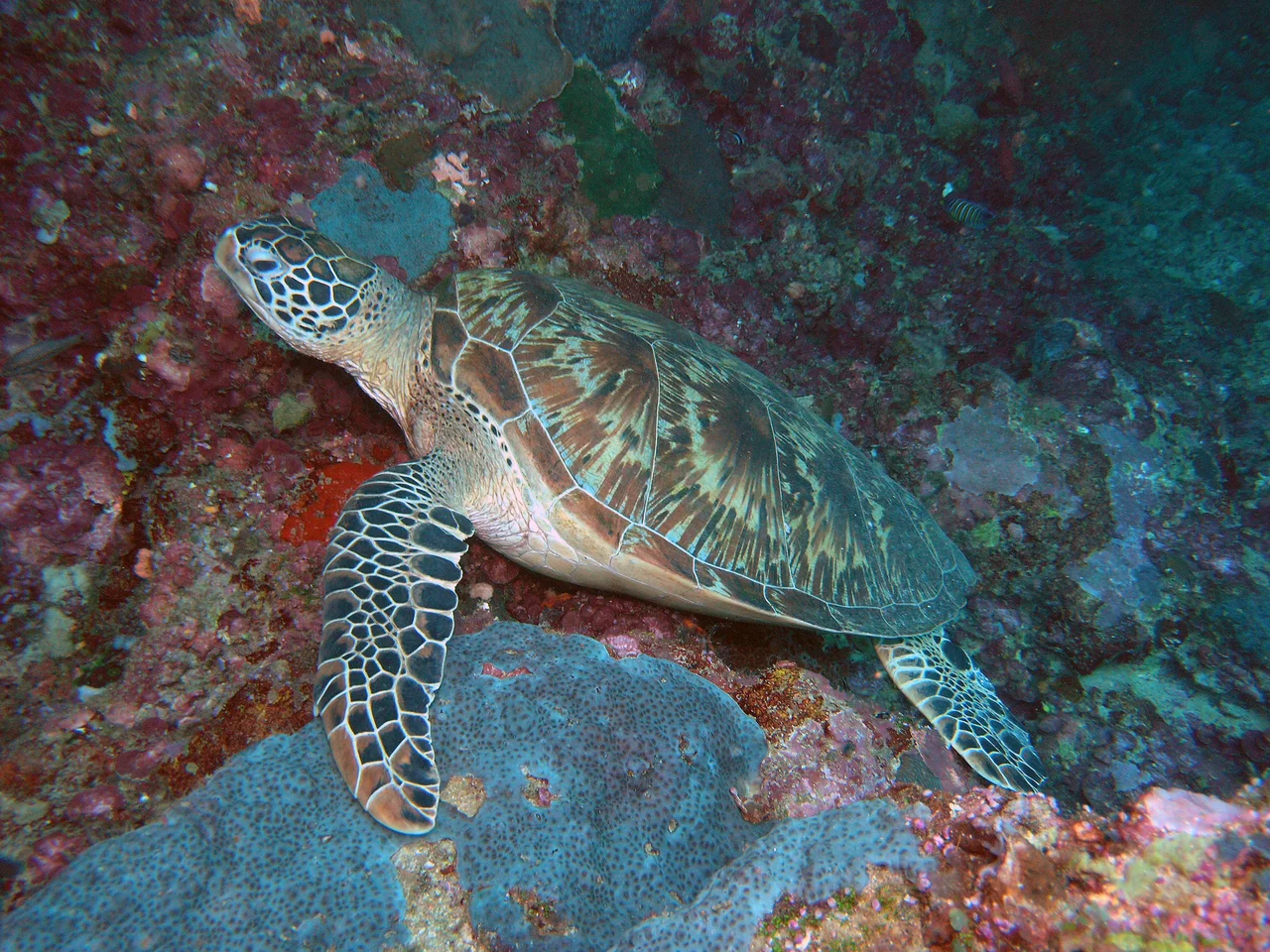
Beneath Sipadan island, inside the limestone column that rises 600 meters from the seabed, there is a tomb full of turtles. The underwater cave system branches into a labyrinth of tunnels and chambers, and green and hawksbill turtles that swim in searching for shelter sometimes cannot find their way back out. Their skeletal remains accumulate in the dark, a quiet cemetery beneath a place that is otherwise overwhelmingly, exuberantly alive. More than 400 species of fish and hundreds of coral species have been classified in the waters surrounding this single island -- Malaysia's only oceanic island, formed by living corals growing on top of an extinct volcanic cone in the Celebes Sea.
An Untouched Piece of Art
Jacques Cousteau came to Sipadan in 1989 to film Borneo: The Ghost of the Sea Turtle, and what he found moved him to a statement unusual for a man who had spent decades exploring the ocean: "I have seen other places like Sipadan, 45 years ago, but now no more. Now we have found an untouched piece of art." The island sits at the heart of the Indo-Pacific basin, the center of the most species-rich marine habitat on Earth. Its position in the Coral Triangle means that currents carry larvae and nutrients from across the tropical Pacific, concentrating biodiversity in a way that few places can match. Schools of barracuda form tornado-like spirals hundreds of fish strong. Big-eye trevally mass in walls of silver. Bumphead parrotfish cruise the shallows in herds, their fused teeth grinding coral into sand. Manta rays, eagle rays, scalloped hammerhead sharks, and whale sharks visit the deeper waters. Killer whales have been sighted circling the island.
Fought Over, Awarded, Transformed
Sipadan's beauty made it contested territory. Both Malaysia and Indonesia claimed the island, and when bilateral negotiations failed, the case went to the International Court of Justice. In December 2002, the ICJ awarded Sipadan and neighboring Ligitan to Malaysia, ruling on the basis of "effective occupation" -- the bird sanctuaries declared in 1933, the turtle conservation programs, the lighthouses maintained by British colonial administrators. The Philippines attempted to intervene based on their claim to northern Borneo but were turned down. The ruling settled sovereignty but triggered a more radical transformation. In 2004, Sabah Parks declared the island a marine park, and all six hotels and resorts operating on Sipadan were shut down and demolished. The island was given back to the turtles and the birds, the barracuda and the coral. Since 2019, Sabah Parks has issued just 178 dive permits per day, and four dive marshals monitor every group that enters the water.
The Kidnapping That Changed Everything
On 23 April 2000, six armed Abu Sayyaf militants arrived by boat from the southern Philippines and kidnapped twenty-one people at gunpoint -- ten tourists and eleven resort workers. The hostages were taken across international waters to Jolo, where they endured months of captivity in jungle conditions before being released in stages through the rest of the year. The last hostage, Filipino dive instructor Roland Ullah, was not freed until 2003. The attack shattered the perception of Sipadan as an untouchable paradise and placed the island under the management of Malaysia's National Security Council. The perpetrators were convicted in October 2024, with seventeen Abu Sayyaf members sentenced to life imprisonment -- justice delivered twenty-four years after the crime.
Island of Limits
Sipadan today exists under a regime of deliberate restraint. No one sleeps on the island. No permanent structures remain beyond Sabah Parks facilities. Divers travel by speedboat from resorts on nearby Mabul and Kapalai islands, arriving in the morning and departing before dark. The 178 daily permits are allocated weeks in advance, and the waiting list can stretch to months during peak season. The restrictions have worked. Coral coverage has rebounded since the resorts were removed. Turtle nesting sites have expanded. The barracuda tornados and trevally walls that Cousteau filmed in 1989 still form with the same density. Sipadan has become an argument for scarcity as conservation strategy -- that the best way to preserve a place of extraordinary natural value is to limit, severely, the number of people who can experience it at any given time.
From the Air
Located at 4.11N, 118.63E in the Celebes Sea, approximately 36 km off the east coast of Sabah, Malaysian Borneo. The island appears as a small, densely vegetated oval surrounded by deep blue water, with a visible reef platform extending from its shores. Sipadan Island Park encompasses 16,860 hectares of surrounding marine area. Nearest airport is Tawau (WBKW). Mabul and Kapalai islands are visible nearby. The island rises from a volcanic seamount -- the abrupt color change from shallow turquoise to deep blue marks the edge of the 600-meter drop-off.
Nearby Stories
- Skull Hill, Malaysia 6.1 km away
- Malaysia Airlines Flight 2133 19 km away
- Ambalat 24 km away
- Menara (tree) 69 km away
- 2006 Southeast Asian Haze 82 km away
- Indonesia-Malaysia Border 83 km away
- Sheikh Karimul Makhdum Mosque 93 km away
- Tawi-Tawi 155 km away