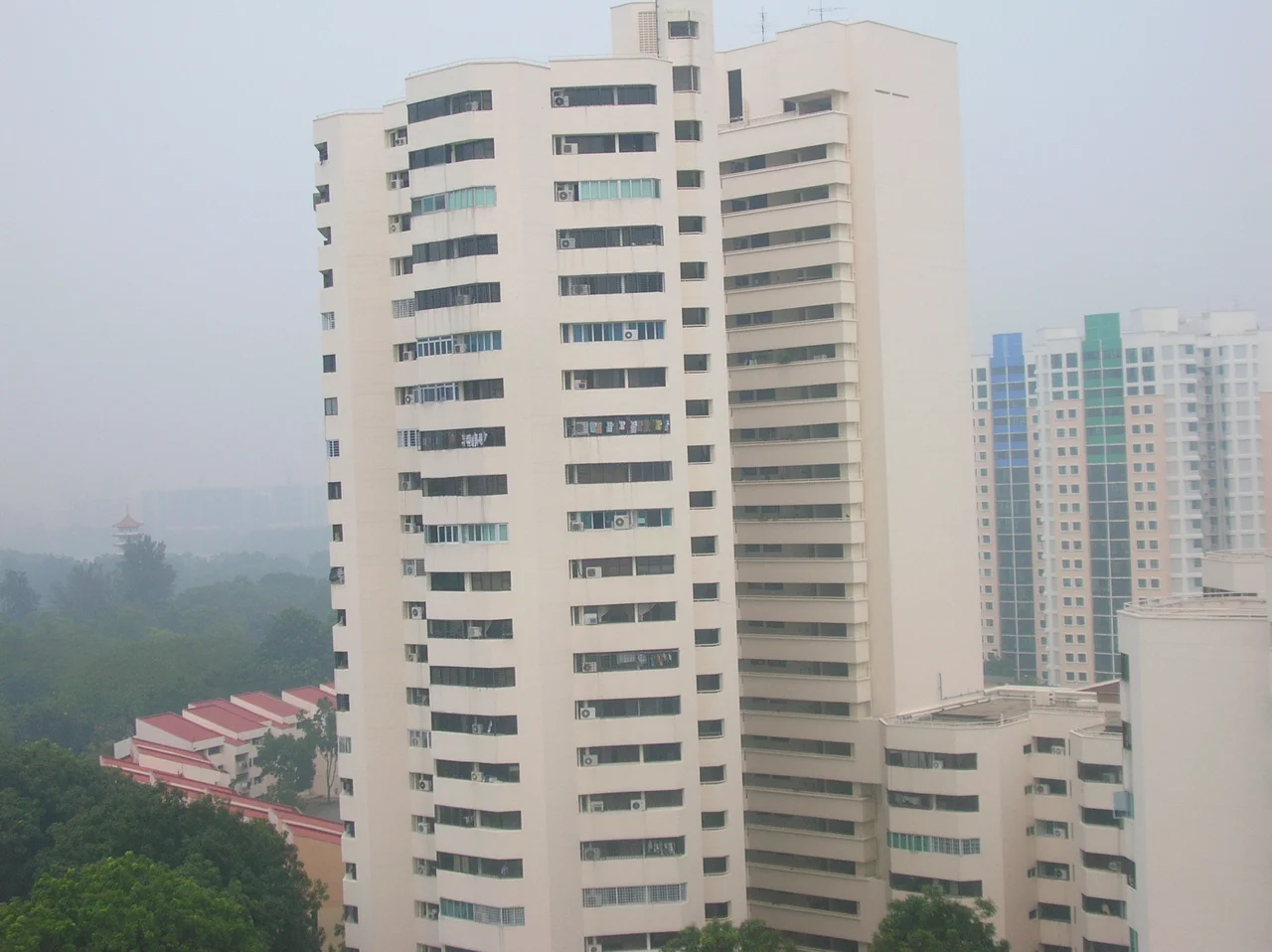

2006 Southeast Asian Haze
"If we do not burn the forest, where are we going to get our food from?" The villager in Central Kalimantan said it plainly, without apology, while a Malaysian journalist gagged on smoke beside him. It was October 2006, and the forests of Borneo were on fire. Not by accident, not by lightning, but by design. Every year, plantation workers and smallholder farmers across Sumatra and Kalimantan set fires to clear land for the growing season. Most years, the monsoon arrived in time to douse the worst of it. In 2006, the monsoon never came on schedule. El Nino delayed the rains by weeks, then months, and the fires burned into peatland that would smolder for the rest of the year. Satellite images taken over Borneo on October 4 revealed 561 active hotspots. The smoke did not stay in Indonesia.
A Sky the Color of Ash
The haze spread across national borders with the indifference of weather. Malaysia's Klang Valley, hemmed in by hills that trapped polluted air like a bowl, recorded Air Pollution Index readings nearing 200, the threshold for "unhealthy." In Kuching, Sarawak, visibility dropped to 300 meters. Kuala Lumpur's skyline vanished: the Petronas Towers became ghostly outlines, the Parliament building invisible from a kilometer away. Singapore's government issued health warnings. In southern Thailand, provinces from Songkhla to Narathiwat reported respiratory illness spikes and visibility under a kilometer. Fishermen heading into the Andaman Sea were told to stay vigilant. Even Saipan, thousands of kilometers across the Pacific, detected the haze. South Korea reported traces. A regional pollution event had become something closer to continental.
When Peat Burns
The chemistry of the disaster lay underground. Kalimantan's peatlands, built up over millennia from decomposing tropical vegetation, can extend meters deep. Once ignited, peat fires burn slowly, stubbornly, and almost invisibly, smoldering beneath the surface and releasing gases that produce sulfuric acid. No amount of water dropped from above can extinguish a peat fire effectively. Indonesia's firefighting aircraft were too small to carry meaningful payloads. The government eventually leased two Beriev Be-200 amphibious aircraft from Russia, planes capable of skimming over water to scoop up loads for sustained drops. They did not begin operations until November 1, by which point the haze had been choking the region for months. Indonesia offered civil servants two days off if they volunteered for fire duty. The military was deployed. None of it was enough.
Grounded
The haze did not merely irritate lungs and obscure views. It disrupted the machinery of modern life. A Mandala Airlines flight from Balikpapan skidded off the runway at Tarakan on October 3 when visibility fell to 400 meters. On October 21, twelve airlines canceled domestic flights from Jakarta's Soekarno-Hatta International Airport because destinations across the archipelago, from Jambi to Denpasar, were socked in. Shipping slowed. Schools closed across multiple provinces. In the Klang Valley, face masks became as routine as umbrellas. The fires destroyed a square kilometer of Tesso Nilo National Park in Riau Province and threatened the orangutans of Tanjung Puting National Park in Central Kalimantan. A BERNAMA journalist traveling 200 kilometers from Banjarmasin to Palangkaraya described a landscape of blackened soil, smoke still rising from the ground, withering trees, and air thick with flying ash.
Neighbors at the Breaking Point
The diplomacy was as acrid as the air. Malaysia and Singapore demanded that Indonesia ratify the ASEAN Agreement on Transboundary Haze Pollution, a treaty specifically created for this recurring crisis. Malaysian Environment Minister Azmi Khalid told the press that "frustration is an understatement." Protesters gathered outside Indonesia's embassy in Kuala Lumpur. Singapore's Prime Minister Lee Hsien Loong expressed public disappointment. Indonesia's president apologized, but the government maintained it lacked the resources to fight the fires effectively, a claim that did little to cool tempers in capitals where citizens were wearing surgical masks outdoors. Singapore proposed hosting regional talks. Indonesia countered that the meeting should be held in Pekanbaru, closer to the fires. The talks convened on October 13 in Pekanbaru, where Malaysia proposed a regional fund to combat the disaster. Whether the fund would prevent next year's fires was another question entirely.
Waiting for the Monsoon
Sarawak tried to force the weather's hand, spending at least 50,000 ringgit per session on cloud seeding operations to encourage rainfall. The results were modest. What finally ended the crisis was what always ends it: the arrival of the northeast monsoon in late October and November. Heavy rains on October 22 cleared the haze from Peninsular Malaysia. By December, the peatland fires were effectively extinguished. The 2006 haze was over, but the pattern was not. Southeast Asia had endured similar crises in 1997, 2005, and would face worse in 2013 and 2015. Each episode followed the same script: fires set during dry conditions, peatlands ignited, smoke crossing borders, diplomatic fury, and then the monsoon arriving to do what governments could not. The fundamental tension between agricultural livelihoods and regional air quality remained unresolved, waiting for the next El Nino to strip away the pretense of progress.
From the Air
Coordinates: 3.35N, 117.60E. The article is centered on the Kalimantan region of Indonesian Borneo, though the haze event affected an area spanning from Sumatra to the southern Philippines. Tarakan's Juwata International Airport (WALR) is the nearest airfield to these coordinates. Balikpapan's Sultan Aji Muhammad Sulaiman Airport (WALL) is a major regional hub to the south. From cruising altitude, the vast peatland and plantation landscapes of eastern Kalimantan stretch to the horizon. During haze events, visibility can drop below 400 meters at ground level, making approaches extremely hazardous.
Nearby Stories
- Borneo's River of Names 29 km away
- Sebatik Island 55 km away
- Sipadan 73 km away
- Ambalat 91 km away
- Kakaban 122 km away
- Maliau Basin 128 km away
- Martin B-10 145 km away
- The Secret War in Borneo's Jungle 168 km away