
Sizihwan
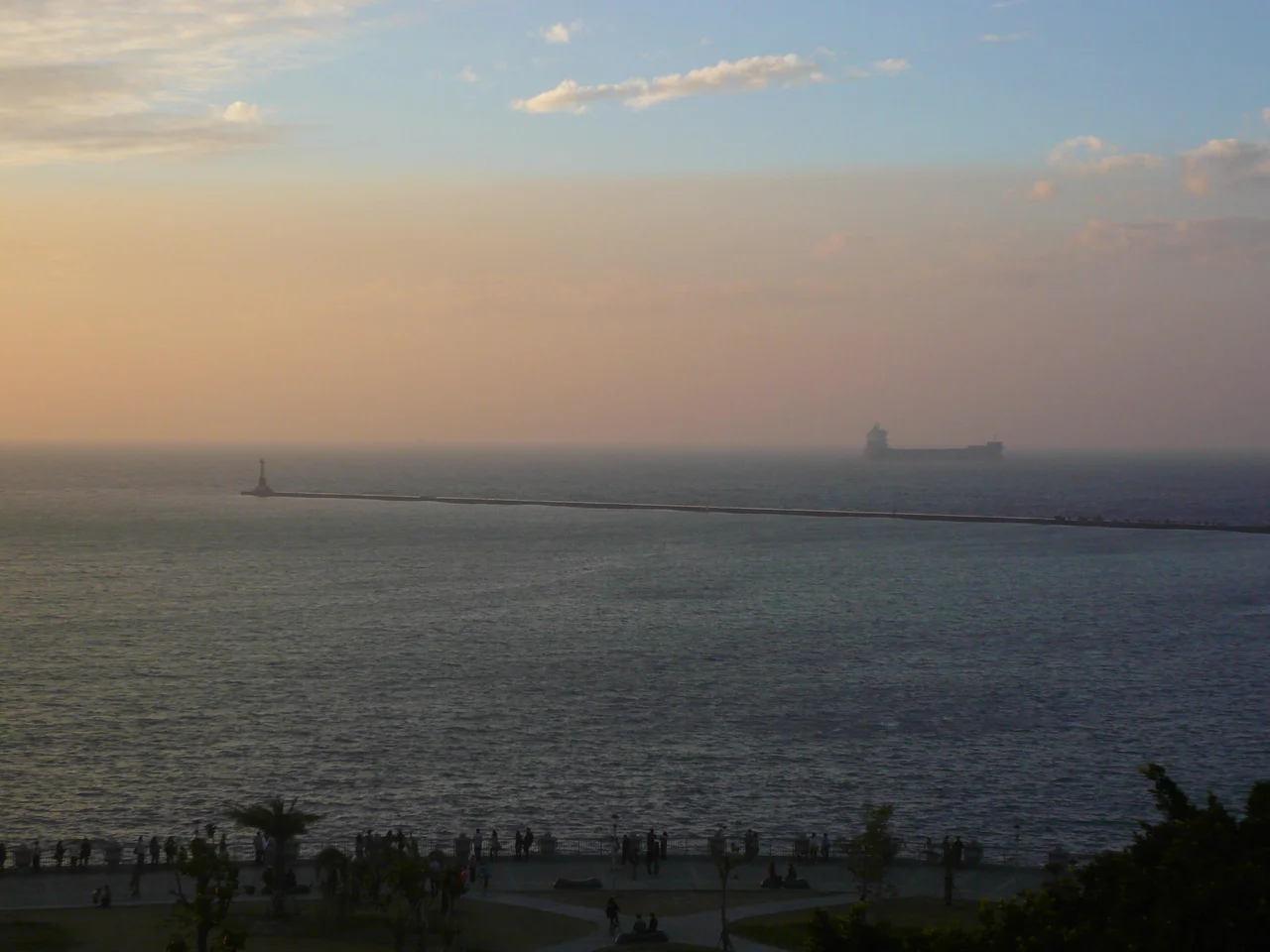
The name arrives with a compliment embedded inside it. Song-dynasty poet Su Dongpo once compared Xi Shi — one of ancient China's most celebrated beauties — to the shimmering quality of West Lake in different weather. Somewhere along the centuries, that comparison migrated south to this bay at the northern edge of Kaohsiung Harbor, and the place took on her name: Sizihwan, the Bay of Xi Shi. It is an extravagant name for a relatively modest curve of shoreline. But at sunset, when the Taiwan Strait goes copper and the silhouette of Shoushan mountain darkens against the sky, you understand the impulse behind it.
A Beach Between Mountain and Sea
Sizihwan sits at a geographical pinch point: Shoushan rises steeply to the northeast, its limestone mass forming the natural spine of the Gushan District, while Shaochuantou Hill — a lower spur of Shoushan — presses in from the east. Between them and the Strait, the bay opens just enough for a black-sand beach and the sprawling campus of National Sun Yat-sen University, whose buildings step down toward the water in a way that makes the whole institution feel like it was designed to face the sea. Sizihwan Beach, called Takao Beach during the Japanese colonial period, has been a popular recreation spot for generations. The dark sand comes from the area's volcanic geology and gives the beach a quality unlike the pale strands further north on Taiwan's coast — it absorbs heat differently, cools the eye, and makes the surrounding water look a shade deeper blue.
The Tunnel That Became a Landmark
For decades, the only direct route into Sizihwan was by sea or by foot over the mountain. That changed when the Sizihwan Tunnel was cut through Shaochuantou Hill between 1927 and 1933. Engineering projects of that scale were a mark of Japanese colonial ambition, and this one transformed access to the bay entirely. Today the tunnel, 260 meters long and lit in warm orange light, is itself listed as a tourist attraction — a short, slightly theatrical passage from the busy streets of Gushan into the quieter world on the other side. Cyclists and pedestrians use it freely. Larger vehicles must take longer routes around the mountain, which has the unintended effect of keeping the bay relatively peaceful on foot.
History Overlooking the Bay
Two heritage structures watch over Sizihwan from elevated ground. The Former British Consulate at Takao, perched on the peak of Shaochuantou, dates to the treaty-port era when Kaohsiung — then called Takao — was opened to foreign trade in the 1860s. Its red-brick facade and wide verandas give it the air of a colonial administrator surveying a domain. The Consulate and the historic structure nearby serve as anchors for a landscape that carries several centuries of trade history. Kaohsiung Harbor's entrance channel is visible just to the south, the same passage that cargo ships have been navigating since the port's earliest days.
The View That Draws Crowds at Dusk
Sizihwan's reputation rests primarily on its sunsets. The bay faces almost directly west across the Taiwan Strait, with little to interrupt the view — no islands, no headlands, just open water meeting open sky. On clear evenings the light performance begins an hour before the sun actually drops, the sky moving through orange into deep red before fading to purple. The university campus fills with students and the beach fills with locals and visitors who have learned when and where to be. It is one of those rare urban sunsets where the city manages to feel incidental — the water, the mountain, and the light are the only things that seem to matter. A metro ride on the Orange Line from central Kaohsiung delivers you to Hamasen Station, the former Sizihwan Station, and from there the tunnel or the shoreline path leads directly to the bay.
A Name That Still Fits
Cities grow and change around their landmarks, and Sizihwan has seen its share of transformation. The nearby harbor has been reshaped, a metro line now runs beneath the district, and the old tunnel has traded its original utilitarian purpose for something closer to spectacle. Yet the bay itself remains recognizable — the same geometry of mountain and water that the Japanese called Seishiwan, that earlier residents knew by other names still, and that Su Dongpo's metaphor eventually settled into. Whatever the era, whatever the script above the tunnel entrance, people have been arriving here to watch the light change over the Strait. Some habits endure because the thing that prompted them doesn't change.
From the Air
Sizihwan Bay lies at approximately 22.629°N, 120.263°E, at the northern mouth of Kaohsiung Harbor. From the air at 3,000–5,000 feet, the bay is easily identified by the dark arc of Sizihwan Beach backed by the green mass of Shoushan mountain, with the National Sun Yat-sen University campus visible along the waterfront. The Former British Consulate sits at the small hill to the east of the beach. Nearest airport is Kaohsiung International (RCKH), approximately 8 km southeast. In clear conditions, the bay and the harbor entrance channel are visible from cruising altitude as the distinctive notch between Shoushan and the open Strait.
Nearby Stories
- Taimali 7.2 km away
- Meinong East Gate Tower 15 km away
- Kunci Temple 20 km away
- Checheng Fu'an Temple 42 km away
- Dongji Island 49 km away
- Orchid Island 69 km away
- South Penghu Marine National Park 77 km away
- Hong Kong 12 549 km away