
Skegness
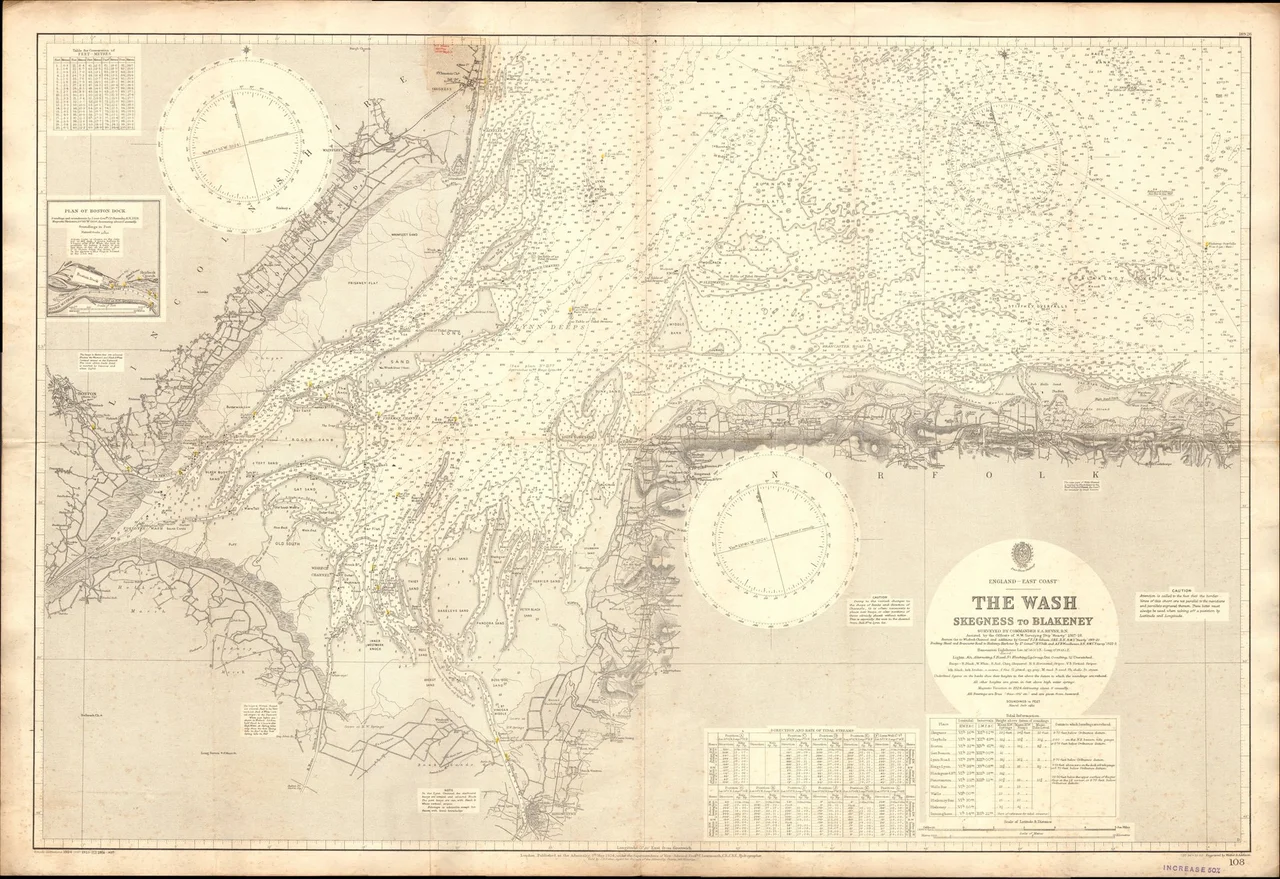
The original Skegness is underwater. The medieval port that sat at the mouth of The Wash, a locally important centre for coastal trade by the 14th century, was lost to the sea after a storm in the 1520s. The town rebuilt further inland, and for three centuries remained a small fishing and farming village. Then, in 1873, the railway arrived — and everything changed. The 9th Earl of Scarbrough, who owned most of the surrounding land, built the infrastructure for a resort, laid out plots, and leased them to developers. What he created was one of the most visited seaside towns in England.
The Earl's Invention
Before the railway, Skegness was a village with a modest history and a coast prone to flooding. After it, the town became something else entirely: a destination for factory workers from Nottingham, Derby, and Leicester who could now reach the Lincolnshire coast in a few hours. By the interwar years, Skegness was established as one of Britain's most popular seaside resorts. The layout of the seafront that exists today — the esplanade, the tower gardens, the pier — dates largely to this period.
Billy Butlin arrived in the 1920s, setting up his first amusement stall on the seafront before opening the fairground south of the pier in 1929. In 1936, the first Butlin's holiday camp opened at Ingoldmells, just to the north — a concept that would change British leisure culture. Early in his career, the comedian Dave Allen worked as a redcoat at Butlin's. Skegness, it turned out, was where careers and traditions both got started.
A Town of Unlikely Lives
The Rough Guides describe Skegness as 'every inch the traditional English seaside town,' and the observation is accurate — but the town's story contains stranger threads than the description suggests.
Harold Davidson, a disgraced Church of England clergyman fighting to be reinstated to the priesthood, took up a circus act in the amusement park in 1937. He was mauled by one of his performing lions and died in Skegness that same year. Ray Clemence, one of England's greatest goalkeepers, was born here in 1948. So was the rock singer Graham Bonnet in 1947. Jesse Handsley, who was born in Skegness, sailed on Scott's first Antarctic Expedition. The town produced an Antarctic explorer, a rock star, and a rector who died in a lion cage — not quite what the seafront promises, but evidence of the range of lives that have passed through it.
The Long Sandy Beach
Skegness received over 1.4 million visitors in 2015, ranking as England's fourth most popular holiday destination for UK residents in 2011. After the package holiday industry took hold in the 1970s and declining East Midlands industrial employment reduced the traditional visitor base, the resort retained its loyal audience. The recession of 2007–2009 brought a modest revival: Skegness was affordable when foreign travel was not.
The beach is the town's core asset — long, wide, and sandy, bounded at the south by Gibraltar Point, a national nature reserve and one of England's earliest bird observatories, established in 1949. At the north end: amusement arcades, eateries, Botton's funfair with its roller coasters, the pier, the Natureland Seal Sanctuary. Between 1 May and 30 September, dogs are banned from the beach. Donkey rides are offered for children. The traditions here run deep.
Living by the Sea
The seafront attractions are the visible side of Skegness, but behind them lies a more complex town. High levels of deprivation sit alongside the tourism economy; the service jobs that fill hotels and amusement parks are seasonal and low-paid, and the town's population skews older than the national average. For every two residents aged 16–24 who leave, three residents aged 60 or above move in. Transport links are poor. Economic diversification has been slow.
And yet the sea wall that was built in 1878 — designed not to protect the town from flooding but to support the seafront development — largely held during the catastrophic 1953 North Sea flood, when only gardens, amusements, and part of the pier were damaged. The town that George Scarbrough built on a railway line has absorbed storms, wars, economic cycles, and the changing habits of British holiday-makers. It remains, stubbornly and cheerfully, England's Skegness.
From the Air
Located at 53.14°N, 0.34°E on the Lincolnshire coast of the North Sea, 43 miles east of Lincoln. The town's pier, esplanade, and seafront are clearly visible from altitude. Nearest airport is Humberside (EGNJ), approximately 50 miles north. The flat Lincolnshire coastline runs from the Humber Estuary to The Wash with minimal elevation, making Skegness's seafront development distinctly visible against the open North Sea.
Nearby Stories
- North Somercotes 3 km away
- Walsingham Priory 12 km away
- Silver Pit 12 km away
- RAF Waddington 12 km away
- Grantham Rail Accident 20 km away
- True's Yard Fisherfolk Museum 23 km away
- Holkham National Nature Reserve 24 km away
- Humber Bridge 31 km away