
Snowy Mountains Scheme
To build it, Australia turned a river inside-out. The Snowy River once tumbled off the high country and ran south to the sea, draining the continent's tallest snowfields into the Tasman with almost nothing to show for it. Between 1949 and 1974, an army of workers reversed that logic, capturing the snowmelt high in the mountains and sending it the other way, west through tunnels bored clean through the spine of the Australian Alps, to fall 800 metres through power stations and pour out onto the thirsty inland plains. Sixteen major dams, nine power stations, and 225 kilometres of tunnels and aqueducts: the Snowy Mountains Scheme remains the largest engineering project ever undertaken in Australia.
Bending a Continent's Water
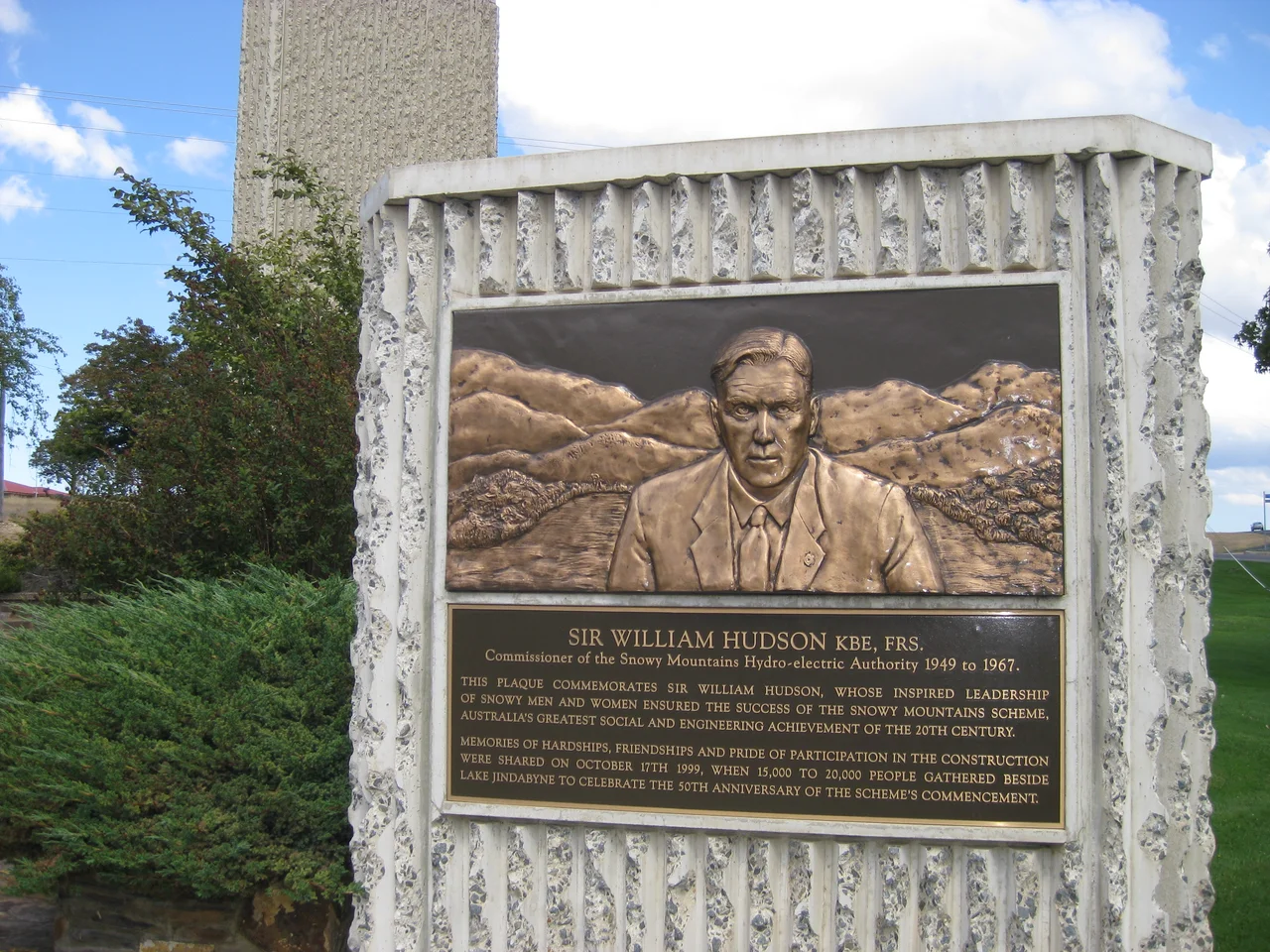
The engineering still astonishes. Two great tunnel systems pierce the continental divide that Australians call the Great Dividing Range, swallowing the waters of the Snowy and its tributaries and carrying them inland to the Murray and Murrumbidgee. On the way the water plunges through turbines that generate peak-load electricity for New South Wales, Victoria, and the national capital, then arrives in irrigation country worth billions to Australian agriculture. The scheme delivers around 2,100 gigalitres a year to the Murray-Darling Basin. It was modelled on America's Tennessee Valley Authority, financed in part by a hundred-million-dollar World Bank loan, and run by the methodical Chief Engineer Sir William Hudson, who prized facts over opinion and cooperation over conflict. It even drove one of the world's first transistorised computers, nicknamed Snowcom.
A Nation Built by Strangers
Hudson was told to recruit overseas, and the workforce that arrived remade Australia as profoundly as the dams remade the rivers. More than a hundred thousand people worked on the Snowy across its twenty-five years, and roughly seventy per cent were migrants, drawn from more than thirty nations: Italians, Germans, Greeks, Norwegians, Poles, Yugoslavs, Irish, and many more. Some had been on opposite sides of a war that had ended only a few years before, now sharing tunnels, camps, and meals in the cold mountains. In a country that had clung to a white-only immigration policy, the Snowy became an unplanned experiment in multiculturalism, and a successful one. The towns they built, Cabramurra and Khancoban, still stand; Cabramurra, at 1,481 metres, is the highest town in Australia.
The Price in the Rock
Nation-building of this scale was paid for in lives. The official death toll during construction was 121, men killed by rockfalls, machinery, and the brutal logic of tunnelling fast through hard country. On 16 April 1958, an elevator at the Tumut 1 underground power station plunged about 400 feet when its cable snapped, killing four Italian workers in an instant. The Snowy was, by the standards of its era, unusually safety-conscious; it mandated seatbelts in every vehicle decades before most of the world did. Yet the danger was constant, and the men who died building it came from across the world to do so. The valleys hold other losses too: the old townships of Adaminaby, Jindabyne, and Talbingo were drowned as the reservoirs filled. Lake Eucumbene alone holds nine times the water of Sydney Harbour.
The River Remembers
Triumph carried a sting that took decades to surface. The original plan diverted so much water that the lower Snowy River was left a shadow, starved below Lake Jindabyne while the inland flourished. By the 1990s the damage was undeniable, and a campaign to revive the river gathered force. In 1999 a fisherman and activist named Craig Ingram won a seat in the Victorian parliament largely on a promise to bring the Snowy back, and governments slowly committed to returning environmental flows, water enough for platypus and native bass to live again. The scheme remains mainland Australia's largest renewable generator and a major tourist draw, its dam walls and lakes ringed by Kosciuszko National Park. The contested expansion known as Snowy 2.0, under way since 2019, means the great experiment in the mountains is not finished yet.
From the Air
The Snowy Mountains Scheme spreads across roughly 5,124 square kilometres of Kosciuszko National Park near the New South Wales-Victoria border, centred around 36.12 degrees south, 148.60 degrees east. From altitude the works read as a chain of dam walls and lakes set in alpine terrain: vast Lake Eucumbene, Lake Jindabyne, Talbingo, and the Tumut power stations, with the Main Range and Mount Kosciuszko to the south. Cooma-Snowy Mountains Airport (YCOM) serves the region from the Monaro to the east; Canberra (YSCB) lies further north. Expect rapidly changing mountain weather and strong winds over the high country; clear conditions at 8,000 to 11,000 feet best reveal the scale of the reservoirs.
Nearby Stories
- Murray River 55 km away
- Parliament House, Canberra 62 km away
- Lake Burley Griffin 82 km away
- Old Parliament House, Canberra 92 km away
- Beechworth 121 km away
- Glenrowan, Victoria 160 km away
- Warangesda Aboriginal Mission 229 km away
- 2003 Fiordland Earthquake 1786 km away